
Meet the 2026 Inquiry Work Contest winners
Teachers across the country shared inquiry work from their classrooms this fall, from anchor charts and student work to classroom video. Thank you to every teacher who entered. These are the classrooms that stood out.
Students doing the thinking
Entries were scored on how clearly the work shows students investigating a question, building evidence and sharing their own thinking.
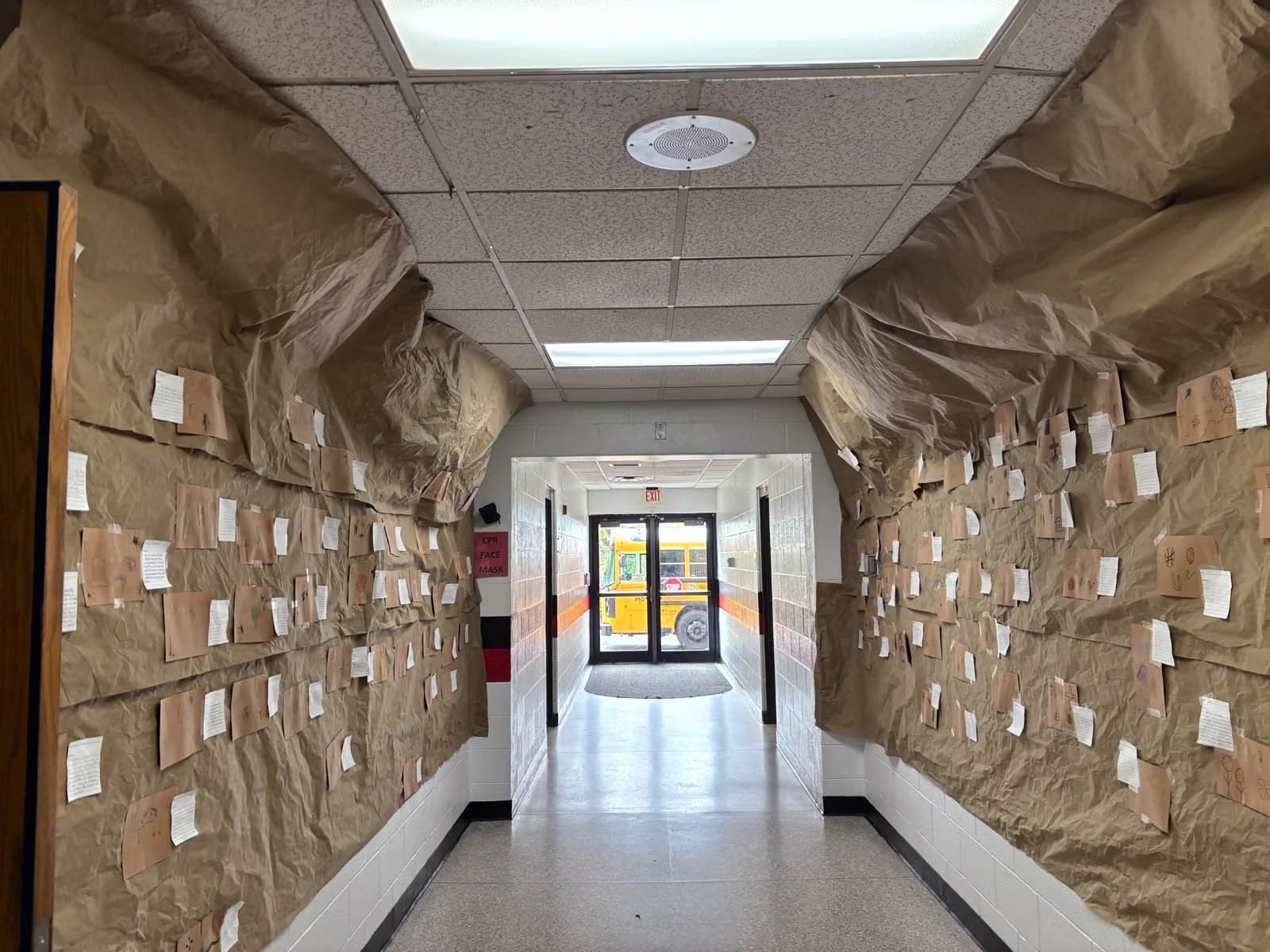
Telling the story of 6th grade through cave art
The Human Story
After studying early humans and the stories artifacts can tell, 6th graders created their own Paleolithic cave art. Using four symbols and no words, each student answered the question "What story would you tell?" Then they switched roles, analyzed the art as archaeologists and wrote museum placards to explain it. The finished pieces came together on a simulated cave wall that tells the story of 6th grade.
Sorting artifacts to uncover their stories
Native America
5th graders spent this inquiry investigating what artifacts can tell us and who they belong to. In the video, students work together to sort artifacts from Native American cultures into categories they came up with on their own, including materials, how items were used, time frame, tribe and how items were made. They then took a position on whether artifacts should be kept in museums or returned to their cultures of origin and wrote out their claims and reasoning, shown in the photo.
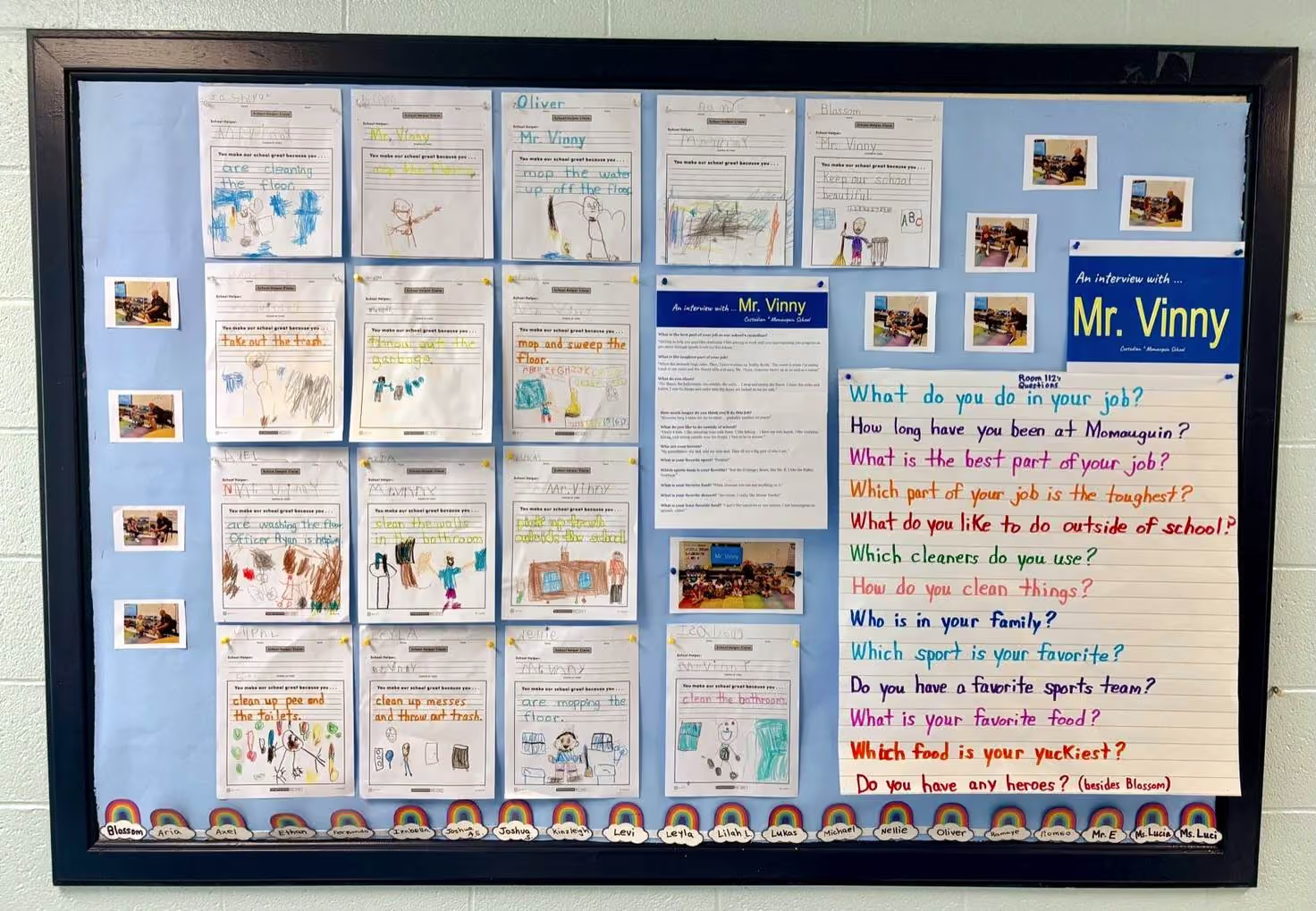
Interviewing the grown-ups who help our school
Navigating School
Kindergartners brainstormed the grown-ups who help at school and voted to interview their custodian. With teacher support, they wrote questions to learn about his role and his life outside of work, then illustrated and labeled what they learned.
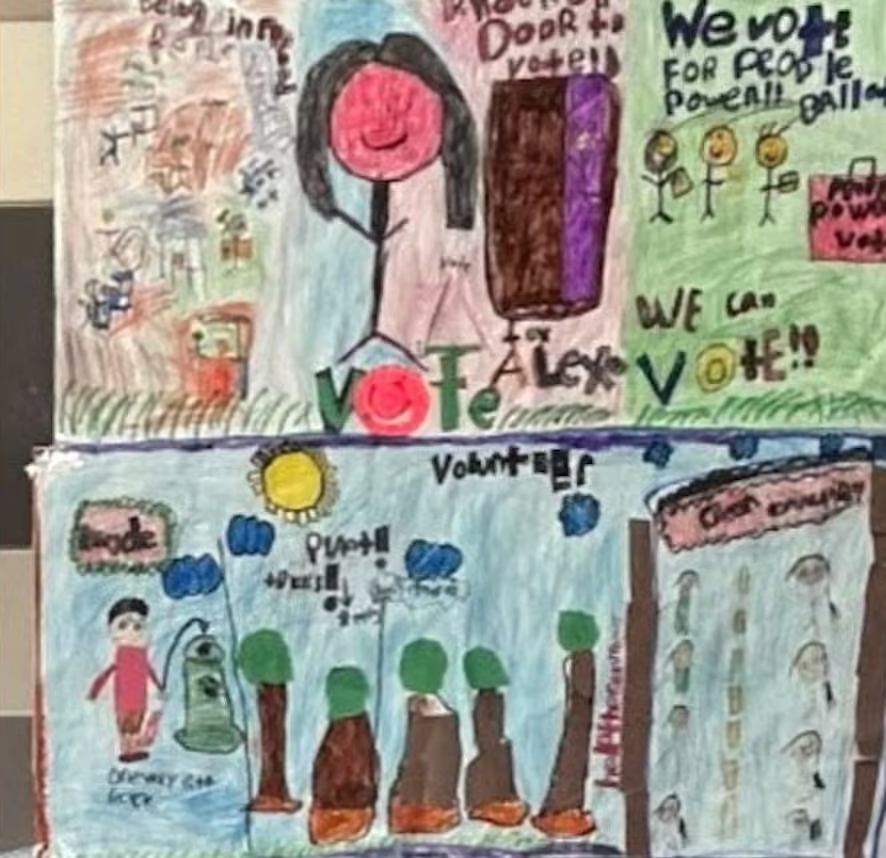
A layer cake for a healthy democracy
Rights and Responsibilities
3rd graders designed a layer cake to show their audience how people can take part in a democracy. They decided which layer should support the ones above it, from knowing how government works and using your rights to staying informed, volunteering and voting.
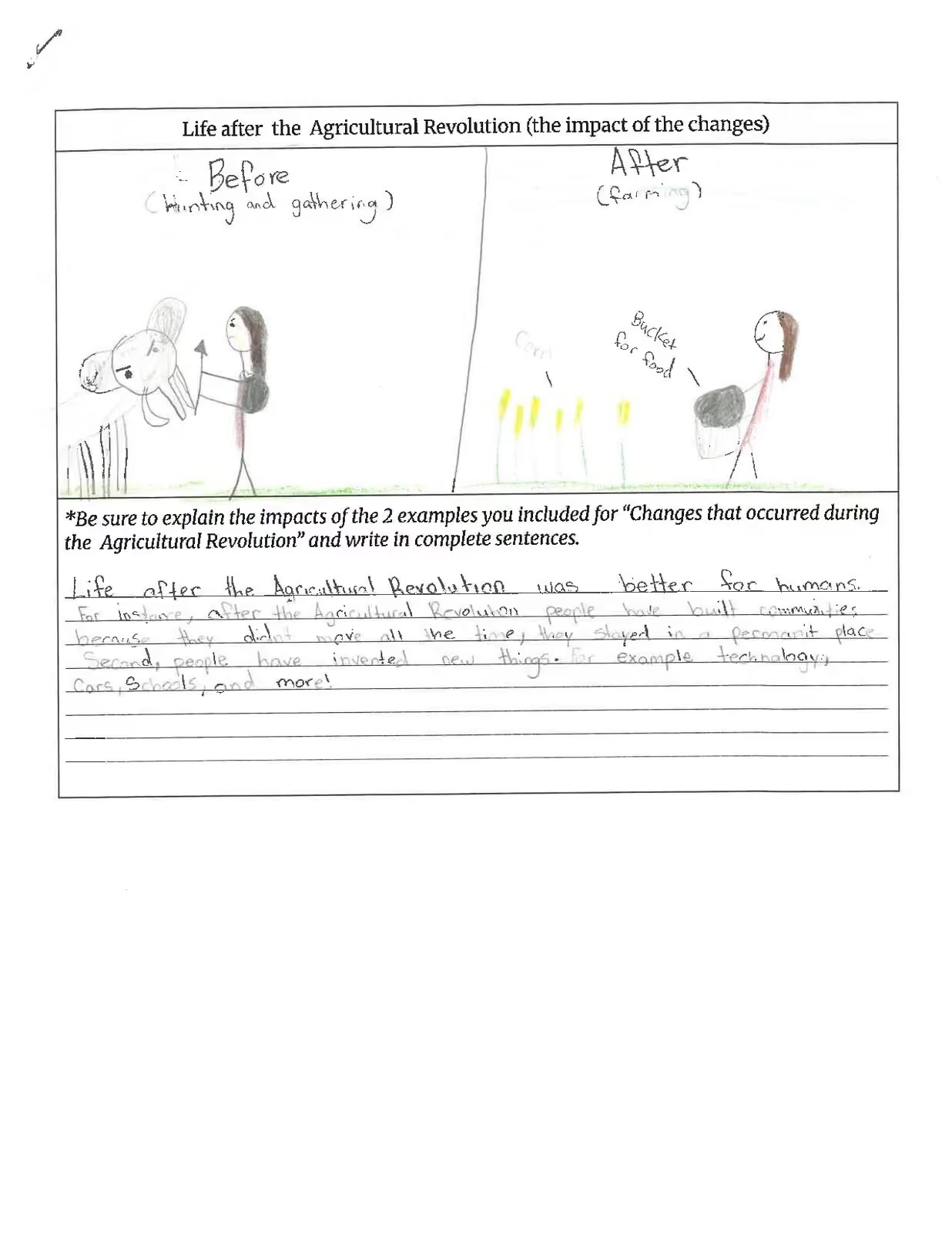
Comic strips on the Agricultural Revolution
The Human Story
6th graders created two-part comic strips about the Agricultural Revolution. First, they illustrated the changes it brought, like farming in place of hunting and gathering and people taking on different jobs. Then they showed the impact on daily life and weighed the tradeoffs, such as a steadier food supply against crop failures and disease from domesticated animals.
More standout classrooms
These classrooms will also be featured in this year's showcase.
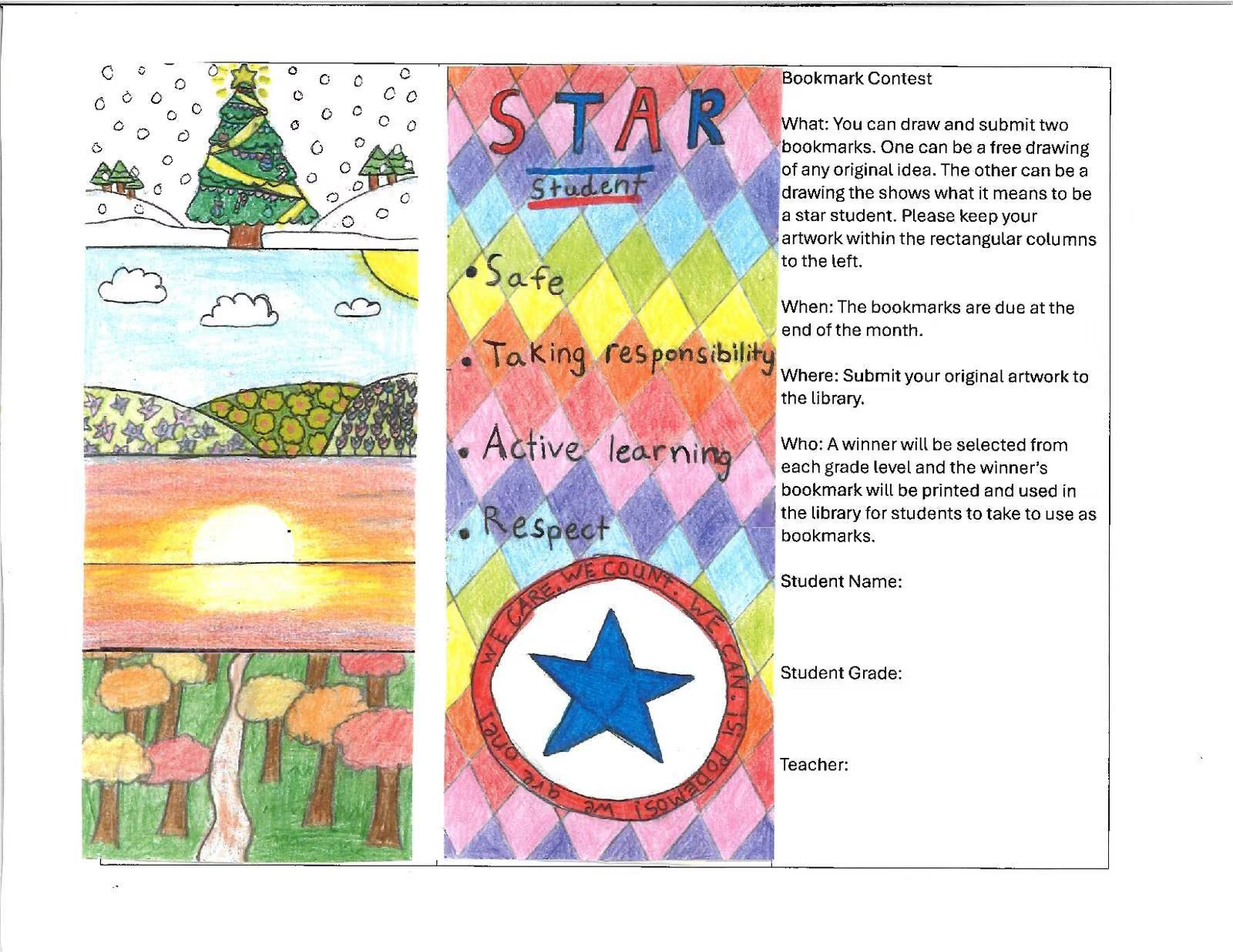
Star student bookmarks
My Team and Self
Students designed bookmarks about being a star student, and the winning designs are printed in color and handed out with library books.
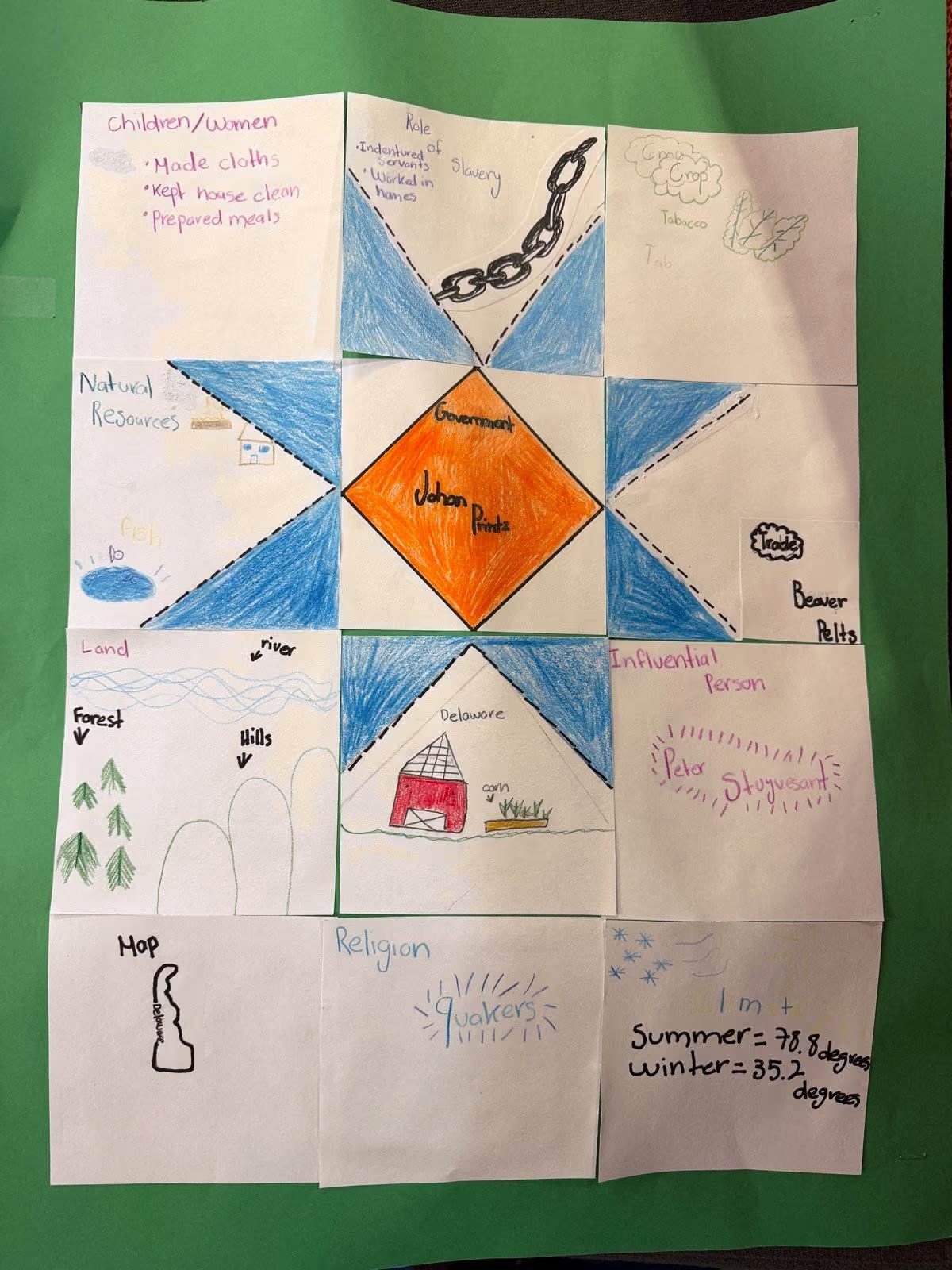
A colonial regions quilt
The Colonial Era
Students researched how culture, geography and economics shaped each colonial region, then designed quilt blocks based on historical regional patterns that came together as a bulletin-board-sized quilt.
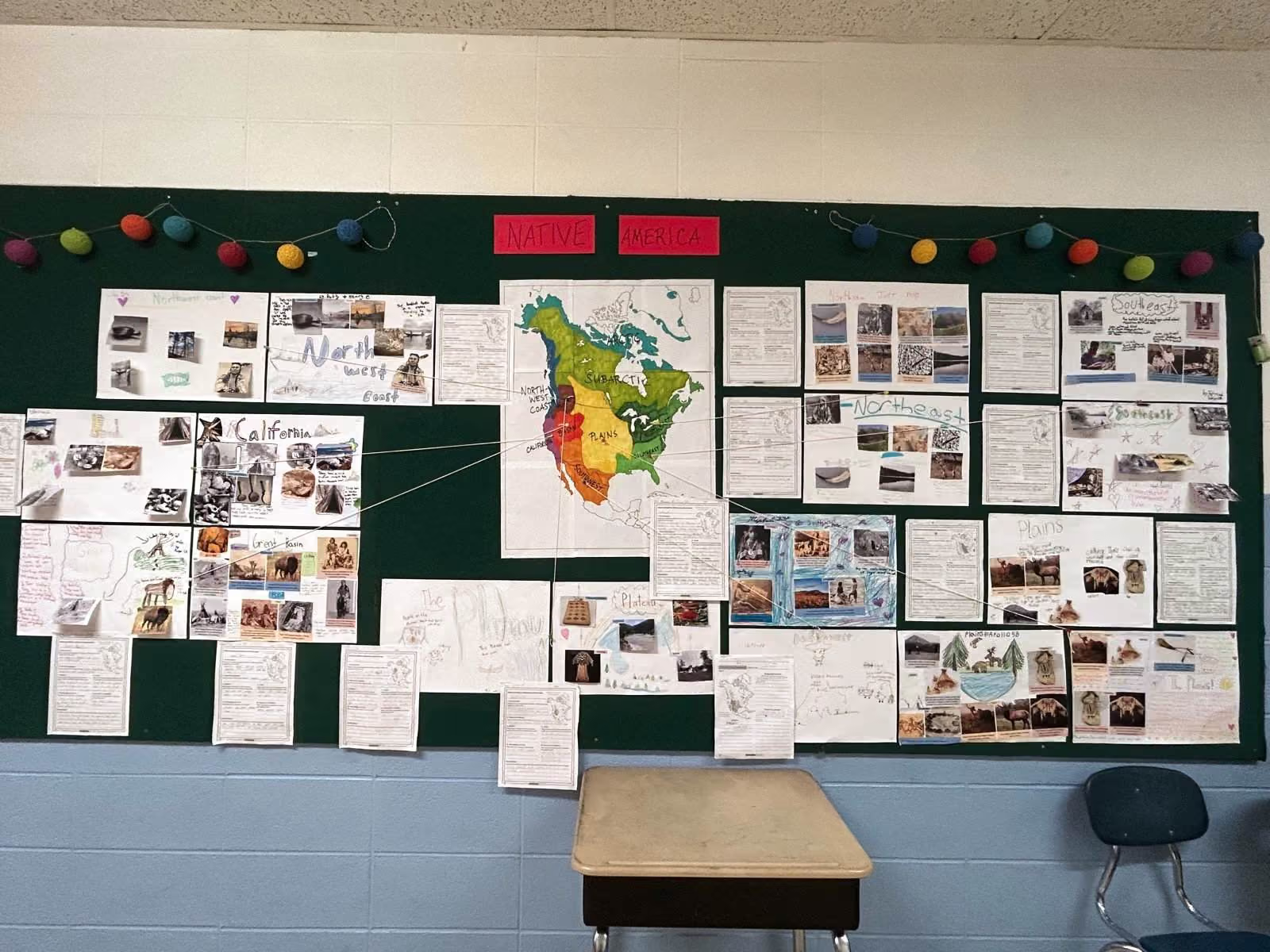
Native America inquiry wall
Native America
Students turned their research into large posters connected to each region on a hallway map that families explored during conferences.
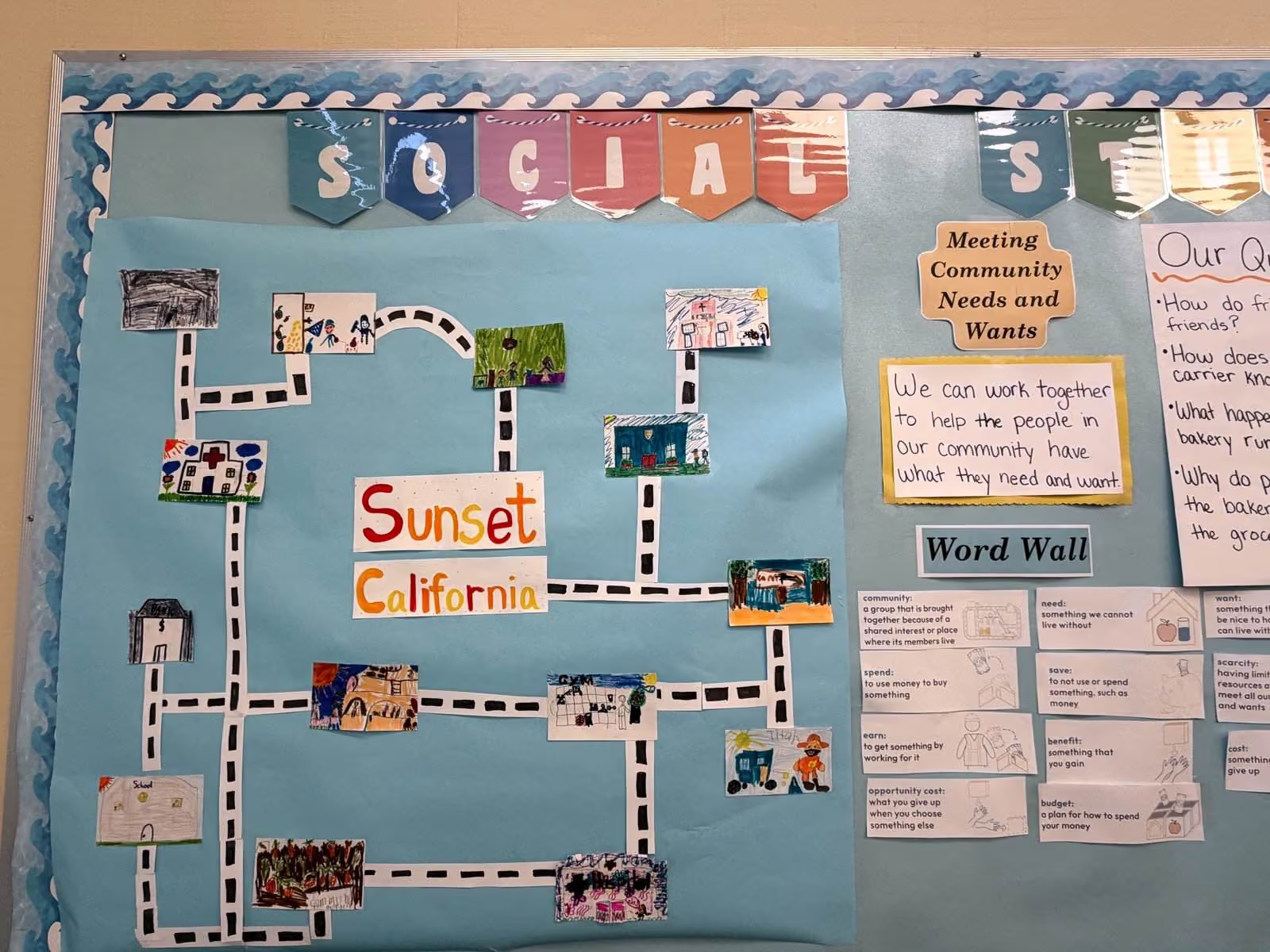
Mapping a community's needs and wants
Meeting Needs and Wants
Students built a class community called Sunset California and created a word splash connecting their vocabulary, with many placing scarcity at the center.
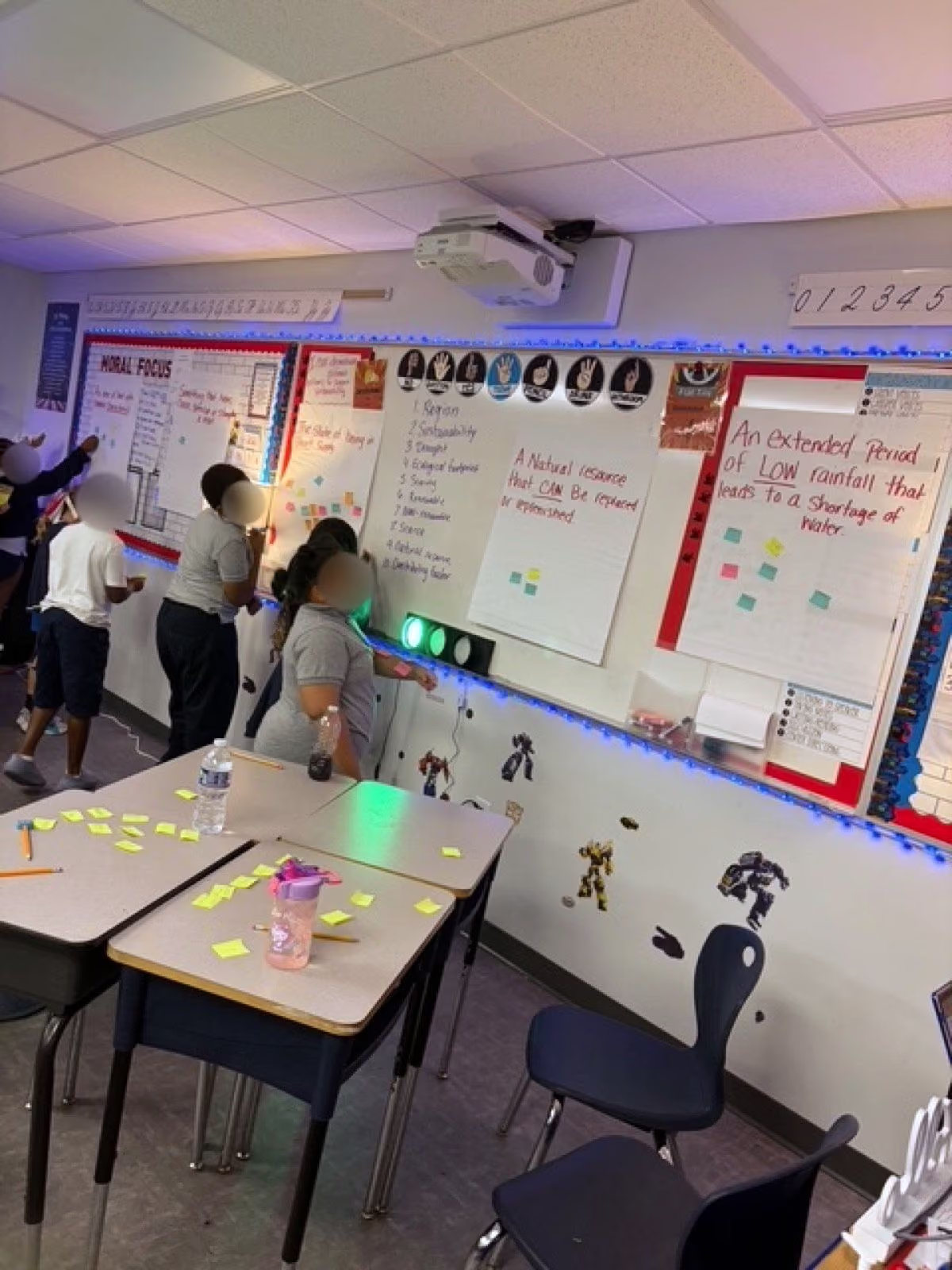
Vocabulary anchor chart challenge
Natural Resources of the U.S.
Students reviewed unit vocabulary by racing to place each term on the correct anchor chart.
Student Works
Explore examples from the Inquiry Work Gallery.
Click on a thumbnail below to expand and view more images.
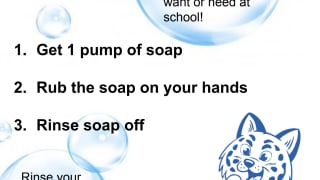
Students realized kids were overusing soap and water in the bathrooms. After learning about the importance of using resources responsibly, they created posters to remind students of the expectations.
Natural Resources of the U.S.
4th Grade
Final Product
Students realized kids were overusing soap and water in the bathrooms. After learning about the importance of using resources responsibly, they created posters to remind students of the expectations.
Additional Info
Whitney Duthie from Iowa City Community School District: IA, 4th Grade

This wall displays shows student work from the Our State and Region.
Our State and Region
4th Grade
Wall Display
This wall displays shows student work from the Our State and Region.
Additional Info
Linda Withers from Waukee Community School District: IA, 4th Grade

My students love this unit! There is so much depth and students get to learn multiple perspectives on how Oregon became a state. The Inquiry Wall is something we refer back to all unit long and students love to see their work on the wall.
Our State and Region
4th Grade
Inquiry-Long Display
My students love this unit! There is so much depth and students get to learn multiple perspectives on how Oregon became a state. The Inquiry Wall is something we refer back to all unit long and students love to see their work on the wall.
Additional Info
Amanda Hargadine from Canby School District: OR, 4th Grade

We taught this unit in a 4/5 blend. Students worked in groups and were engaged. Each group focused on a different region and within the group each person created an artifact to represent a different area of the Native American group's life.
Native America
5th Grade
Final Product


We taught this unit in a 4/5 blend. Students worked in groups and were engaged. Each group focused on a different region and within the group each person created an artifact to represent a different area of the Native American group's life.
Additional Info
Angela Kastrava from Canby School District: OR, 5th Grade, 4th Grade

My students also made inquiry products like colonial cook books, posters, presentations, and skits. We had a lot of great discussions during the unit and students were engaged throughout.
The Colonial Era
5th Grade
Final Product
My students also made inquiry products like colonial cook books, posters, presentations, and skits. We had a lot of great discussions during the unit and students were engaged throughout.
Additional Info
Kaberi Banerjee from Lake Washington School District: WA, 5th Grade

For this wall display, the students connected the different ways they could learn from others around the world and show how we are all connected through our global citizenship. Students researched different countries and learned about how goods and raw materials can originate from all over the world before they reach the stores we buy them from.
Global Connections
3rd Grade
Wall Display

For this wall display, the students connected the different ways they could learn from others around the world and show how we are all connected through our global citizenship. Students researched different countries and learned about how goods and raw materials can originate from all over the world before they reach the stores we buy them from.
Additional Info
Joanna Hecker from Lake Washington School District: WA, 3rd Grade

Students painted self portraits and filled in hearts with pictures and words to show themselves on the outside and inside.
My Team and Self
Kindergarten
Wall Display


Students painted self portraits and filled in hearts with pictures and words to show themselves on the outside and inside.
Additional Info
Jennie Greene from Skokie District 68: IL, Kindergarten

Every year students present their Native American Cultural Area Museum Exhibits: students build, mold, draw, analyze, and create awesome projects to share based on their role in the group. There is a shelter diorama, story analysis, artifact analysis, food samples presentation, artwork presentation or inspired artwork creation, and clothing presentations for each of the cultural areas. Students are placed in their groups and they then decide who is going to take on which role, so it is an amazing project for student choice and demonstrating mastery in multiple ways.
Native America
5th Grade
Final Product


Every year students present their Native American Cultural Area Museum Exhibits: students build, mold, draw, analyze, and create awesome projects to share based on their role in the group. There is a shelter diorama, story analysis, artifact analysis, food samples presentation, artwork presentation or inspired artwork creation, and clothing presentations for each of the cultural areas. Students are placed in their groups and they then decide who is going to take on which role, so it is an amazing project for student choice and demonstrating mastery in multiple ways.
Additional Info
BAILEY GREENWALD from National Heritage Academies - Parent District: NC, MI, NY, CO, 5th Grade

This was a wonderful, student driven project. The class worked in groups to brainstorm places in several categories including: activities, shopping, restaurants, places to visit, and private lessons available. Students focused on 3 specific activities that had personal meaning to them and explained what the place was and why it was kid friendly. Then they chose other pictures of places from the general list for the middle photos and created a list of other things like schools, (mostly private, including preschools), places to shop, lessons, places to visit, etc. depending upon what was already included in their brochure. The class remained excited throughout the activity and they were all proud of their finished products.
Our Special Location
1st Grade
Final Product


This was a wonderful, student driven project. The class worked in groups to brainstorm places in several categories including: activities, shopping, restaurants, places to visit, and private lessons available. Students focused on 3 specific activities that had personal meaning to them and explained what the place was and why it was kid friendly. Then they chose other pictures of places from the general list for the middle photos and created a list of other things like schools, (mostly private, including preschools), places to shop, lessons, places to visit, etc. depending upon what was already included in their brochure. The class remained excited throughout the activity and they were all proud of their finished products.
Additional Info
Heather Chapman from Quality Schools International: IT, 1st Grade

We created a gameboard of our special location.
Our Special Location
1st Grade
Other

We created a gameboard of our special location.
Additional Info
Faith Lau from San Francisco Unified School District: CA, 1st Grade

Students illustrated and organized flip book handouts.
Our Special Location
1st Grade
Wall Display


Students illustrated and organized flip book handouts.
Additional Info
Jennie Greene from Skokie District 68: IL, 1st Grade

Students researched Indigenous Americans and used Canva to created Infographics to share what they learned. Walden School, Deerfield School District 109
Native America
5th Grade
Final Product

Students researched Indigenous Americans and used Canva to created Infographics to share what they learned. Walden School, Deerfield School District 109
Additional Info
Barbara Mastin from Deerfield Public Schools District 109: IL, 5th Grade
No results found.
There are no results with this criteria. Try changing your search.