
Meet the 2026 Inquiry Work Contest winners
Teachers across the country shared inquiry work from their classrooms this fall, from anchor charts and student work to classroom video. Thank you to every teacher who entered. These are the classrooms that stood out.
Students doing the thinking
Entries were scored on how clearly the work shows students investigating a question, building evidence and sharing their own thinking.
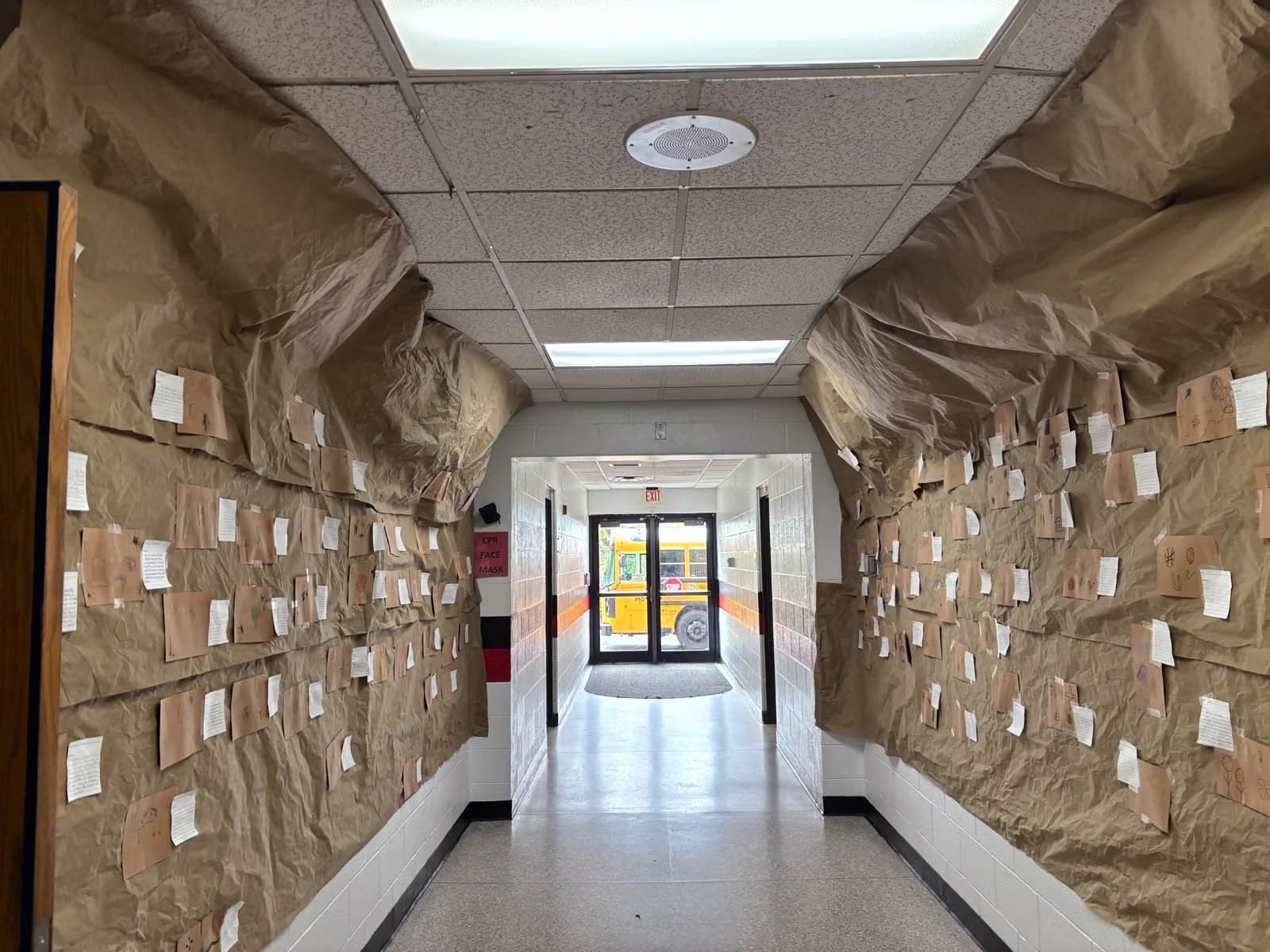
Telling the story of 6th grade through cave art
The Human Story
After studying early humans and the stories artifacts can tell, 6th graders created their own Paleolithic cave art. Using four symbols and no words, each student answered the question "What story would you tell?" Then they switched roles, analyzed the art as archaeologists and wrote museum placards to explain it. The finished pieces came together on a simulated cave wall that tells the story of 6th grade.
Sorting artifacts to uncover their stories
Native America
5th graders spent this inquiry investigating what artifacts can tell us and who they belong to. In the video, students work together to sort artifacts from Native American cultures into categories they came up with on their own, including materials, how items were used, time frame, tribe and how items were made. They then took a position on whether artifacts should be kept in museums or returned to their cultures of origin and wrote out their claims and reasoning, shown in the photo.
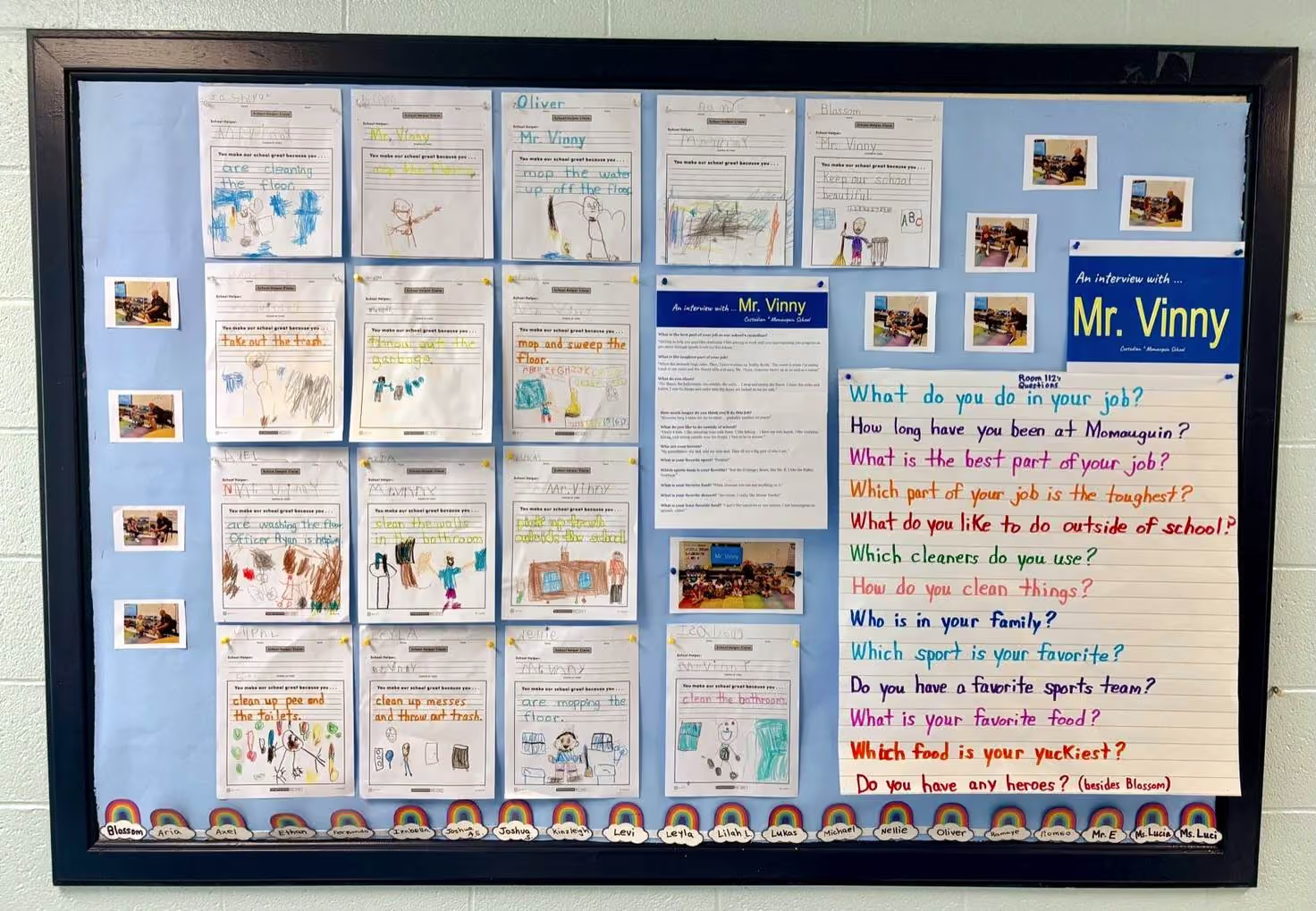
Interviewing the grown-ups who help our school
Navigating School
Kindergartners brainstormed the grown-ups who help at school and voted to interview their custodian. With teacher support, they wrote questions to learn about his role and his life outside of work, then illustrated and labeled what they learned.
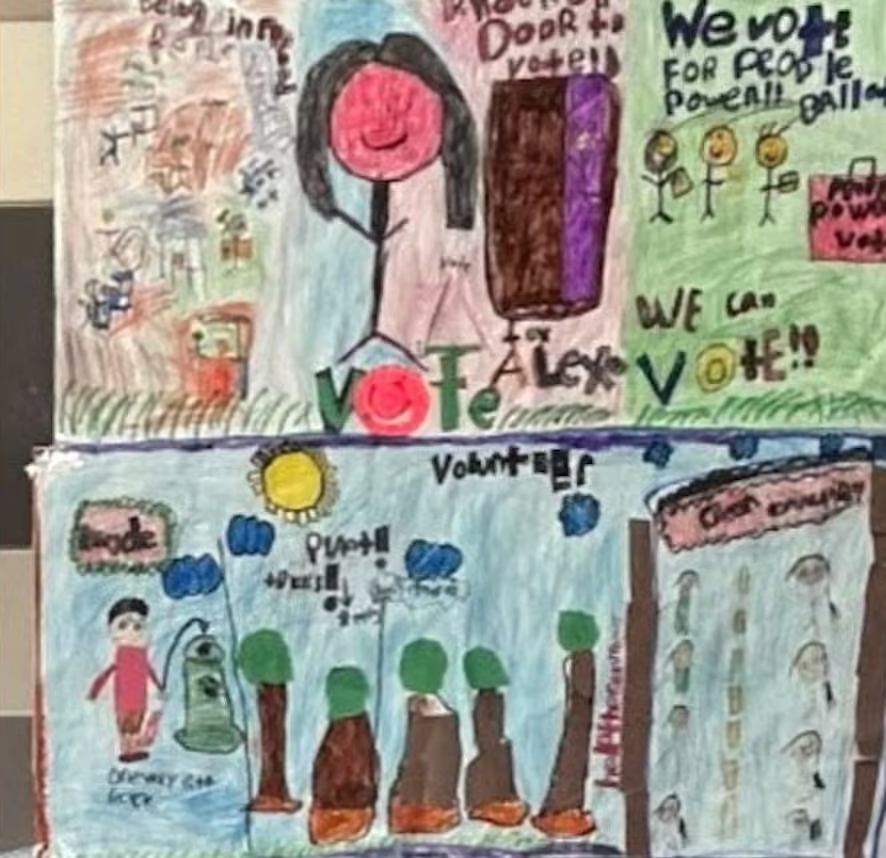
A layer cake for a healthy democracy
Rights and Responsibilities
3rd graders designed a layer cake to show their audience how people can take part in a democracy. They decided which layer should support the ones above it, from knowing how government works and using your rights to staying informed, volunteering and voting.
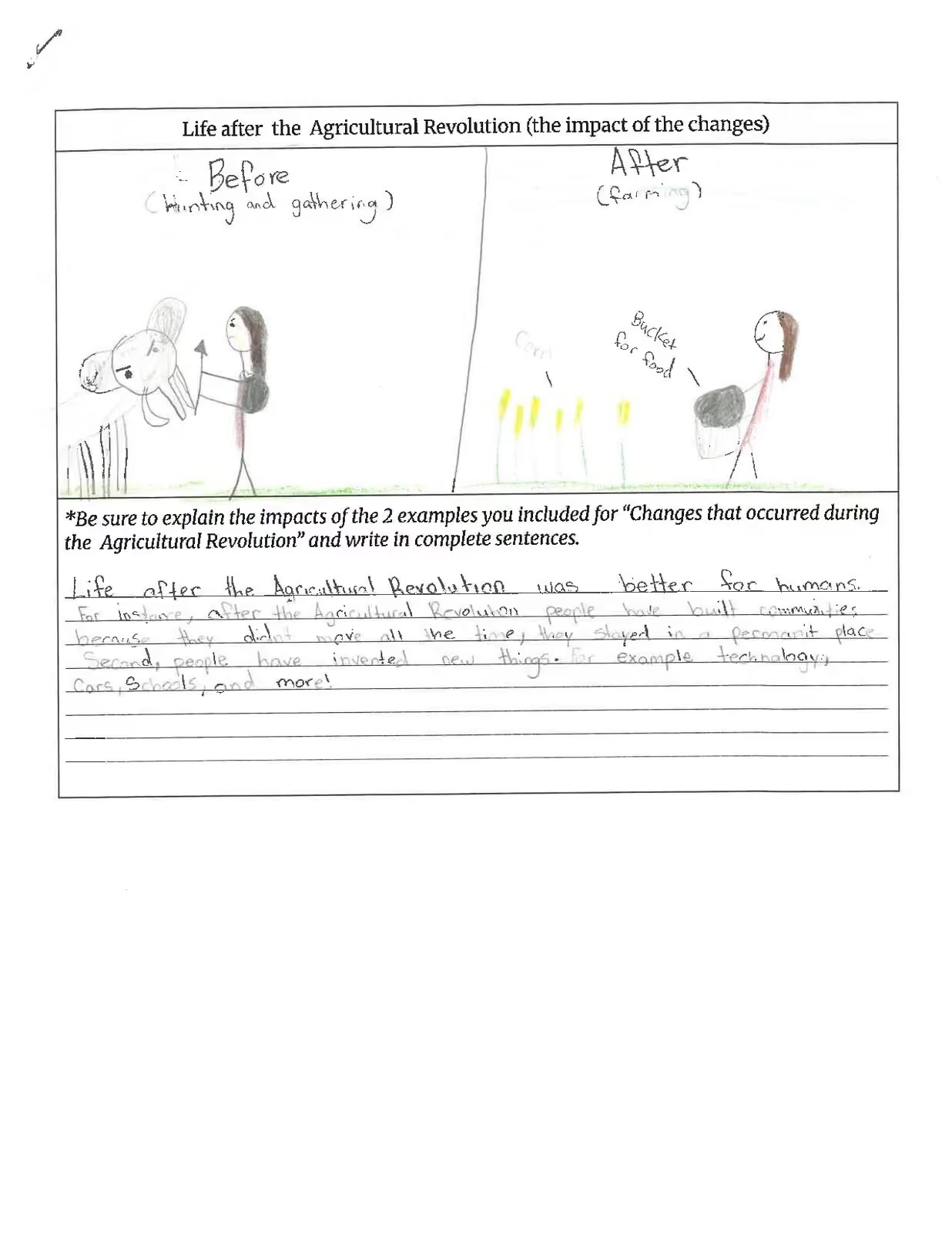
Comic strips on the Agricultural Revolution
The Human Story
6th graders created two-part comic strips about the Agricultural Revolution. First, they illustrated the changes it brought, like farming in place of hunting and gathering and people taking on different jobs. Then they showed the impact on daily life and weighed the tradeoffs, such as a steadier food supply against crop failures and disease from domesticated animals.
More standout classrooms
These classrooms will also be featured in this year's showcase.
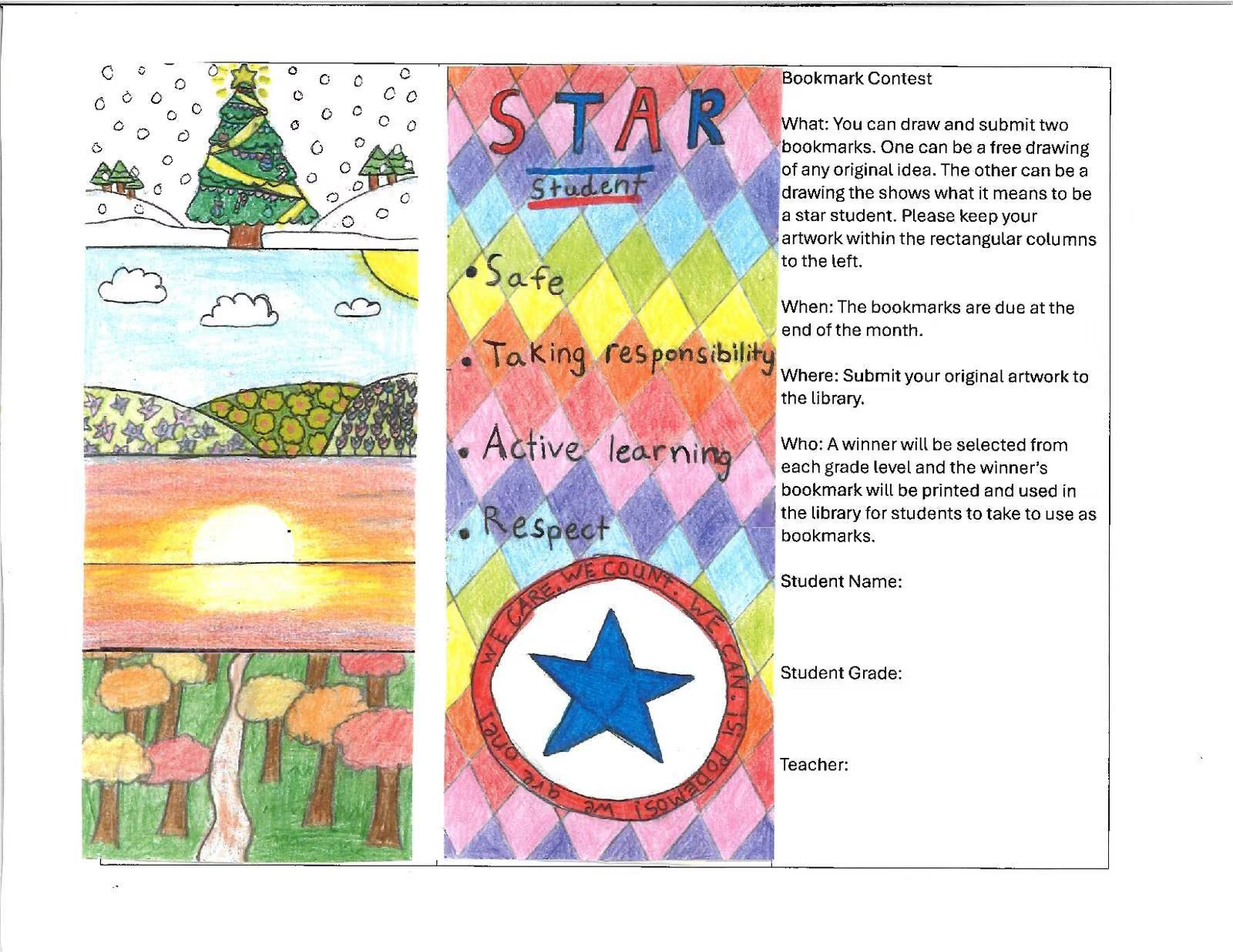
Star student bookmarks
My Team and Self
Students designed bookmarks about being a star student, and the winning designs are printed in color and handed out with library books.
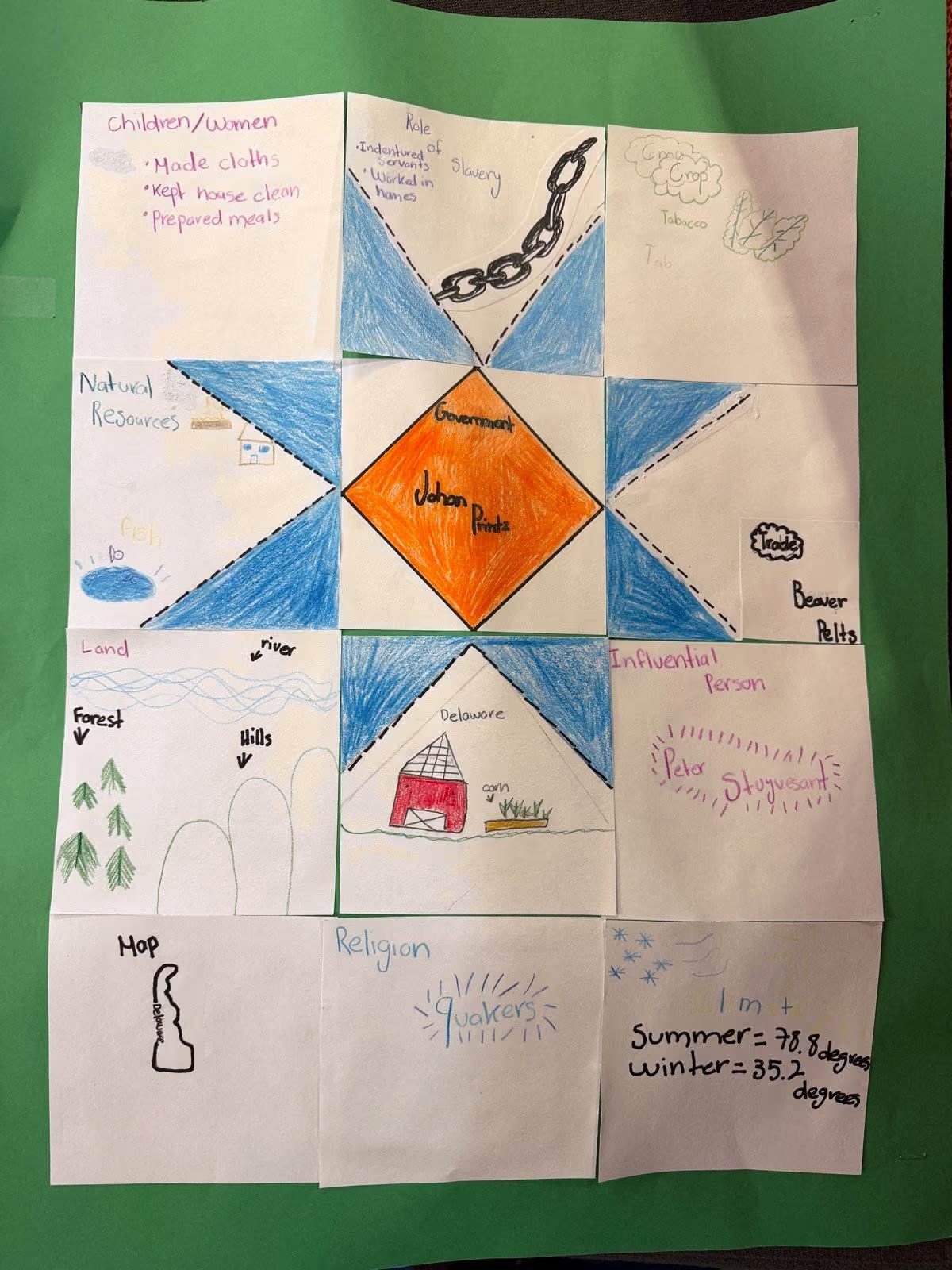
A colonial regions quilt
The Colonial Era
Students researched how culture, geography and economics shaped each colonial region, then designed quilt blocks based on historical regional patterns that came together as a bulletin-board-sized quilt.
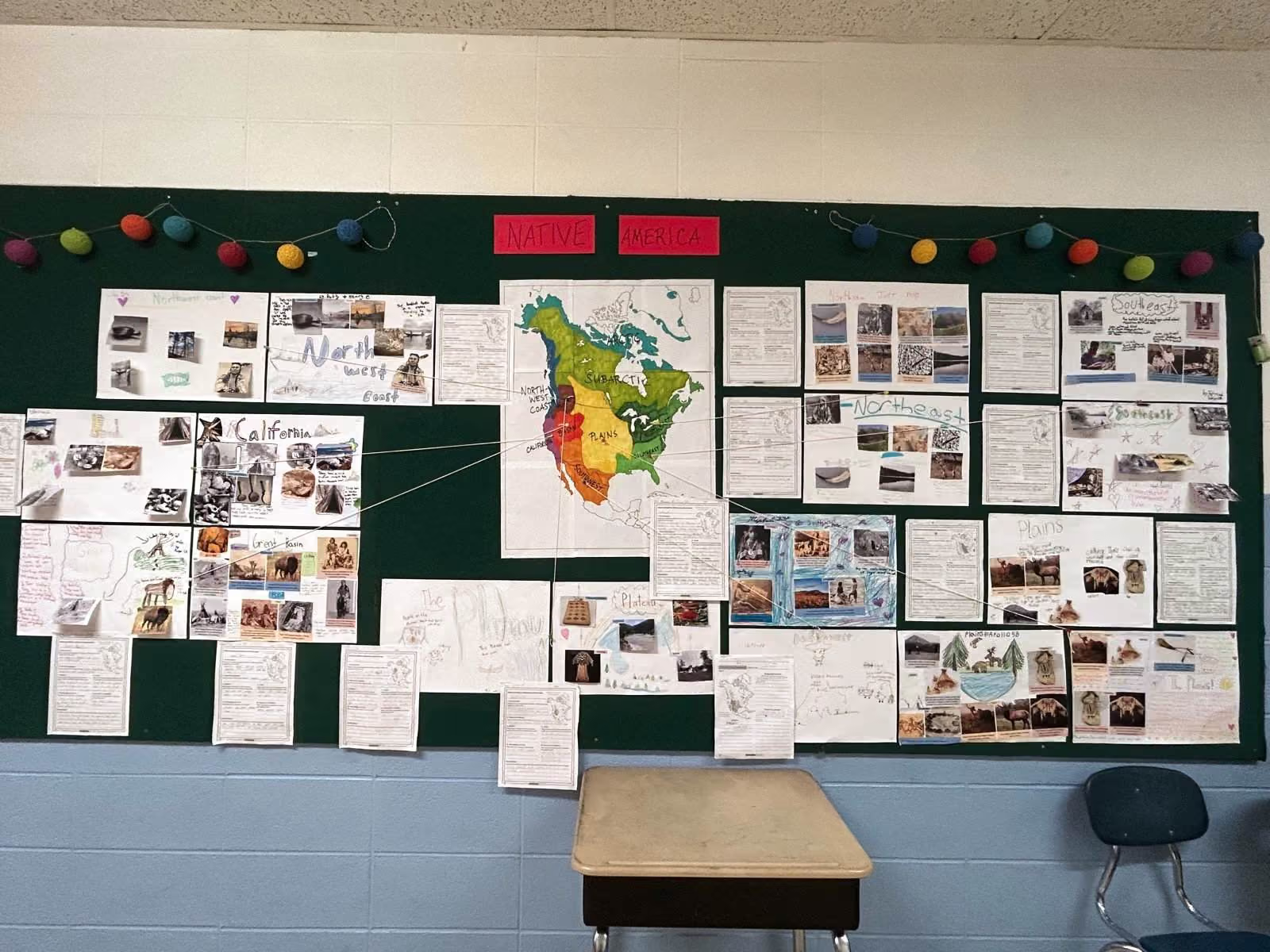
Native America inquiry wall
Native America
Students turned their research into large posters connected to each region on a hallway map that families explored during conferences.
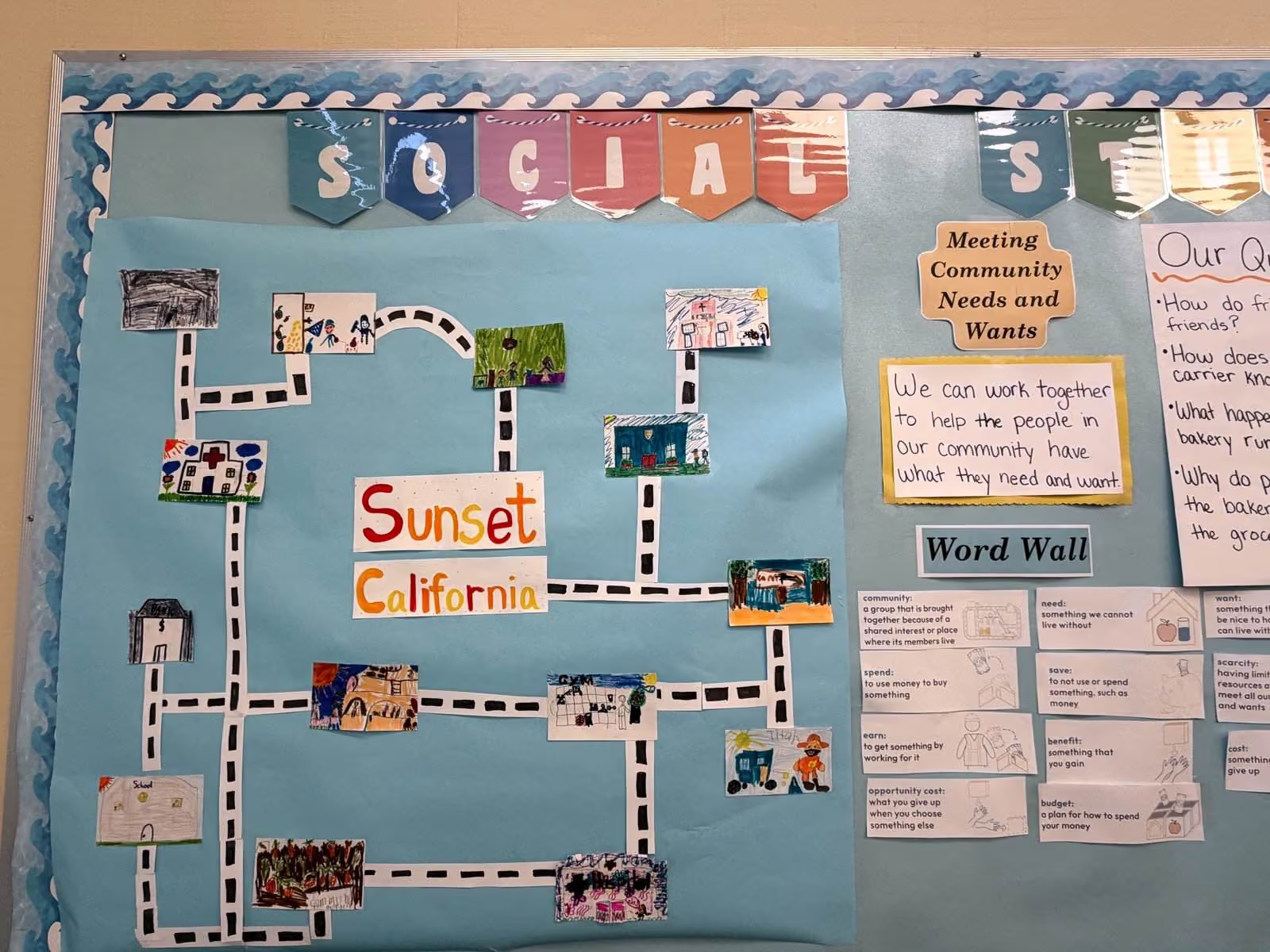
Mapping a community's needs and wants
Meeting Needs and Wants
Students built a class community called Sunset California and created a word splash connecting their vocabulary, with many placing scarcity at the center.
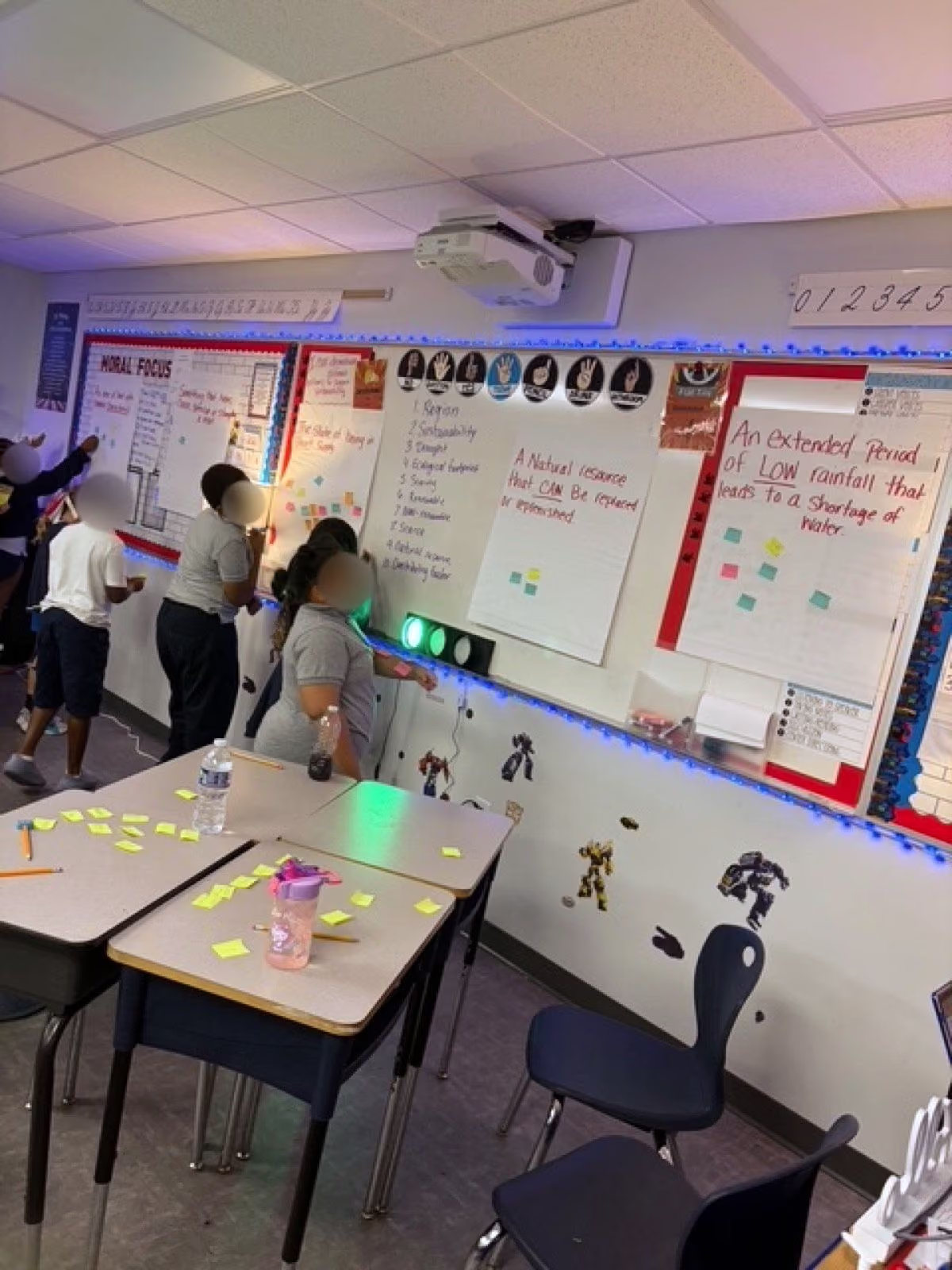
Vocabulary anchor chart challenge
Natural Resources of the U.S.
Students reviewed unit vocabulary by racing to place each term on the correct anchor chart.
Student Works
Explore examples from the Inquiry Work Gallery.
Click on a thumbnail below to expand and view more images.

This unit was paired with our Money unit in math and our character traits unit in Language arts. Parents came in to talk about their businesses and how they got to where they are. We ended our unit with a market day. Students made homemade goods, they advertised them by making a poster and a video to first grade. First grade came in and shopped using the money (fake) they earned throughout the semester.
Economic Choices
2nd Grade
Wall Display
This unit was paired with our Money unit in math and our character traits unit in Language arts. Parents came in to talk about their businesses and how they got to where they are. We ended our unit with a market day. Students made homemade goods, they advertised them by making a poster and a video to first grade. First grade came in and shopped using the money (fake) they earned throughout the semester.
Additional Info
Christine Crutchfield from Mount Pisgah Christian School: GA, 2nd Grade

Swansea Elementary third graders appreciated this project because it allowed them to recognize and write down their rights and obligations both at home and at school.
Rights and Responsibilities
3rd Grade
Wall Display


Swansea Elementary third graders appreciated this project because it allowed them to recognize and write down their rights and obligations both at home and at school.
Additional Info
Gloria Navarrete Rodriguez from dpsk12.net: CO, 3rd Grade

We have been working on our changing landscape for a while, but we are just in the middle of Module 3! I try to put up some samples of their work as we go along, as well as other resources we pick up throughout our time. Our town is building a new pedestrian bridge, so I took some pictures of that - it's a great example of how our landscape is modified by humans. We also connected to our science unit and studied water erosion for quite a while and how that can change our landscape. The students noticed on the bridge picture how they are using straw to stop the erosion. The paragraphs on Food and Farming was a collaborative write that we did together - students partner read the book and picked out vocabulary from one section that was meaningful. We put it all together to write a multi-paragraph compare and contrast essay! I love building our inquiry walls and hope the students find all sorts of connections to their everyday lives.
Our Changing Landscape
2nd Grade
Wall Display


We have been working on our changing landscape for a while, but we are just in the middle of Module 3! I try to put up some samples of their work as we go along, as well as other resources we pick up throughout our time. Our town is building a new pedestrian bridge, so I took some pictures of that - it's a great example of how our landscape is modified by humans. We also connected to our science unit and studied water erosion for quite a while and how that can change our landscape. The students noticed on the bridge picture how they are using straw to stop the erosion. The paragraphs on Food and Farming was a collaborative write that we did together - students partner read the book and picked out vocabulary from one section that was meaningful. We put it all together to write a multi-paragraph compare and contrast essay! I love building our inquiry walls and hope the students find all sorts of connections to their everyday lives.
Additional Info
Emily Smith from Sherwood School District 88J: OR, 2nd Grade

We are currently working on travel plans and can’t wait to add those to the colored papers above the inquiry wall!
Global Connections
3rd Grade
Wall Display

We are currently working on travel plans and can’t wait to add those to the colored papers above the inquiry wall!
Additional Info
Nicole Guptil from Lake Washington School District: WA, 3rd Grade

6th grade World History wrapped up their module 1 and 2 learning with the creation of a children's book. The students worked in pairs to demonstrate the advancements, adaptions, innovations, and overall life of early humans. The students had two class periods (1 hr periods) to work on it, and then two weeks to finish on their own. They had a blast creating their projects. Many utilized Canva, as well as Google Slides, and some students hand drew their books.
The Human Story
6th Grade
Other
6th grade World History wrapped up their module 1 and 2 learning with the creation of a children's book. The students worked in pairs to demonstrate the advancements, adaptions, innovations, and overall life of early humans. The students had two class periods (1 hr periods) to work on it, and then two weeks to finish on their own. They had a blast creating their projects. Many utilized Canva, as well as Google Slides, and some students hand drew their books.
Additional Info
from , 6th Grade

Anchor chart from the "Kids Take Action" lesson featuring our own Changemaker, Carmelo. He wasn’t inspired he was proud to share how he is already taking steps toward addressing an issue that impacts him by raising money for celiac research and one day a treatment or even a cure! He is the artist, leader, organizer, and Colette’s of his own brand because all of his profits are donated to his cause. Anchor chart featuring the class’s questions at the beginning of the lesson. Amazing questions like Why did they start slavery? How can kids take steps toward equality and justice? Why are people still racist and not treating people equally? Will we ever end racism? Can kids hold small marches to protest?
The 20th Century Civil Rights Movement
3rd Grade
Anchor Chart

Anchor chart from the "Kids Take Action" lesson featuring our own Changemaker, Carmelo. He wasn’t inspired he was proud to share how he is already taking steps toward addressing an issue that impacts him by raising money for celiac research and one day a treatment or even a cure! He is the artist, leader, organizer, and Colette’s of his own brand because all of his profits are donated to his cause. Anchor chart featuring the class’s questions at the beginning of the lesson. Amazing questions like Why did they start slavery? How can kids take steps toward equality and justice? Why are people still racist and not treating people equally? Will we ever end racism? Can kids hold small marches to protest?
Additional Info
Maria-Elena Diaz from Alameda Unified School District: CA, 3rd Grade

I allowed each group in my class to pick their own inquiry product. While they needed support and guidance, they were completely capable of designing and constructing an Inquiry Challenge Statement without any limitations. Their projects were amazing and the learning was deep and joyful.
Global Connections
3rd Grade
Inquiry Challenge Statement
I allowed each group in my class to pick their own inquiry product. While they needed support and guidance, they were completely capable of designing and constructing an Inquiry Challenge Statement without any limitations. Their projects were amazing and the learning was deep and joyful.
Additional Info
Maria-Elena Diaz from Alameda Unified School District: CA, 3rd Grade

This work is after finishing up our module on California Regions.
Our State and Region
4th Grade
Handout


This work is after finishing up our module on California Regions.
Additional Info
Olga Velasco from Rio School District: CA, 4th Grade

Students collaborated in groups of 4 to conduct research and find information to describe their region. The next step in this process was an oral presentation of each region. Each group condensed its section onto a notecard (per person) and delivered the content verbally while the remaining students took notes. They had to choose the most salient information and speak slowly and clearly so that the rest of the students could take notes. They put a lot of thought into which elements gave the best picture of their region.
Native America
5th Grade
Handout


Students collaborated in groups of 4 to conduct research and find information to describe their region. The next step in this process was an oral presentation of each region. Each group condensed its section onto a notecard (per person) and delivered the content verbally while the remaining students took notes. They had to choose the most salient information and speak slowly and clearly so that the rest of the students could take notes. They put a lot of thought into which elements gave the best picture of their region.
Additional Info
Jennifer O'Toole from Rio School District: CA, 5th Grade

This is my first year teaching with InquirED and I am enjoying the lessons! My class likes and looks forward to Social Sciences time and is using the vocabulary throughout the day. This picture is our wall from the beginning of the year with some of the read-aloud books posted, maps with post-its to show where some of our students' families come from, and vocabulary for reference. The wall has grown since then with new vocab and new work posted, but the general feeling is the same. I'm looking forward to new units of study!
Families Near and Far
1st Grade
Wall Display

This is my first year teaching with InquirED and I am enjoying the lessons! My class likes and looks forward to Social Sciences time and is using the vocabulary throughout the day. This picture is our wall from the beginning of the year with some of the read-aloud books posted, maps with post-its to show where some of our students' families come from, and vocabulary for reference. The wall has grown since then with new vocab and new work posted, but the general feeling is the same. I'm looking forward to new units of study!
Additional Info
from , 1st Grade

My students explore the ways they are connected to distant places through the movement of people, goods, and ideas.
Global Connections
3rd Grade
Wall Display

My students explore the ways they are connected to distant places through the movement of people, goods, and ideas.
Additional Info
Gloria Navarrete Rodriguez from dpsk12.net: CO, 3rd Grade

My students are learning SO much! They are engaged and making connections to the content with real-life situations and content.
Our Special Location
2nd Grade
Handout
My students are learning SO much! They are engaged and making connections to the content with real-life situations and content.
Additional Info
from , 2nd Grade
No results found.
There are no results with this criteria. Try changing your search.