Teachers across the country shared photos of students in the thick of inquiry — asking questions, testing ideas, and discovering something new. Here are the classrooms that stood out.


These classrooms were picked for their creativity, depth of questioning, and student engagement.

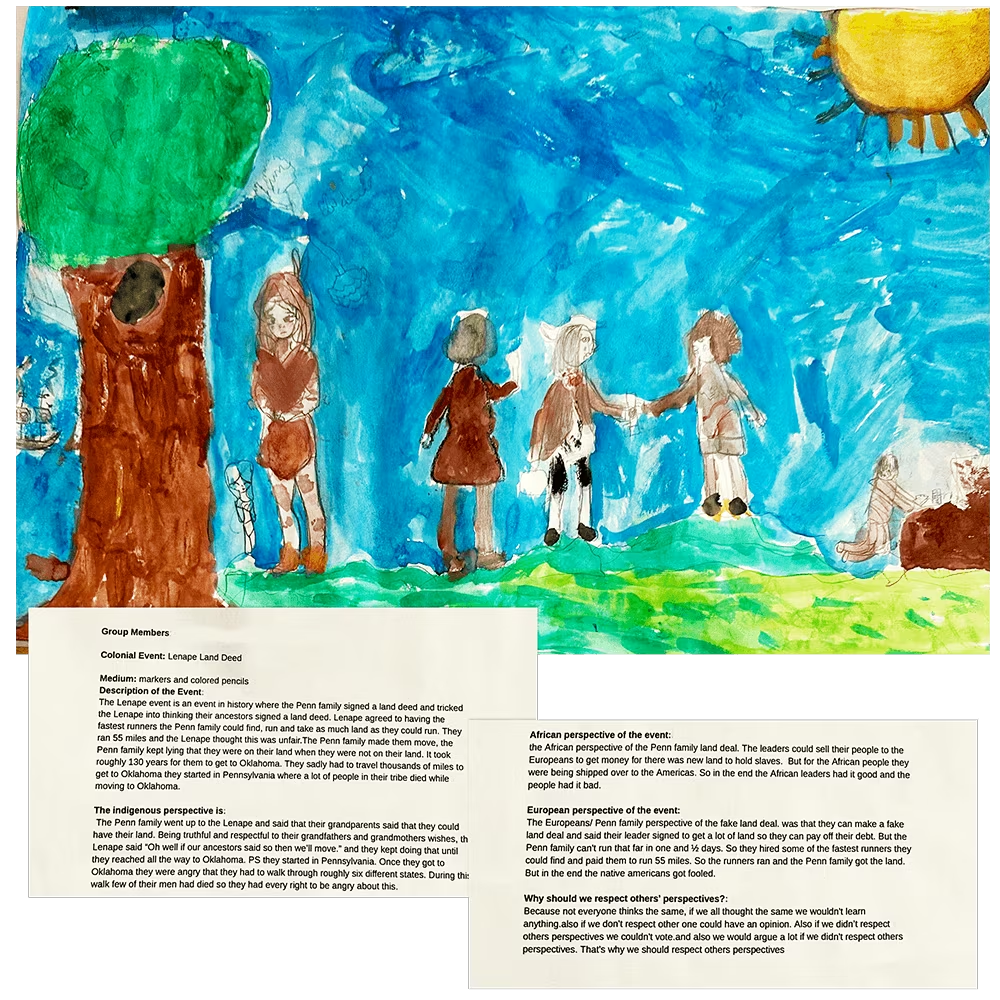
This end of unit project for the Colonial America unit asks students to explore an important event or aspect of colonial life. Students chose a topic and created an illustration in the medium of their choice. They also wrote a caption that explains the event from the perspectives of the different groups they studied, helping them consider how people experienced the same moment in different ways.

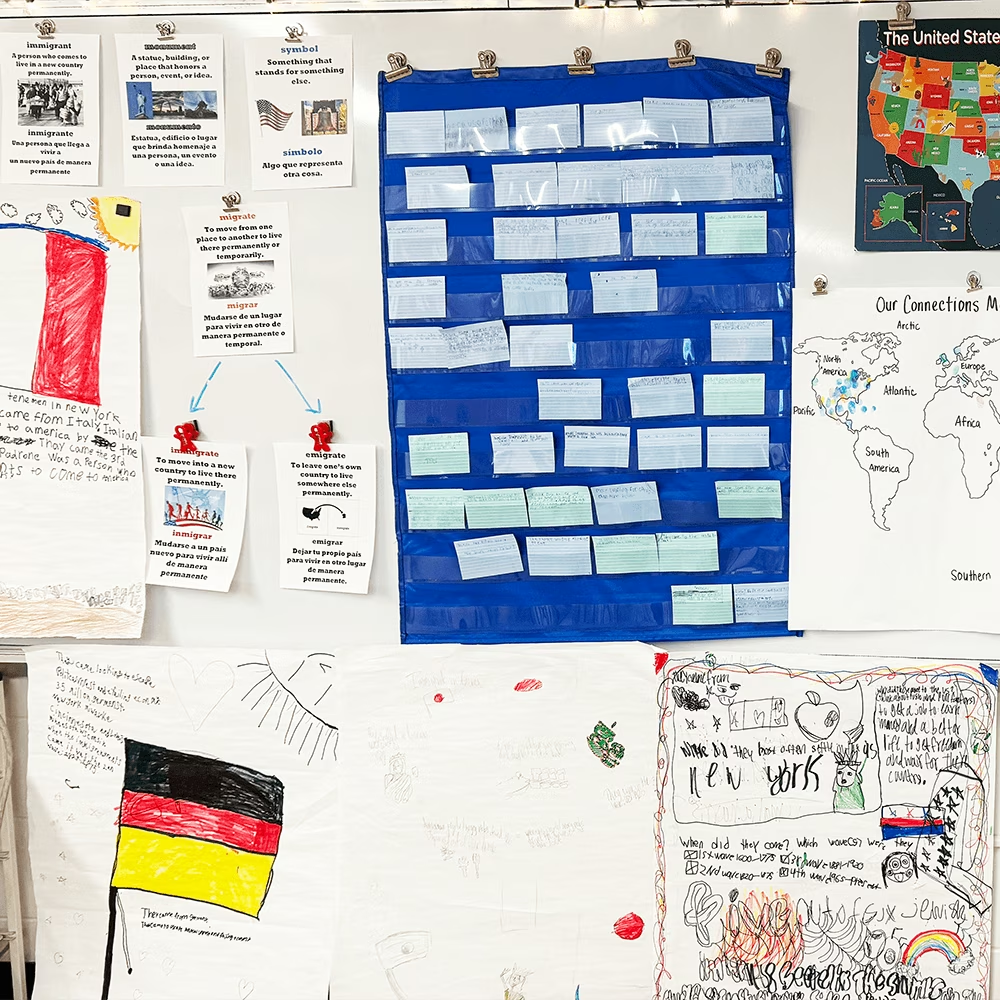
After reading about different waves of immigration, third grade students created posters about a specific immigrant group and presented what they learned to the class. The activity sparked discussion about push and pull factors and helped students understand the challenges immigrants faced before and after arriving in the United States.

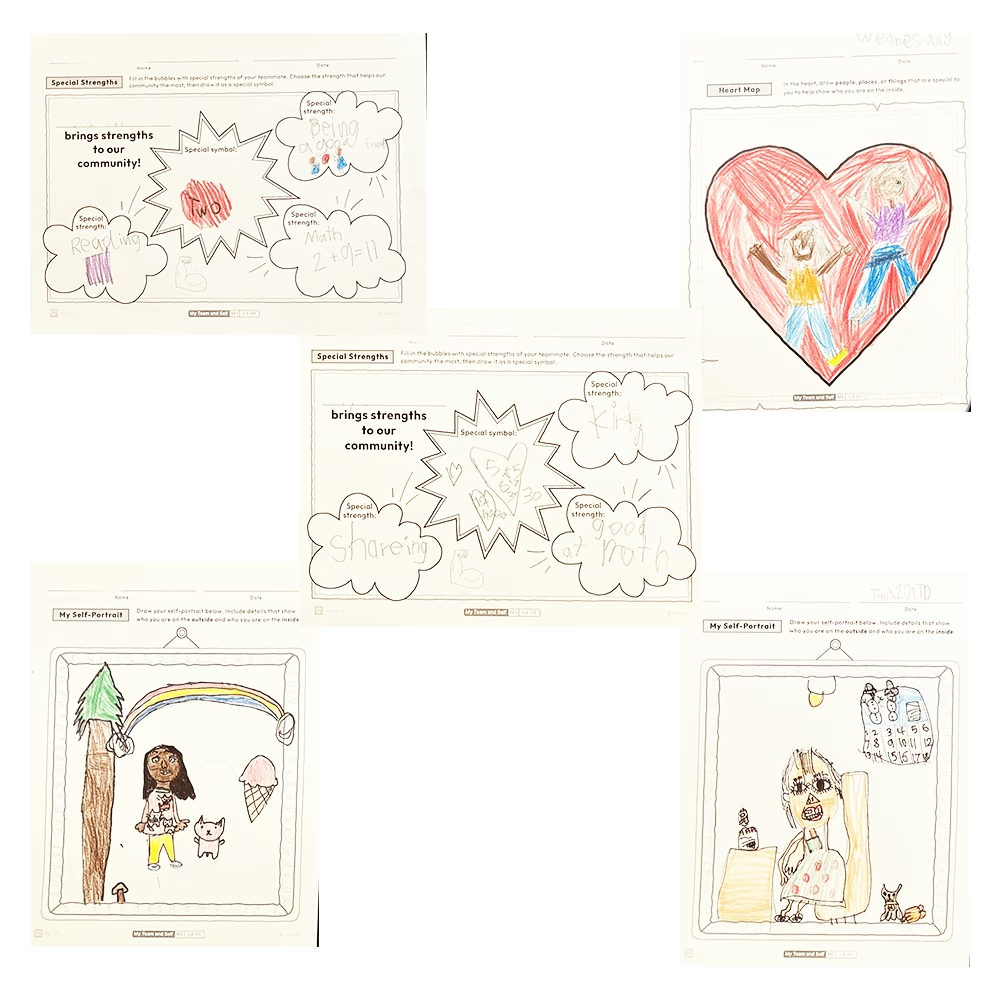
In the My Team and Self inquiry unit, students reflected on their own strengths and then identified the strengths of their classmates. They shared and celebrated these qualities as a class while learning how each person contributes to a team. The experience helped students understand the importance of teamwork and appreciating one another.
Every student who participated in Inquiry Week 2026 deserves recognition. Download the official participation certificate to celebrate their curiosity and hard work.
Download certificate (PDF)Click on a thumbnail below to expand and view more images.

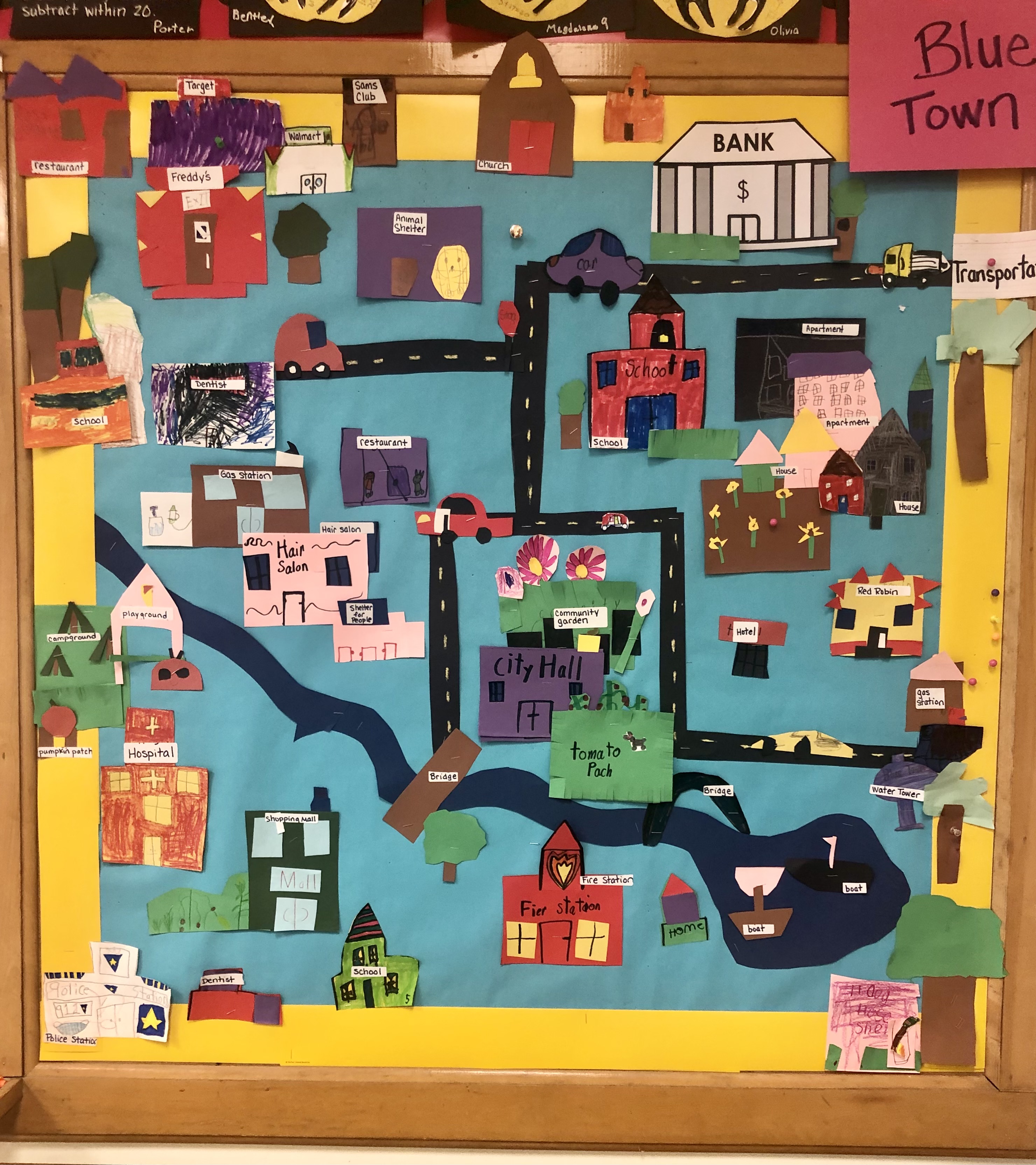
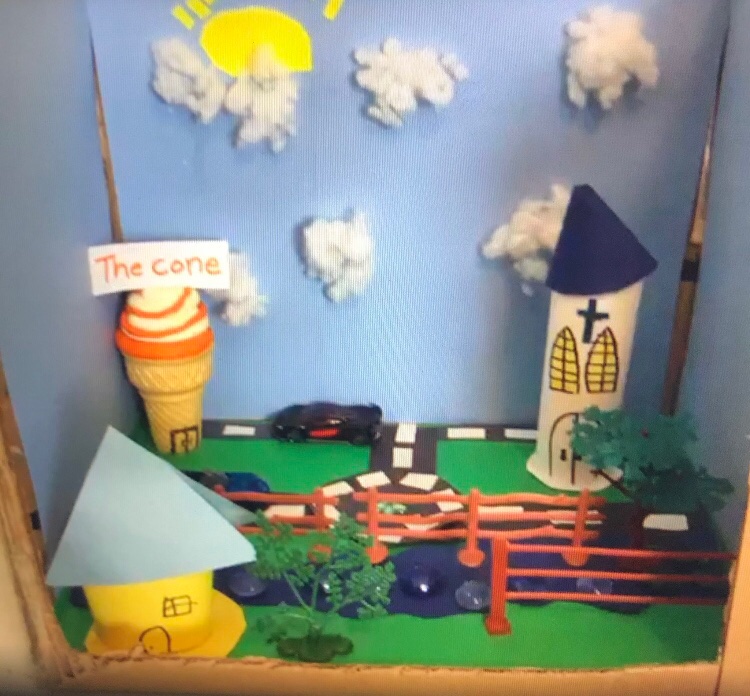
This is the end result of our unit-long display. Students were so engaged with this project and excited each time we added something new. One time we were talking about communities in ELA, specifically landfills, and a student raised her hand to tell me that we needed to figure out how to deal with garbage in Blue Town. This sparked a deeper conversation and a new addition to our town. The student were using our display to make connections with our fictional town and real world. It was awesome!
Meeting Needs and Wants
2nd Grade
Inquiry-Long Display
This is the end result of our unit-long display. Students were so engaged with this project and excited each time we added something new. One time we were talking about communities in ELA, specifically landfills, and a student raised her hand to tell me that we needed to figure out how to deal with garbage in Blue Town. This sparked a deeper conversation and a new addition to our town. The student were using our display to make connections with our fictional town and real world. It was awesome!
Additional Info
Nikki Bechen from Dubuque Community School District: IA, 2nd Grade

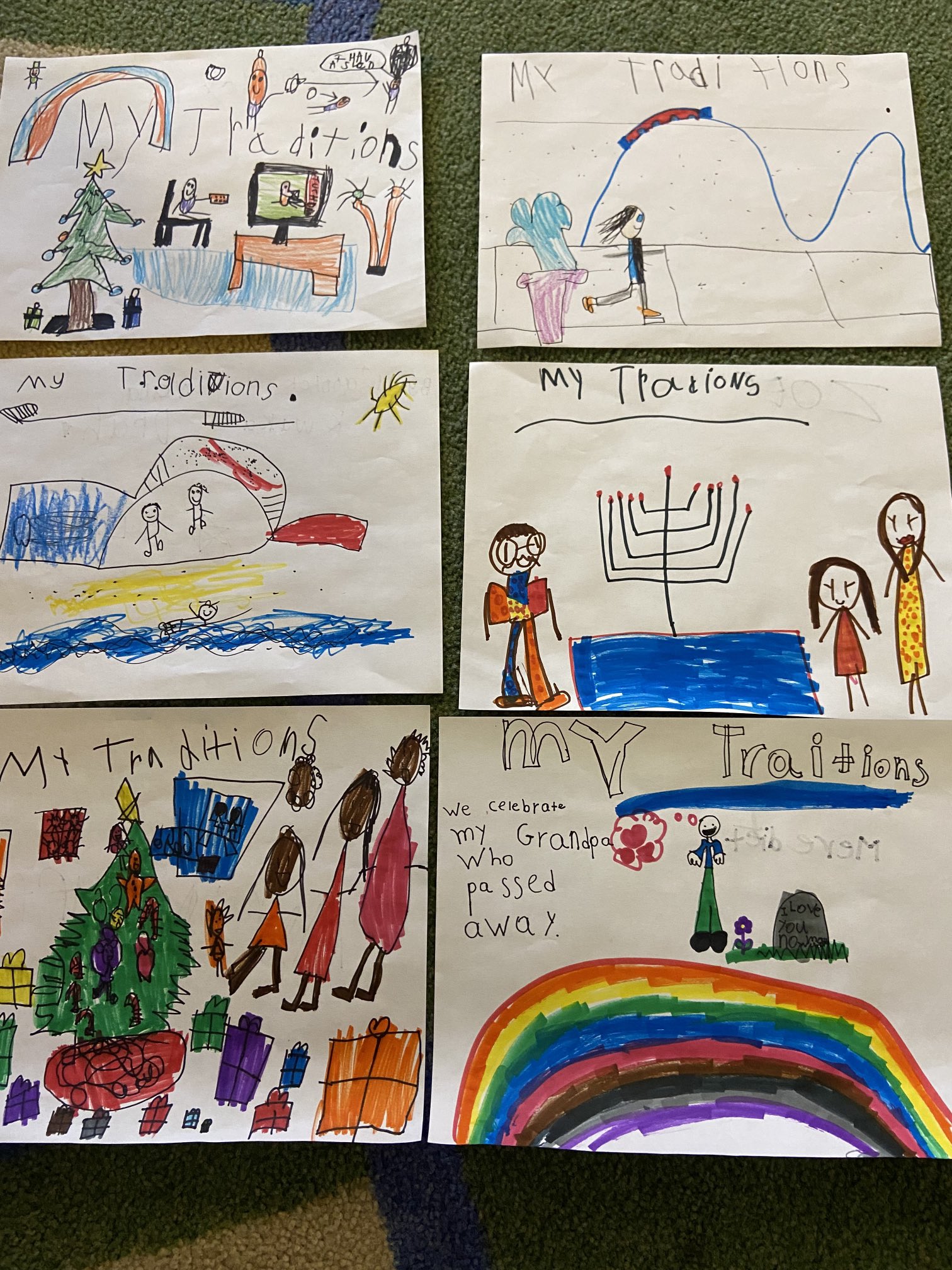
Celebrating our different family traditions
Families Near and Far
1st Grade
Wall Display

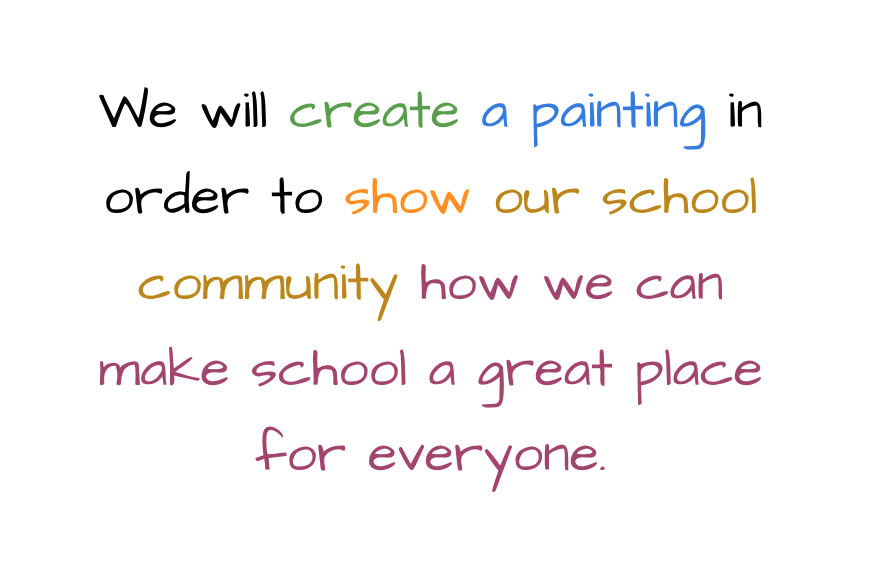
Since this was our first inquiry product, and kindergarten, we kept is somewhat simple. I gave them a few ideas and they discussed at their table groups which one(s) they liked best. We narrowed it down to a few, then voted. Painting a picture won. Then we worked on building the Inquiry Product Statement from there. They did such a great job! After they finished their paintings, we shared them, then hung them up with the statement.
Navigating School
Kindergarten
Final Product
Since this was our first inquiry product, and kindergarten, we kept is somewhat simple. I gave them a few ideas and they discussed at their table groups which one(s) they liked best. We narrowed it down to a few, then voted. Painting a picture won. Then we worked on building the Inquiry Product Statement from there. They did such a great job! After they finished their paintings, we shared them, then hung them up with the statement.
Additional Info
Lori Schieltz from Iowa City Community School District: IA, Kindergarten

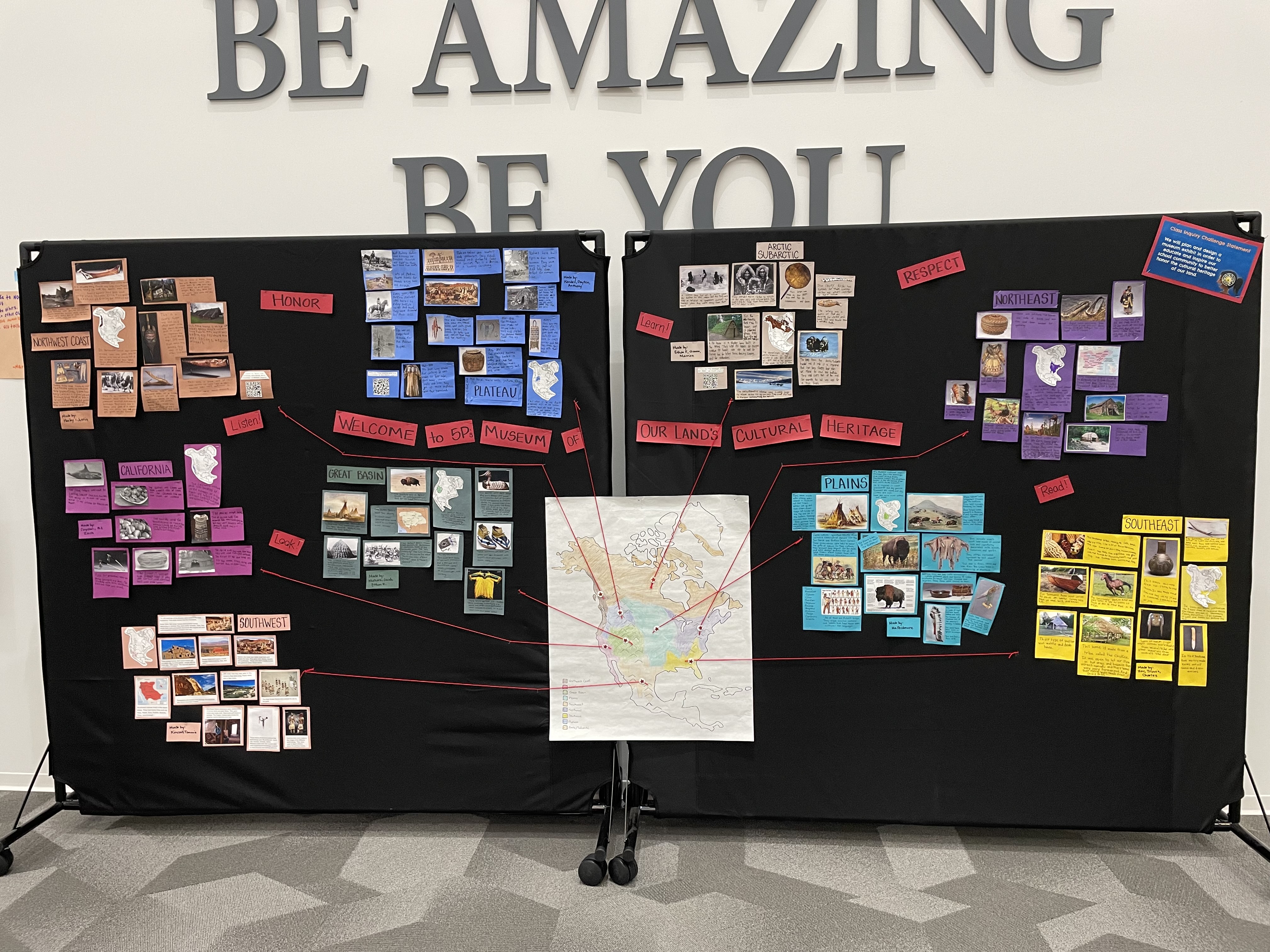
Student "docents" presented and answered questions for classes in our K-5 building who signed up to visit our "museum" in the LRC. It was on display for 2 weeks. They worked for quite a while planning what to put in their portion to inspire others to honor our heritage, then created a prototype, before their final displays were made.
Native America
5th Grade
Final Product
Student "docents" presented and answered questions for classes in our K-5 building who signed up to visit our "museum" in the LRC. It was on display for 2 weeks. They worked for quite a while planning what to put in their portion to inspire others to honor our heritage, then created a prototype, before their final displays were made.
Additional Info
Elizabeth Pridmore from Lisle Community Unit School District 202: IL, 5th Grade

These are first graders' awesome end of the unit projects! They had SO much fun teaching others about our special location, our Lakota community!
Our Special Location
1st Grade
Final Product

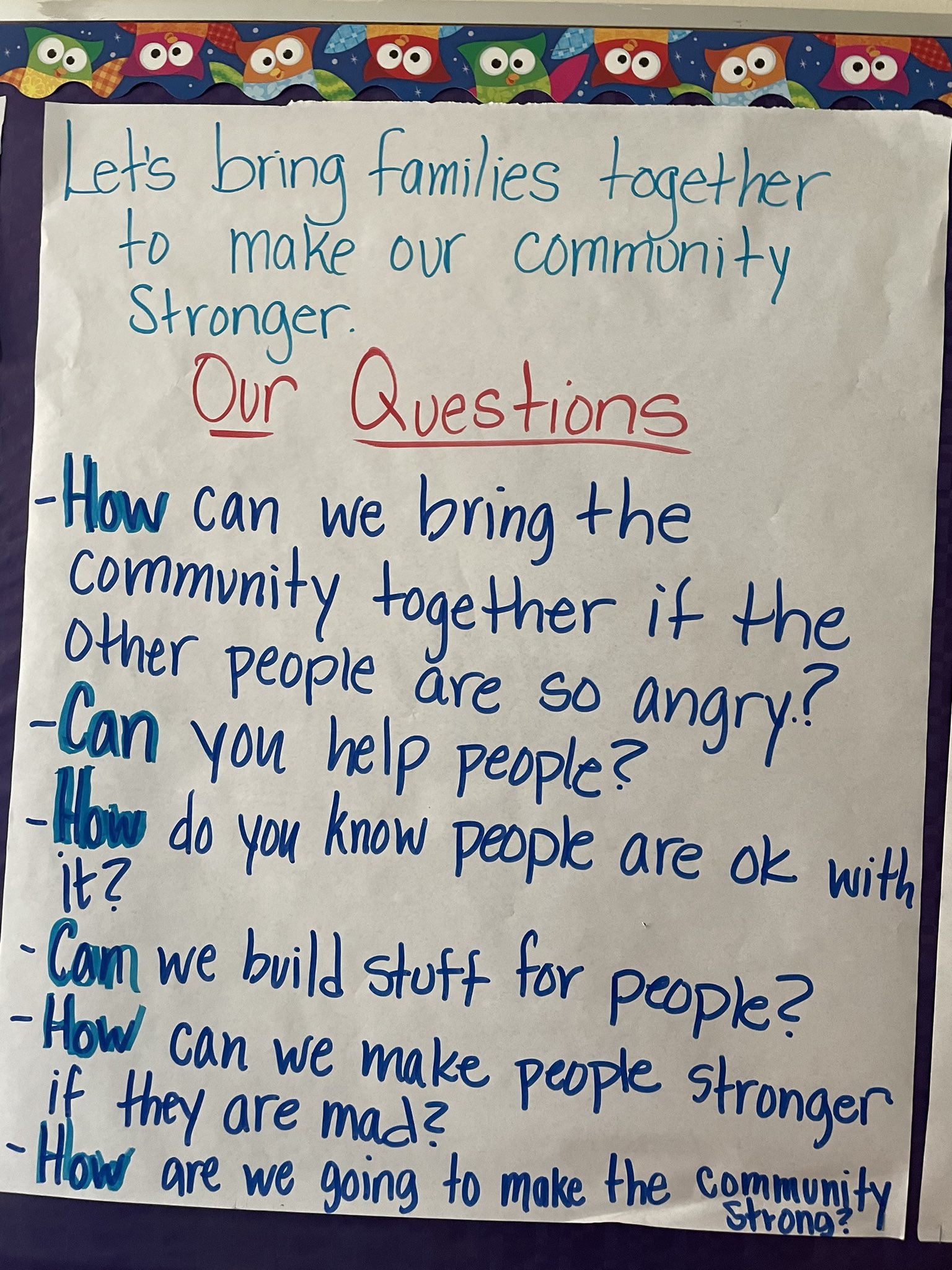
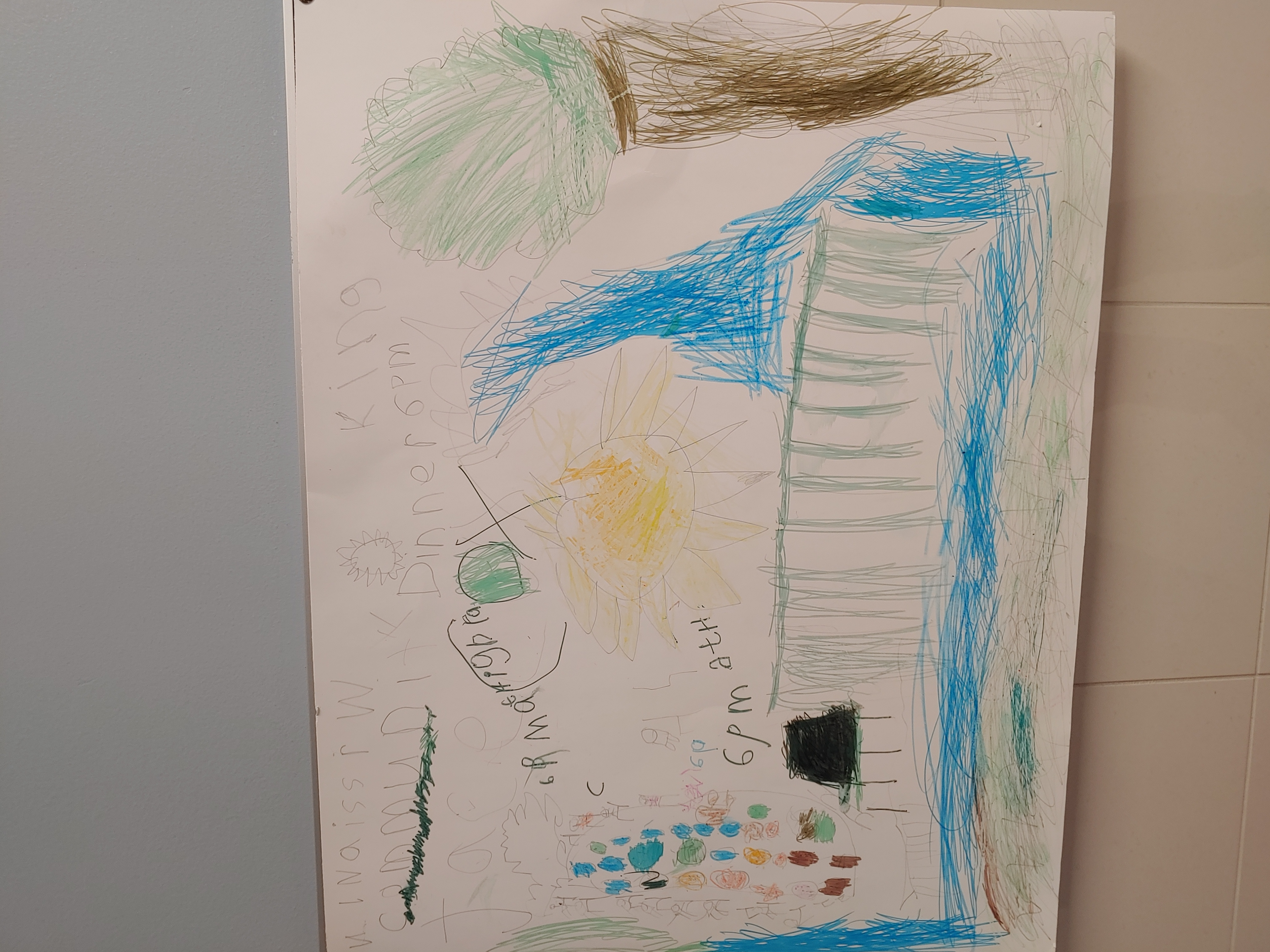
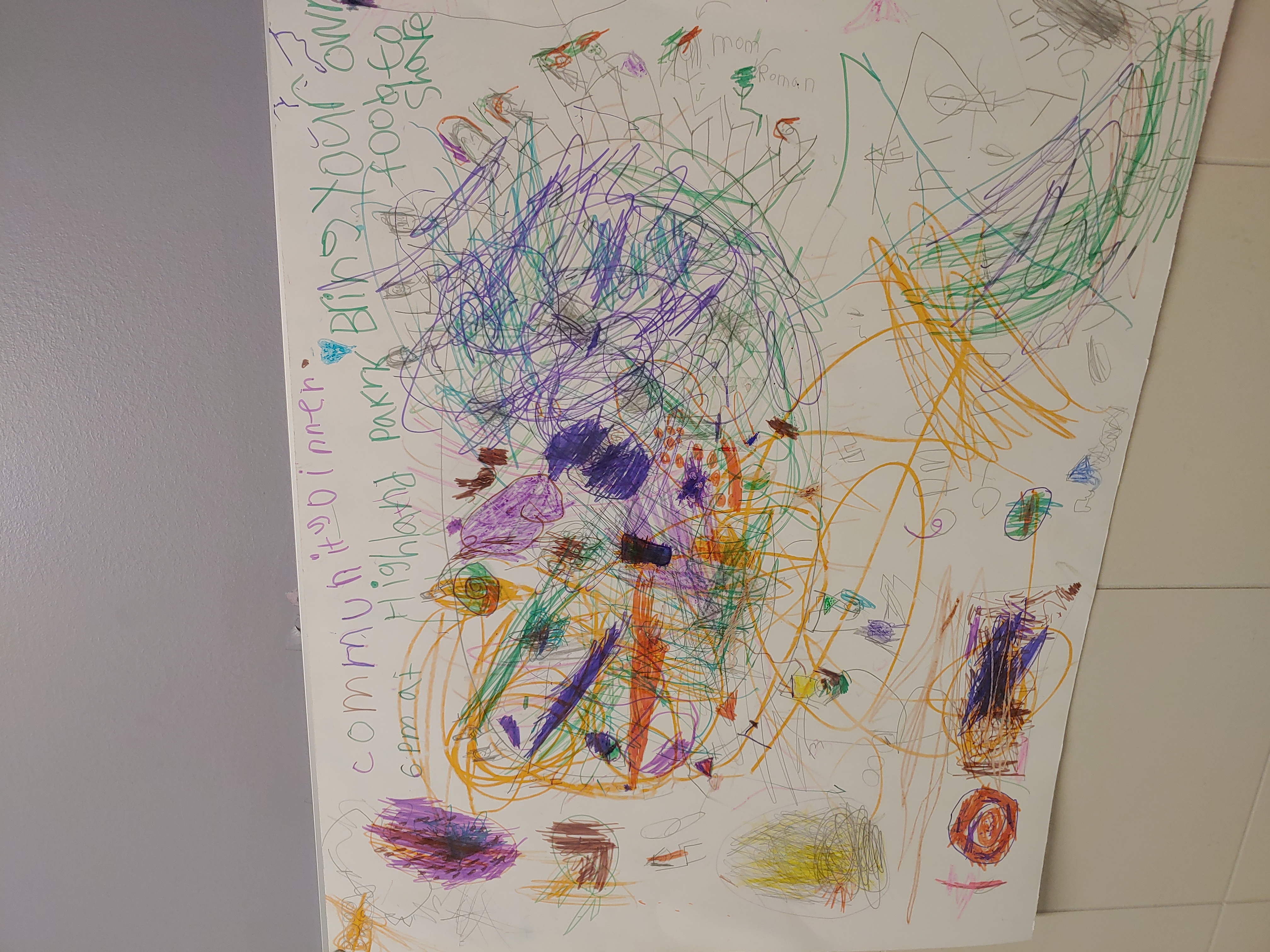
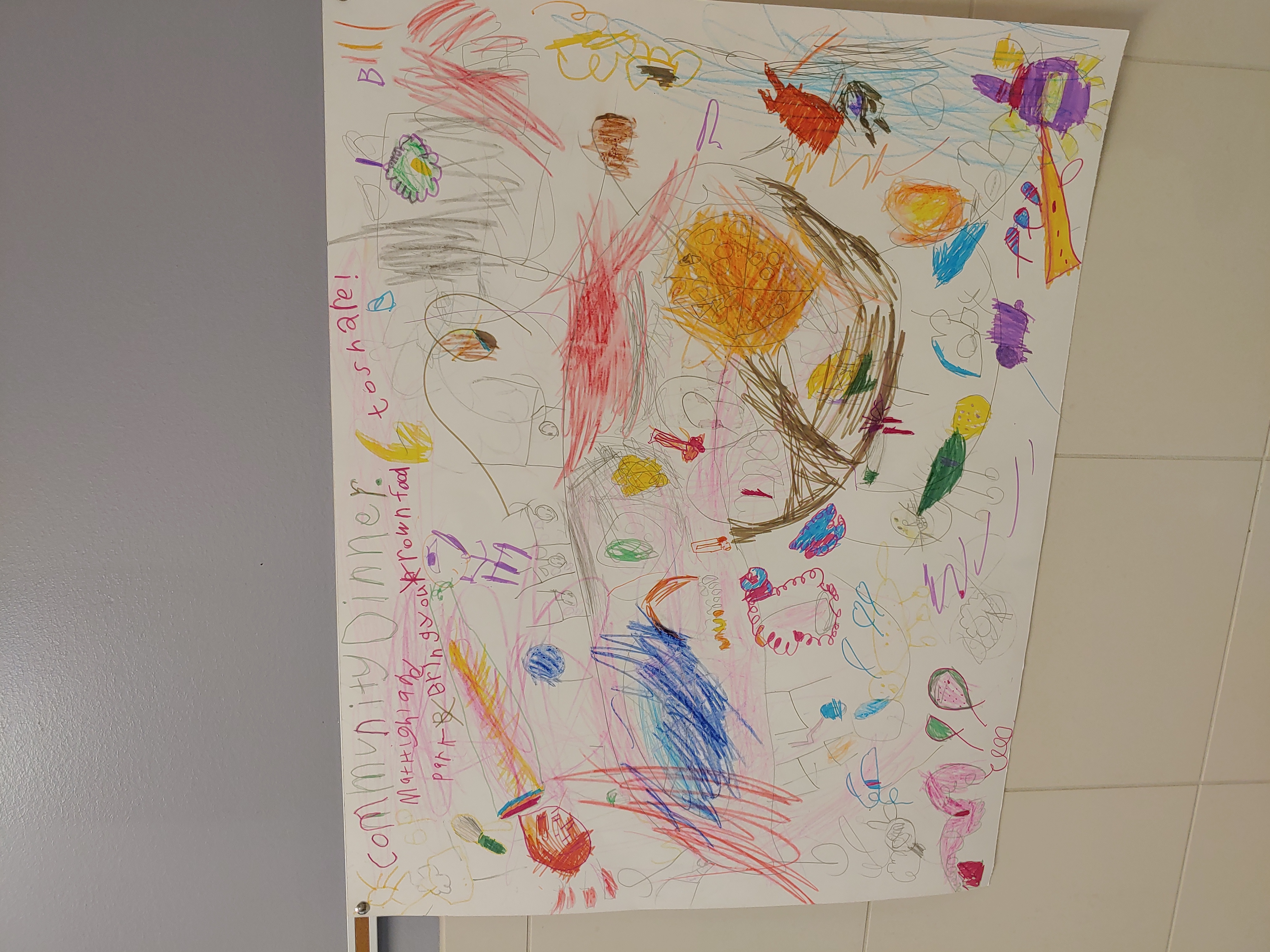
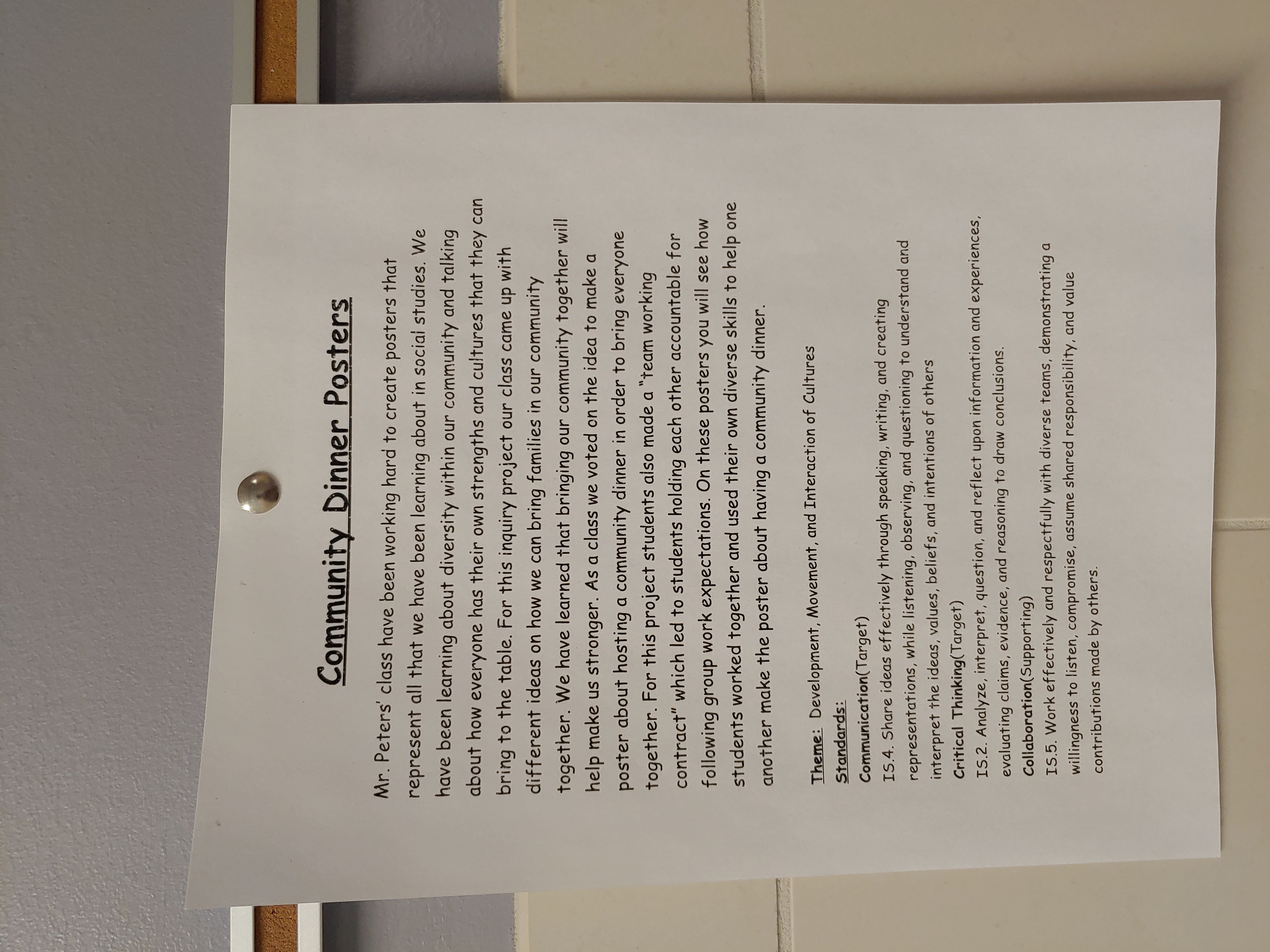
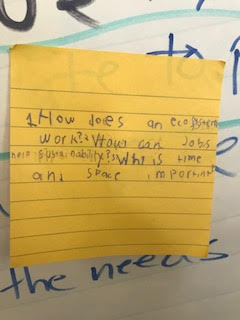
QFT on how we can bring families together to make our community stronger
Families Near and Far
1st Grade
Investigation Questions Anchor Chart

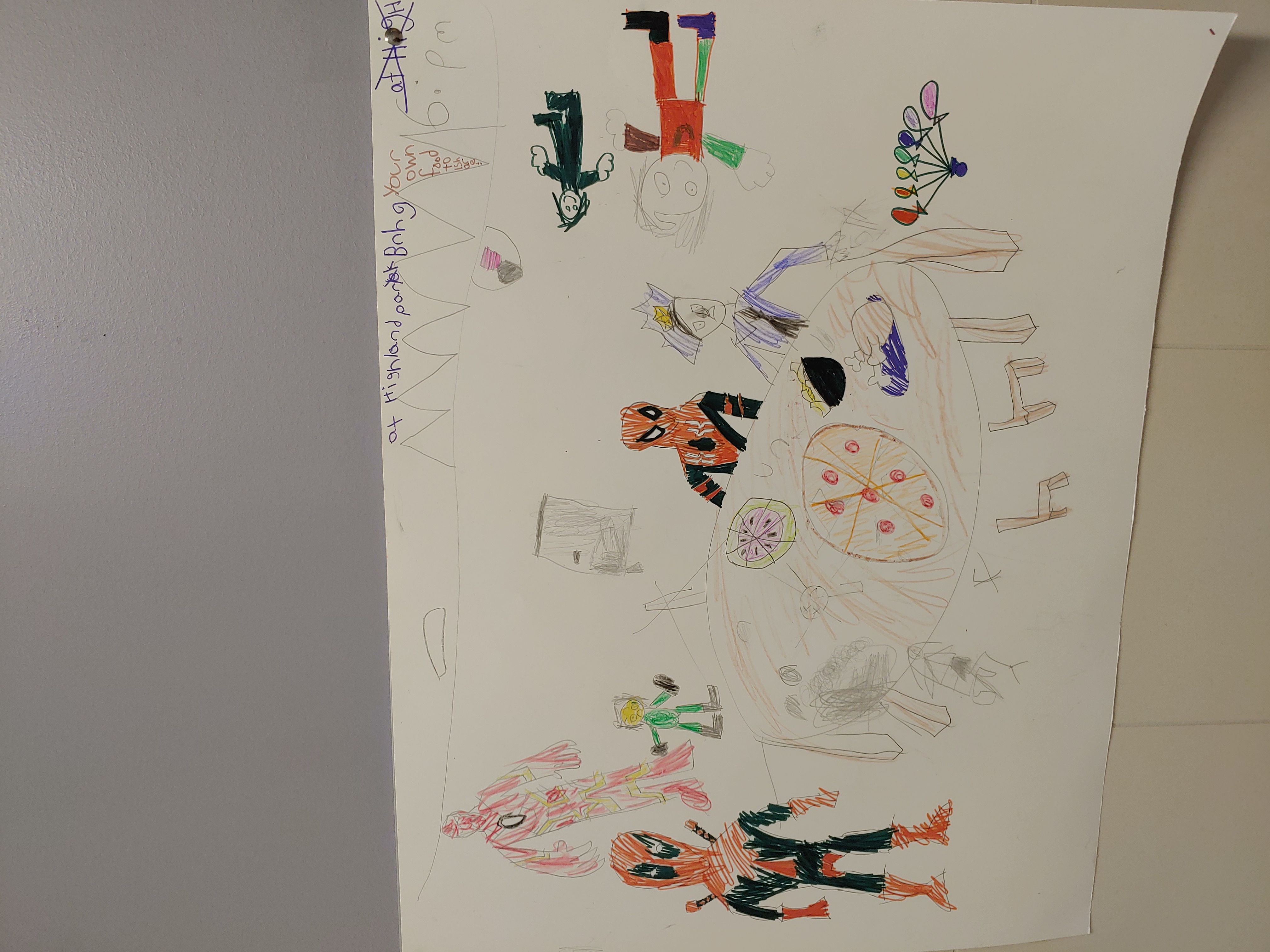
Students really enjoyed working together to create something meaningful.
Families Near and Far
1st Grade
Final Product

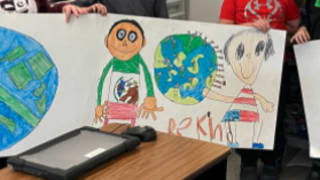
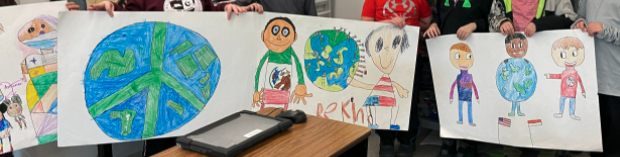
The students were insightful and open-minded during our unit. They learned all about global connections and how we can be global citizens. It has been an enlightening unit for the kids to see how connected we are to the people and places around the world. A student of mine is learning to read in Mandarin so he read a version of The Hungry Caterpillar, I read it in English, and our ESL teacher read it in Spanish. After we interviewed his mom who was pulled to America from Taiwan after falling in love many years ago. We learned so much! It was a great example of how globalization and cultural diffusion is alive and thriving. It was an incredible experience to have them see how everything we have been learning is a part of who we are as humans. We did a mural for our final product this time and they came up with the idea of a variety of people holding hands to show unity around the world. This is before it was hung up in the school.
Global Connections
3rd Grade
Final Product
The students were insightful and open-minded during our unit. They learned all about global connections and how we can be global citizens. It has been an enlightening unit for the kids to see how connected we are to the people and places around the world. A student of mine is learning to read in Mandarin so he read a version of The Hungry Caterpillar, I read it in English, and our ESL teacher read it in Spanish. After we interviewed his mom who was pulled to America from Taiwan after falling in love many years ago. We learned so much! It was a great example of how globalization and cultural diffusion is alive and thriving. It was an incredible experience to have them see how everything we have been learning is a part of who we are as humans. We did a mural for our final product this time and they came up with the idea of a variety of people holding hands to show unity around the world. This is before it was hung up in the school.
Additional Info
Rachel Dawson from Lisle Community Unit School District 202: IL, 3rd Grade

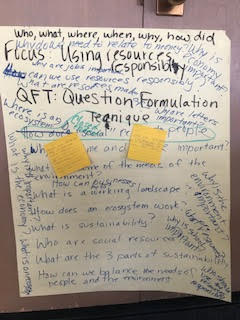
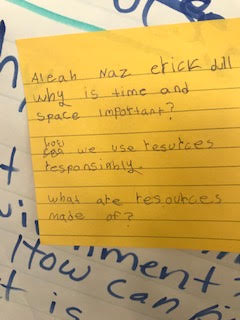
QFT on using resources responsibly
Natural Resources of the U.S.
4th Grade
Investigation Questions Anchor Chart

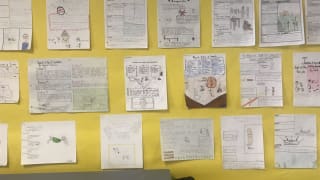
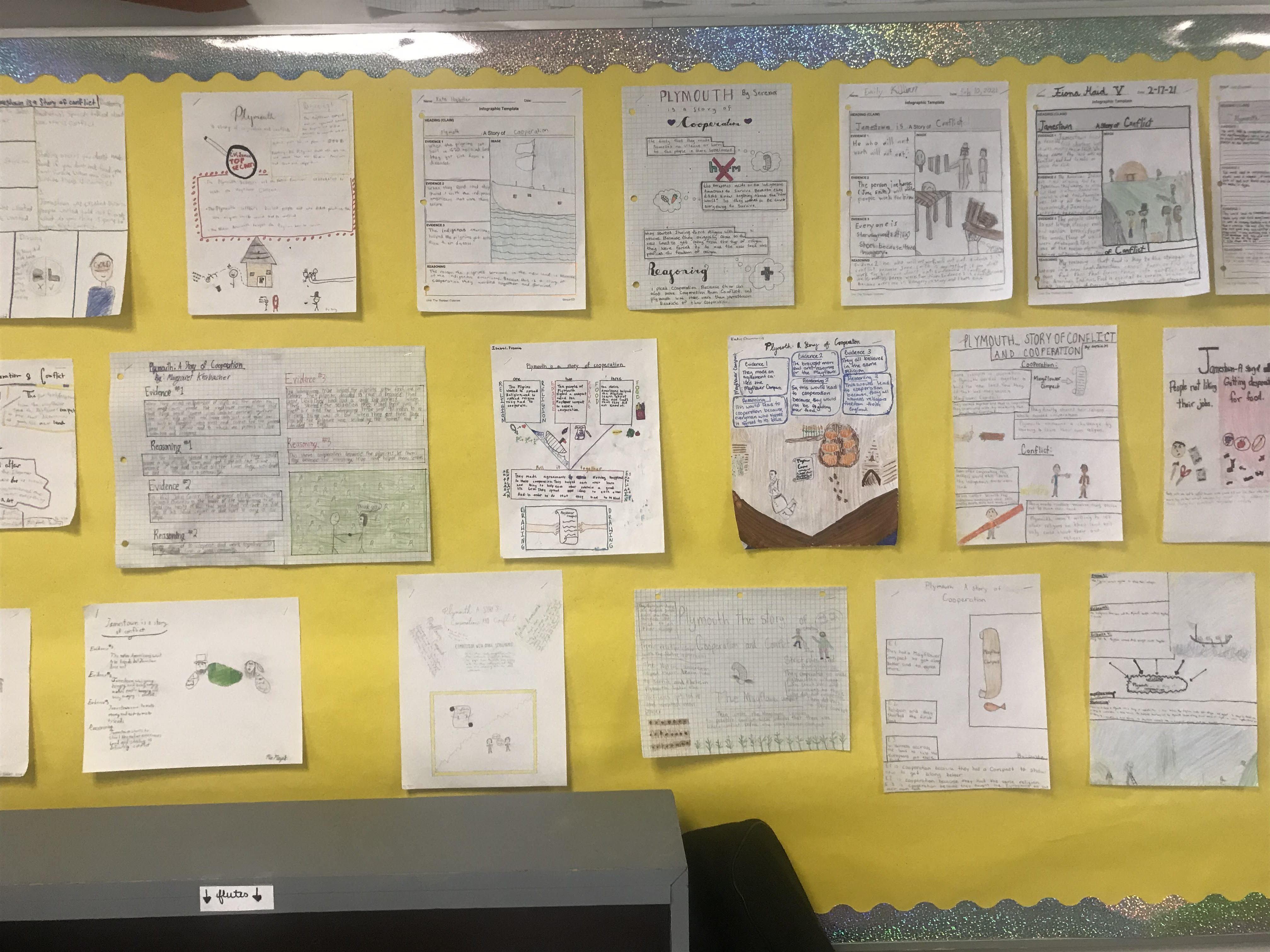
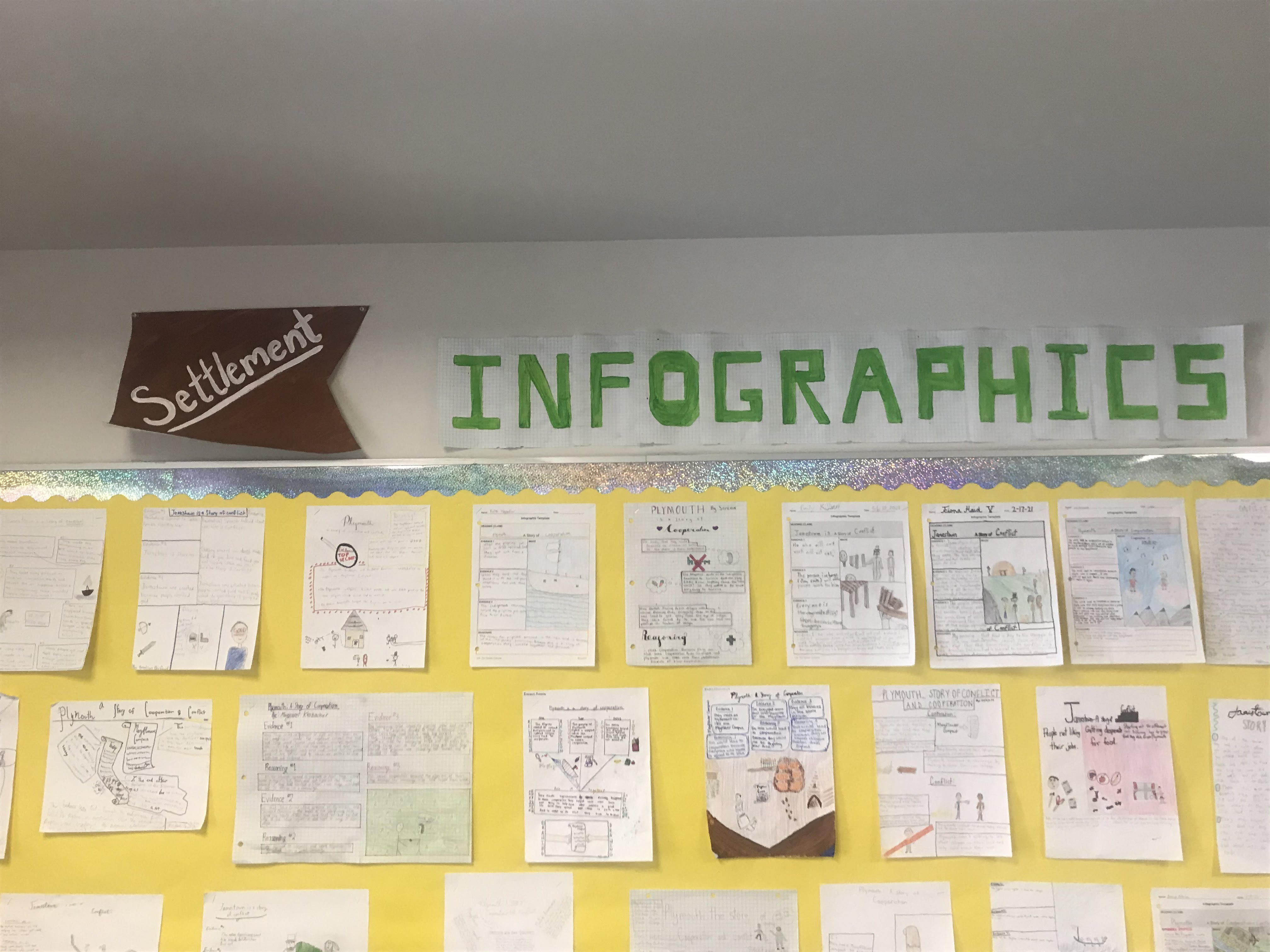
During our Thirteen Colonies unit, students explored the question: How can facing the complexities of America's past help us to meet the challenges in the present? In module 3, we tried to find answers to this question by analyzing how cooperation and conflict affected the survival of a community. After learning the challenges and success of the Jamestown vs. Plymouth colony, students collected evidence to help them form a claim whether these settlements were stories of cooperation/conflict. Students exhibited their thoughts in the form of an infographic; they were required to have a claim, three pieces of evidence, and an image that illustrated their claim. Students were encouraged to design an infographic that would "pop", or be interesting to look at.
The Colonial Era
5th Grade
Wall Display
During our Thirteen Colonies unit, students explored the question: How can facing the complexities of America's past help us to meet the challenges in the present? In module 3, we tried to find answers to this question by analyzing how cooperation and conflict affected the survival of a community. After learning the challenges and success of the Jamestown vs. Plymouth colony, students collected evidence to help them form a claim whether these settlements were stories of cooperation/conflict. Students exhibited their thoughts in the form of an infographic; they were required to have a claim, three pieces of evidence, and an image that illustrated their claim. Students were encouraged to design an infographic that would "pop", or be interesting to look at.
Additional Info
Betsy Gugle from Columbus School for Girls: OH, 5th Grade
There are no results with this criteria. Try changing your search.