
Celebrating inquiry in every classroom
Teachers across the country shared photos of students in the thick of inquiry — asking questions, testing ideas, and discovering something new. Here are the classrooms that stood out.
Outstanding inquiry across every grade
These classrooms were picked for their creativity, depth of questioning, and student engagement.
The Colonial Era
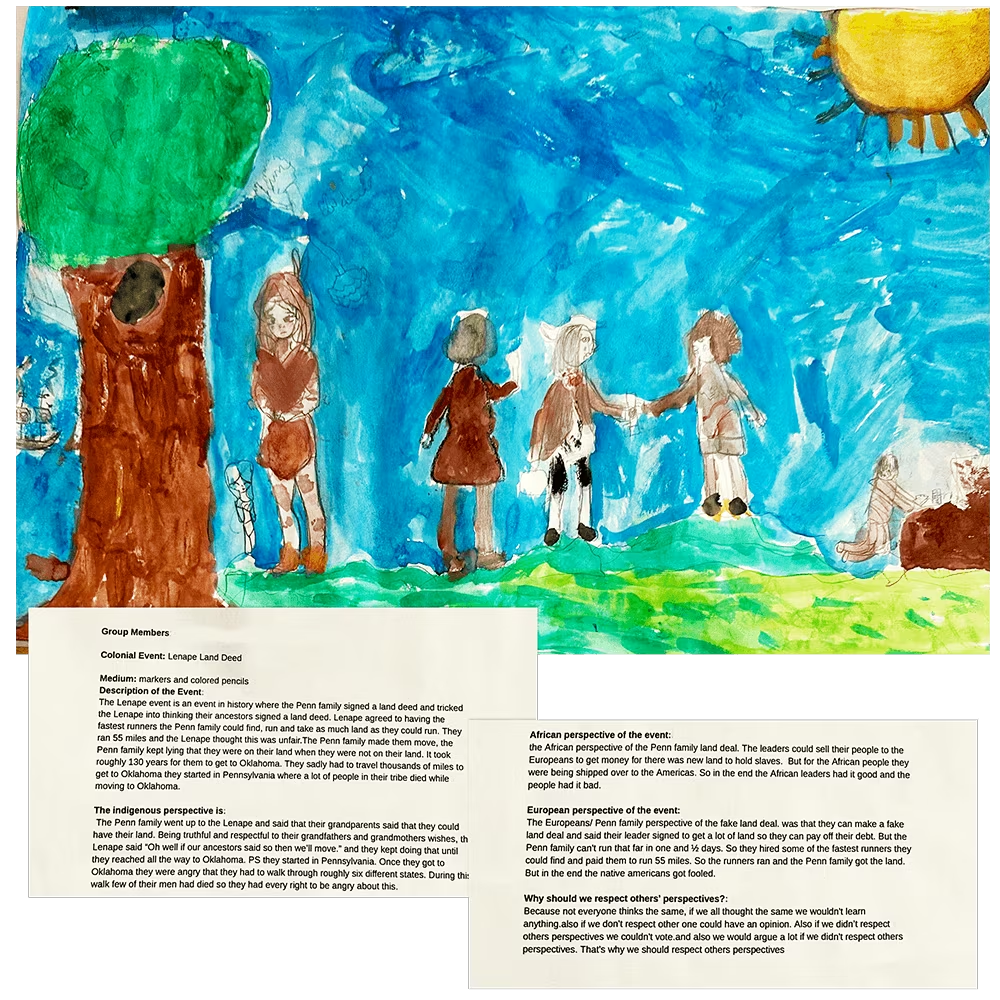
This end of unit project for the Colonial America unit asks students to explore an important event or aspect of colonial life. Students chose a topic and created an illustration in the medium of their choice. They also wrote a caption that explains the event from the perspectives of the different groups they studied, helping them consider how people experienced the same moment in different ways.
Migration & Movement
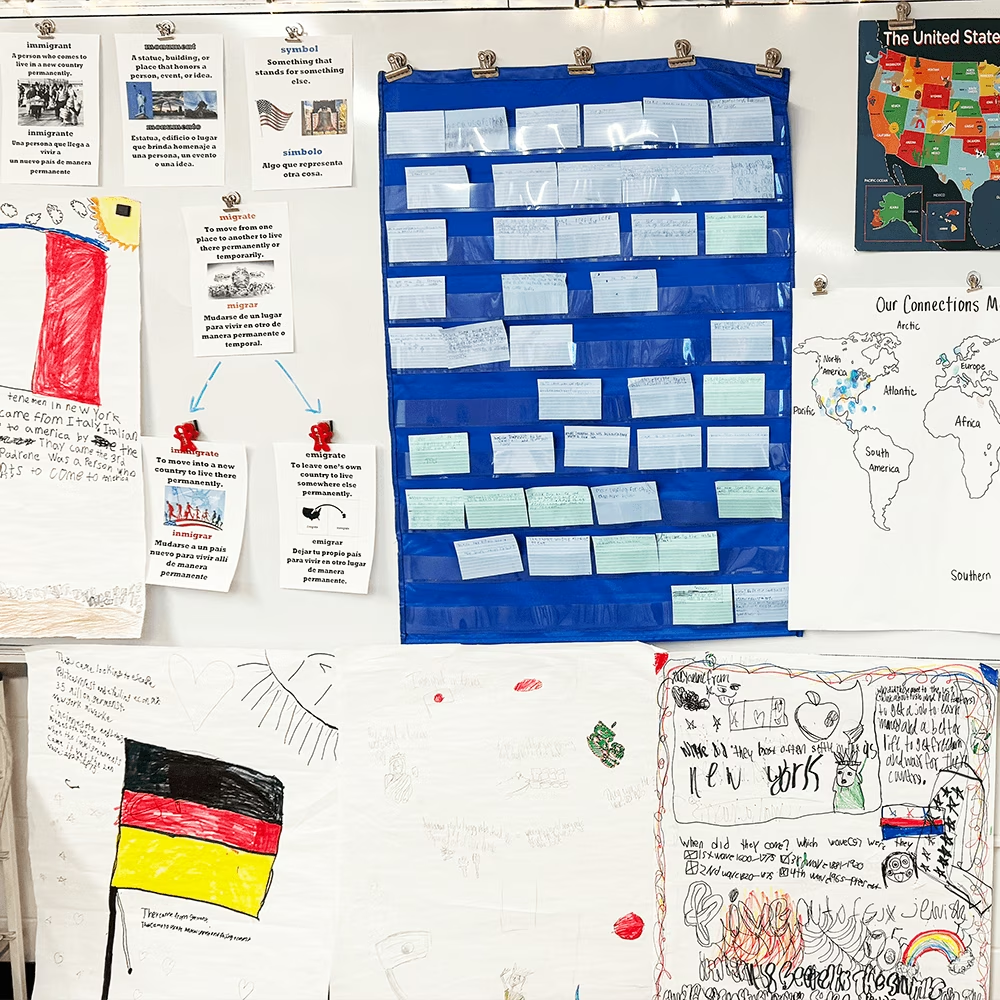
After reading about different waves of immigration, third grade students created posters about a specific immigrant group and presented what they learned to the class. The activity sparked discussion about push and pull factors and helped students understand the challenges immigrants faced before and after arriving in the United States.
My Team & Self
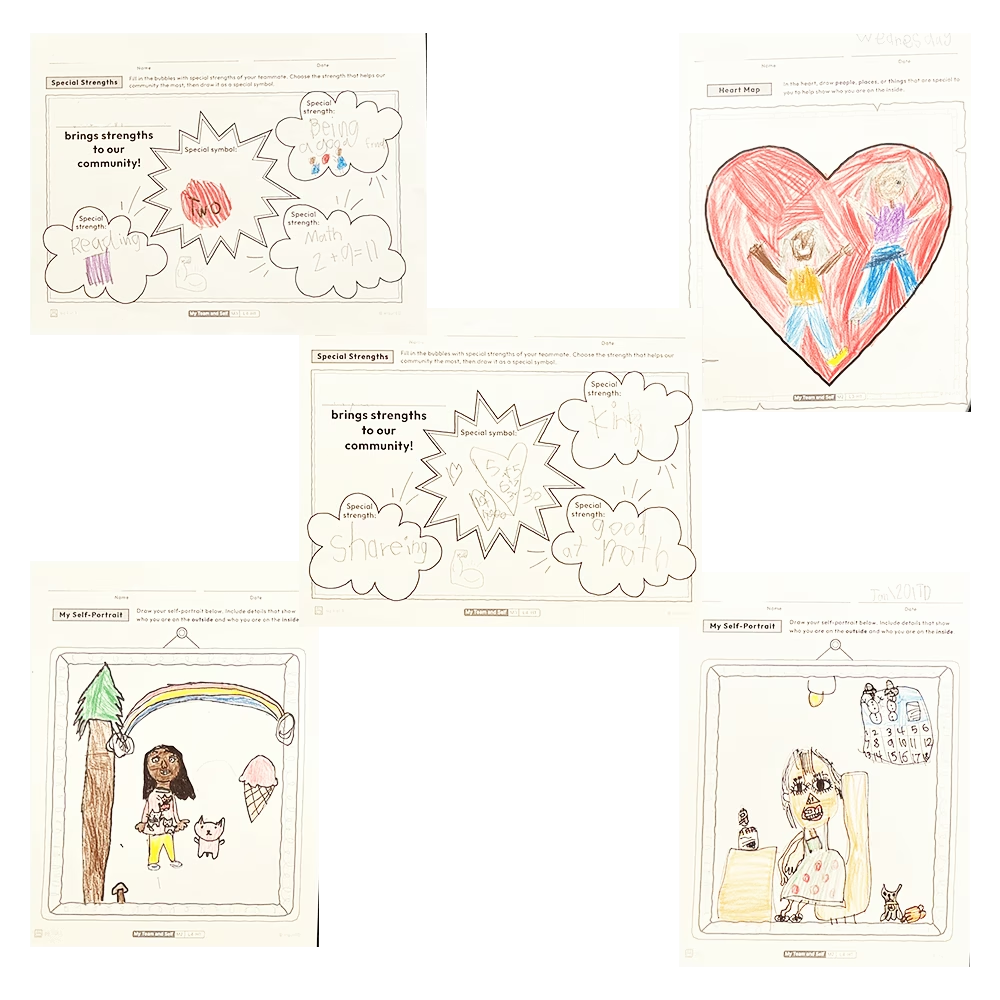
In the My Team and Self inquiry unit, students reflected on their own strengths and then identified the strengths of their classmates. They shared and celebrated these qualities as a class while learning how each person contributes to a team. The experience helped students understand the importance of teamwork and appreciating one another.
Download your certificate
Every student who participated in Inquiry Week 2026 deserves recognition. Download the official participation certificate to celebrate their curiosity and hard work.
Download certificate (PDF)Student Works
Explore examples from the Inquiry Work Gallery.
Click on a thumbnail below to expand and view more images.

Using the Inquiry process, students decided to make a cookbook using a family recipe that represented their cultural background. Students cooked the dish at home; many students took pictures of themselves preparing it and included it in the cookbook. Cookbooks were shared with students and their families.
Global Connections
3rd Grade
Final Product


.png)
Using the Inquiry process, students decided to make a cookbook using a family recipe that represented their cultural background. Students cooked the dish at home; many students took pictures of themselves preparing it and included it in the cookbook. Cookbooks were shared with students and their families.
Additional Info
Barbara Mastin from Deerfield Public Schools District 109: IL, 3rd Grade
Our State and Region
4th Grade
Final Product
Additional Info
Molly Mancinelli from Lake Washington School District: WA, 4th Grade
Students who created this project investigated the State of Illinois and the various landmarks that they felt were relevant to its history. They created a timeline, as well, incorporating events in the country's past that were important to Illinois, as well as resources and indigenous peoples that were a part of our past, present, and future.
Our State and Region
4th Grade
Final Product
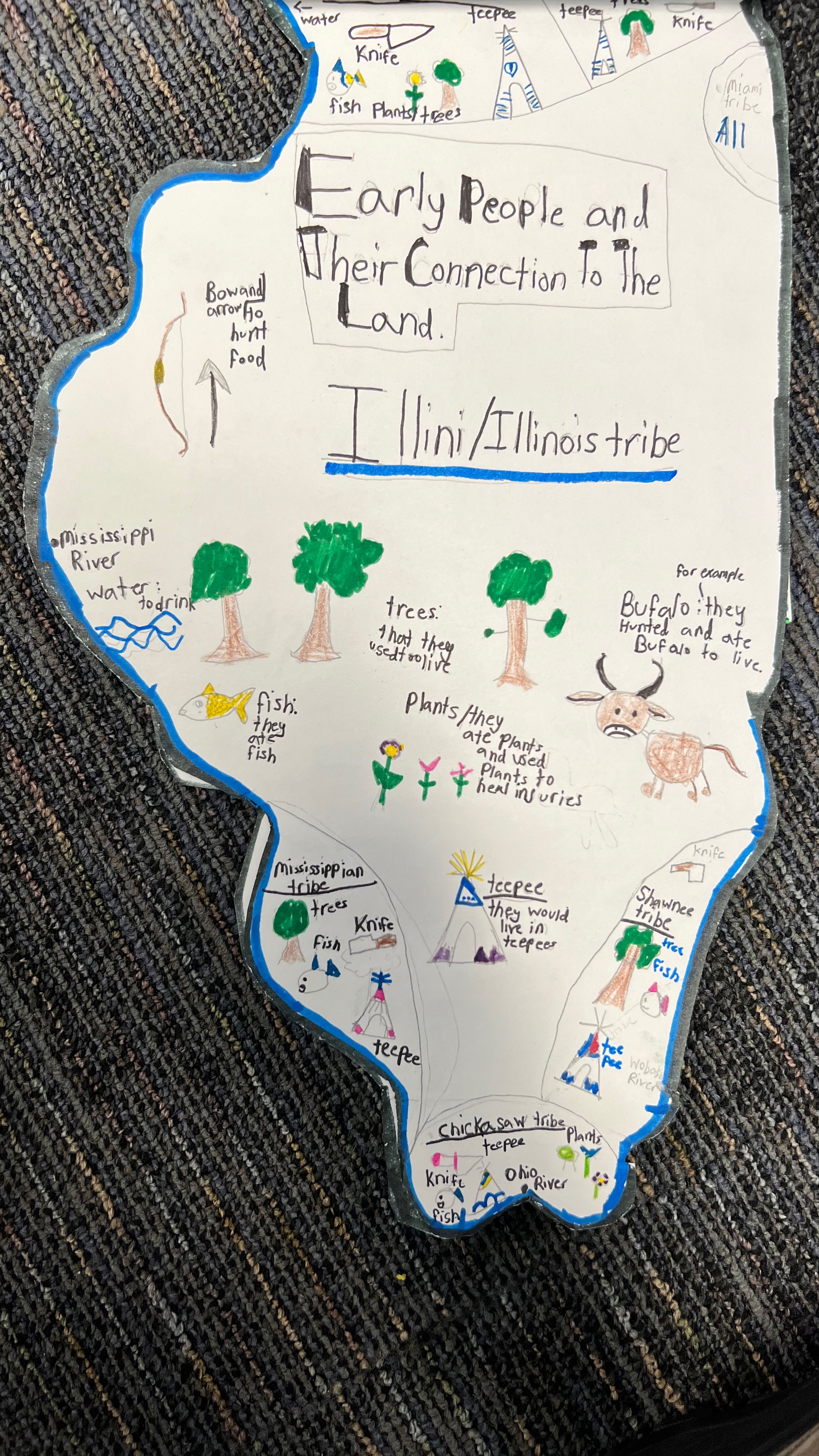
Students who created this project investigated the State of Illinois and the various landmarks that they felt were relevant to its history. They created a timeline, as well, incorporating events in the country's past that were important to Illinois, as well as resources and indigenous peoples that were a part of our past, present, and future.
Additional Info
Jason Pazol from Kildeer Countryside Community Consolidated School District 96: IL, 4th Grade
This mural was inspired by a group project we completed in the beginning of the year. We reflected on our work and recreated a mural to show how we worked as individuals to create a product as a team.
My Team and Self
Kindergarten
Final Product
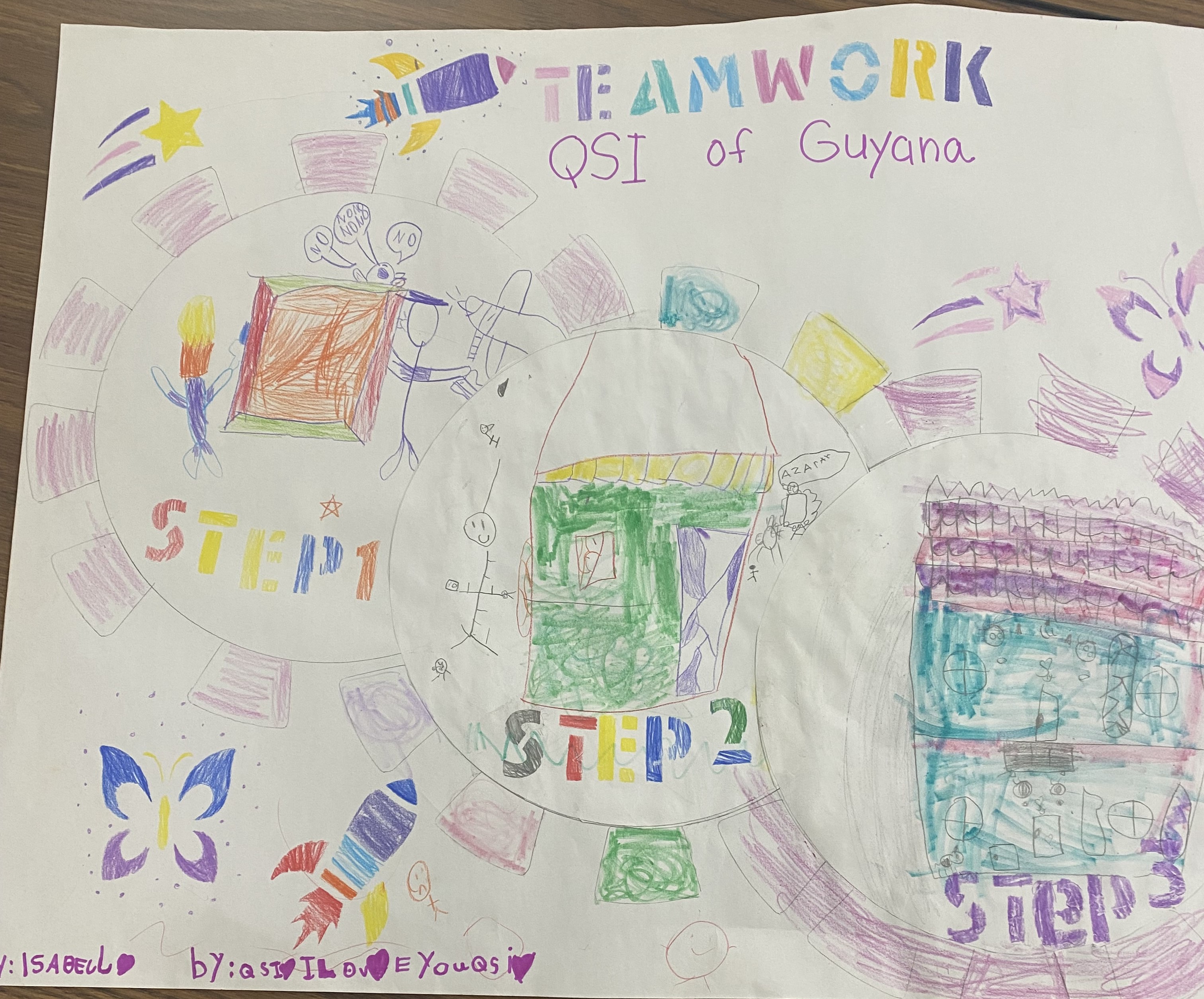
This mural was inspired by a group project we completed in the beginning of the year. We reflected on our work and recreated a mural to show how we worked as individuals to create a product as a team.
Additional Info
Paula Walker from Quality Schools International: IT, Kindergarten, 1st Grade
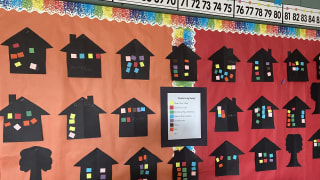
We learned about all kinds of families and what makes our family special. We did the Vin Diagram as a group. We than build our "family" home with all its members and shared with each other. They saw graphically the similarities and differences by comparing the color codes on each house.
Families Near and Far
1st Grade
Wall Display
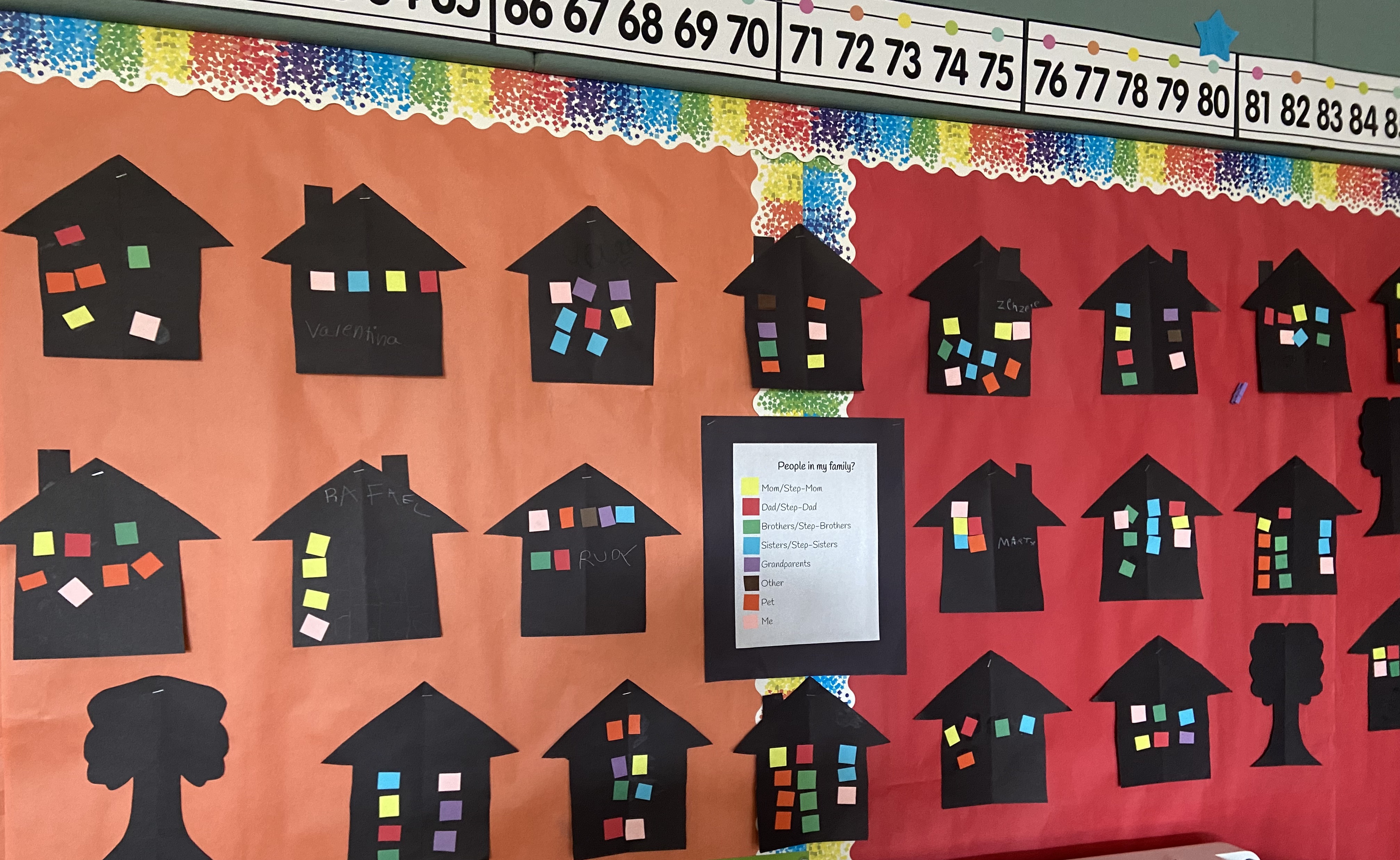
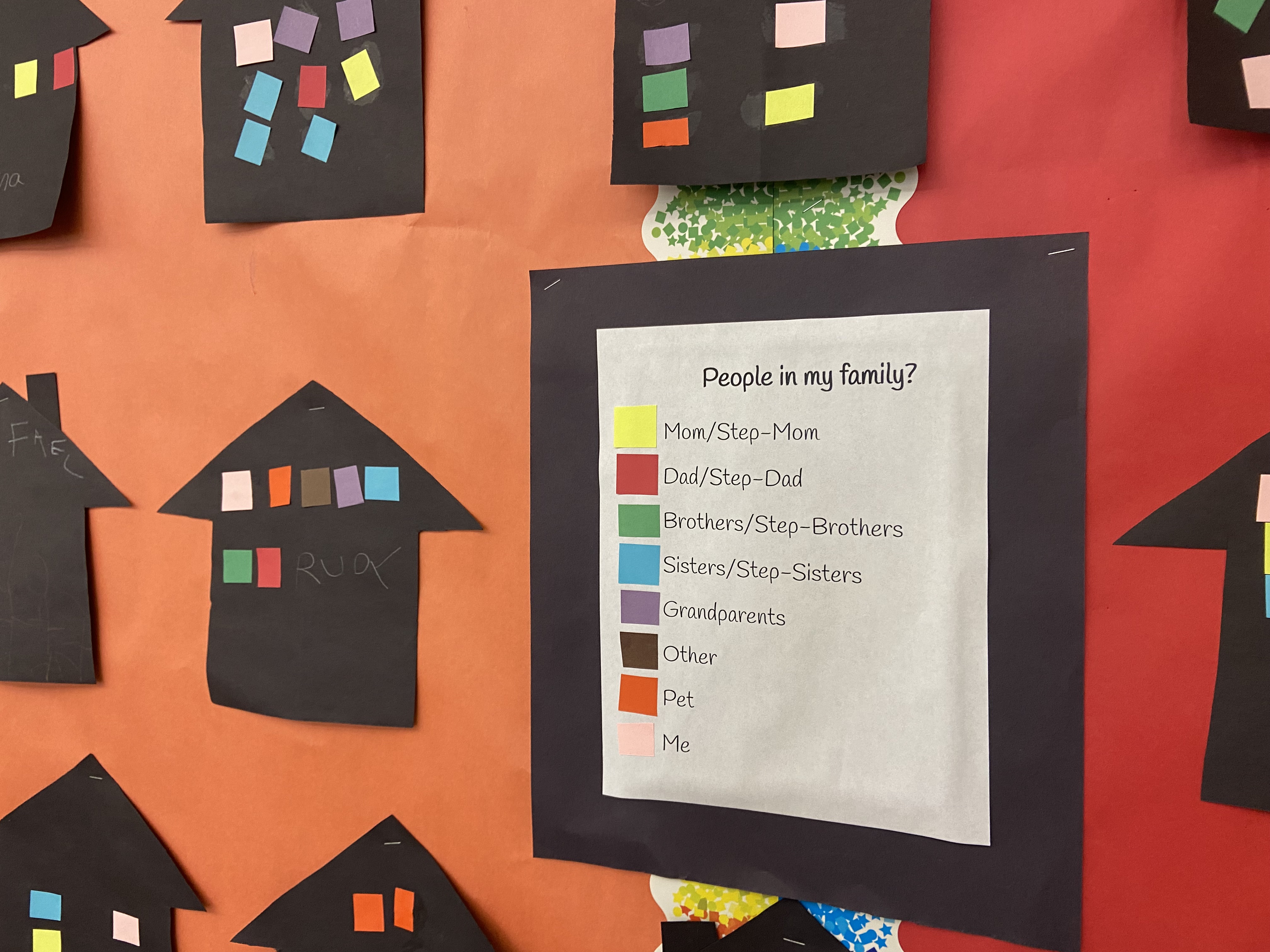
We learned about all kinds of families and what makes our family special. We did the Vin Diagram as a group. We than build our "family" home with all its members and shared with each other. They saw graphically the similarities and differences by comparing the color codes on each house.
Additional Info
Ali Bower from Alameda Unified School District: CA, 1st Grade
Students took the individual quilt square assignments and combined them into a larger mural that represented who they are!
Families Near and Far
1st Grade
Final Product
Students took the individual quilt square assignments and combined them into a larger mural that represented who they are!
Additional Info
Barbara Mastin from Deerfield Public Schools District 109: IL, 1st Grade
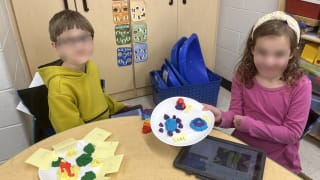
Students used Play-doh to create a landform they learned about. They then made a video on Seesaw showing their landform and explaining what they knew about it. Some teachers had students create the landforms and use them in their final unit map project.
Our Special Location
1st Grade
Other
Students used Play-doh to create a landform they learned about. They then made a video on Seesaw showing their landform and explaining what they knew about it. Some teachers had students create the landforms and use them in their final unit map project.
Additional Info
Barbara Mastin from Deerfield Public Schools District 109: IL, 1st Grade
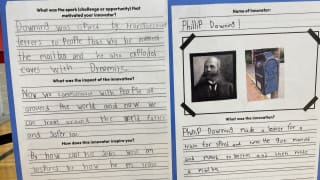
Students researched an innovator, completing the profile handout. These were on display at an innovation fair held by the school.
Innovation
2nd Grade
Handout


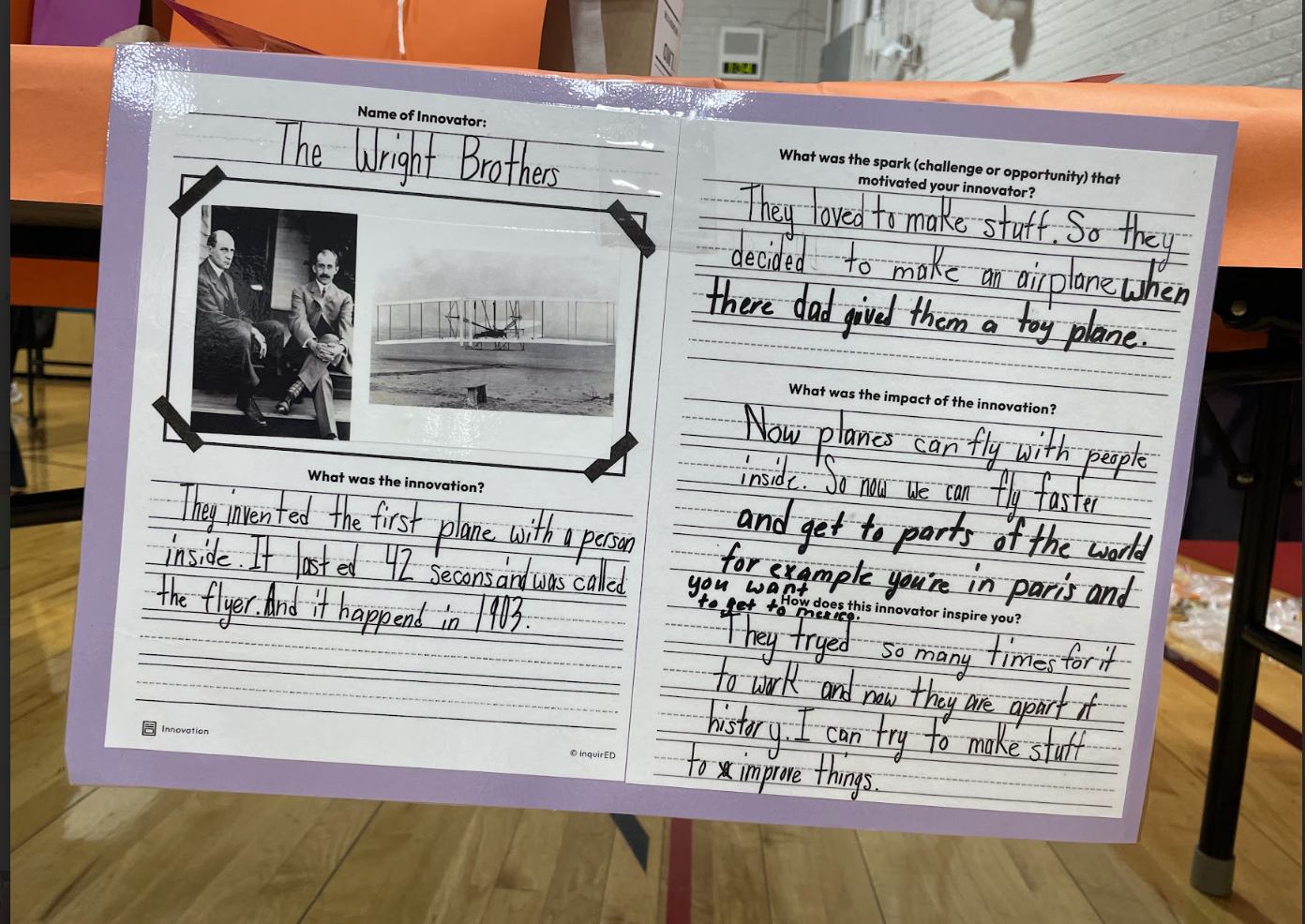
Students researched an innovator, completing the profile handout. These were on display at an innovation fair held by the school.
Additional Info
Barbara Mastin from Deerfield Public Schools District 109: IL, 2nd Grade
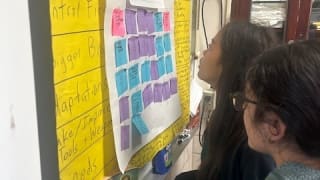
These pictures are from Module 8 of The Human Story. The kids are reflecting on what they've learned from the stories throughout the year. They used post-its to react to the questions on each piece of chart paper and then did a gallery walk to look at each other's responses.
The Human Story
6th Grade
Other
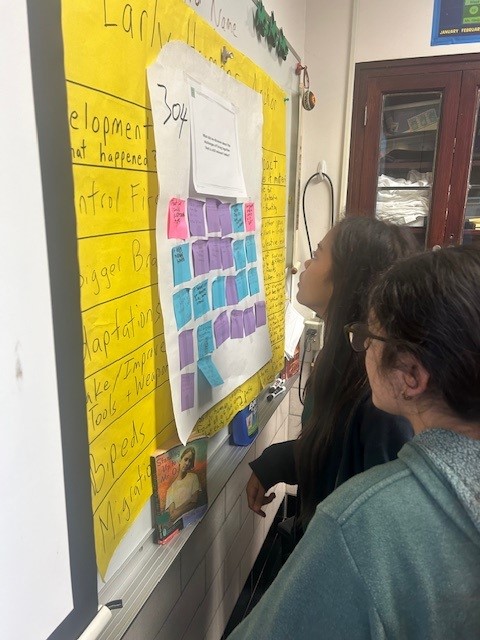
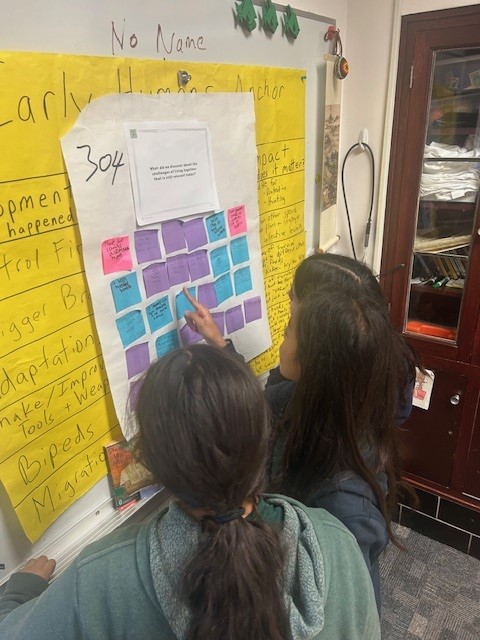
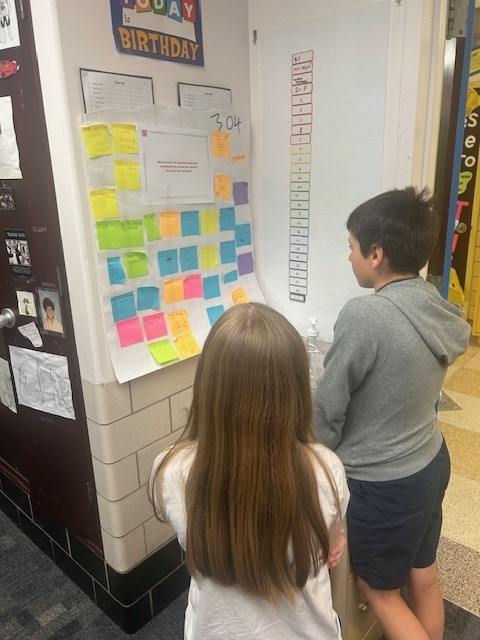
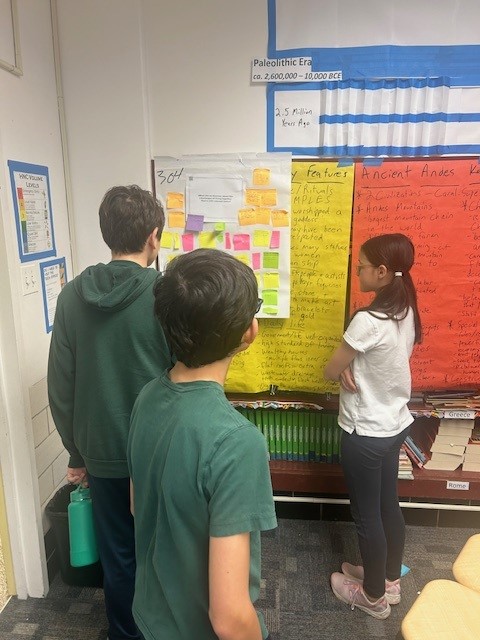
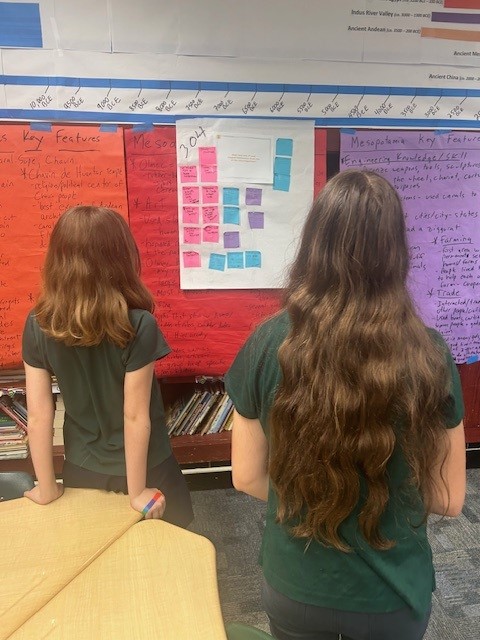
These pictures are from Module 8 of The Human Story. The kids are reflecting on what they've learned from the stories throughout the year. They used post-its to react to the questions on each piece of chart paper and then did a gallery walk to look at each other's responses.
Additional Info
John ORourke from The Frances Xavier Warde School: IL, 6th Grade
My students love adding drawings to the region they are investigating! Celebrating Native America culture has been a blast for these 5th graders!
Native America
5th Grade
Wall Display
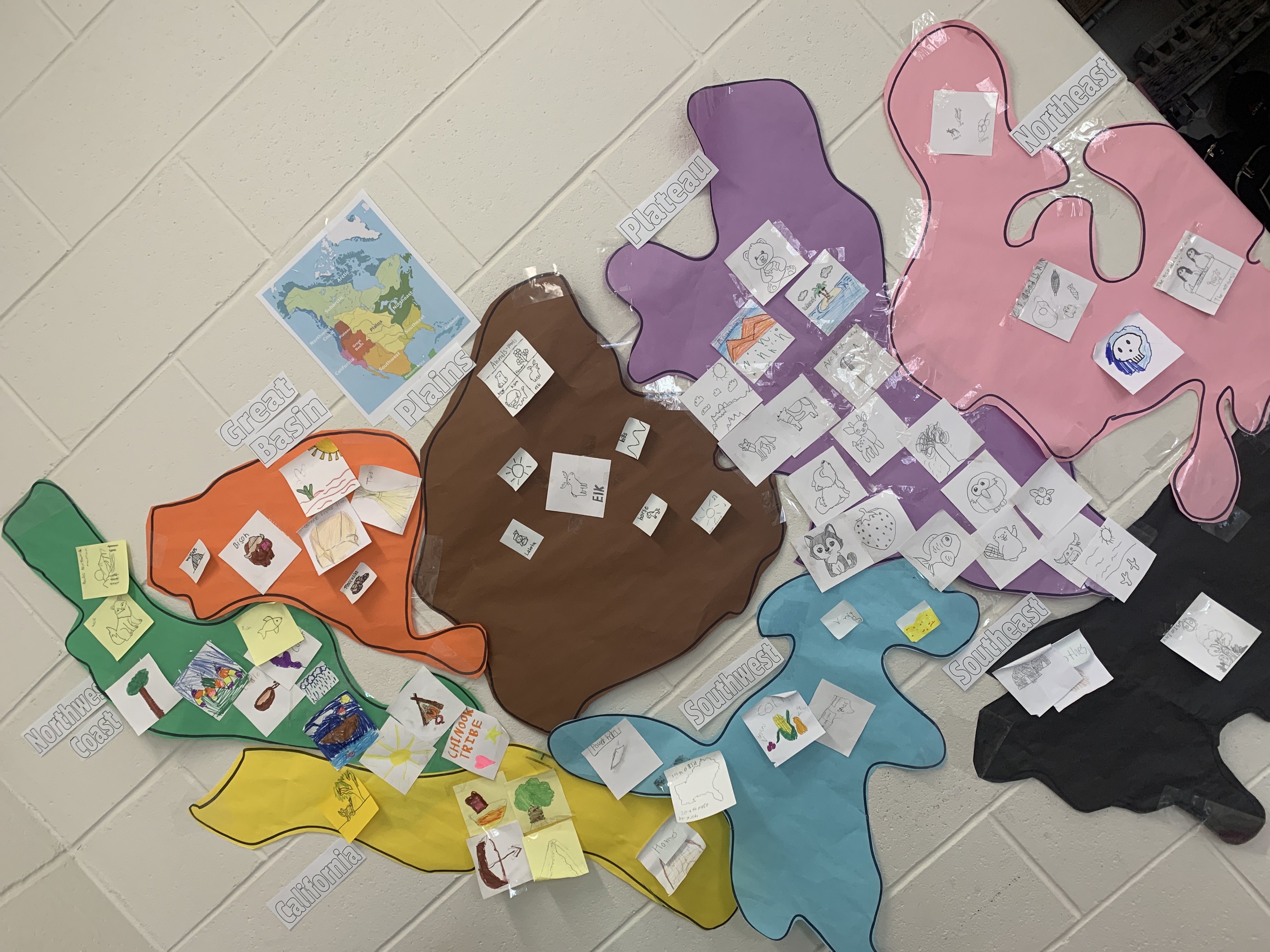
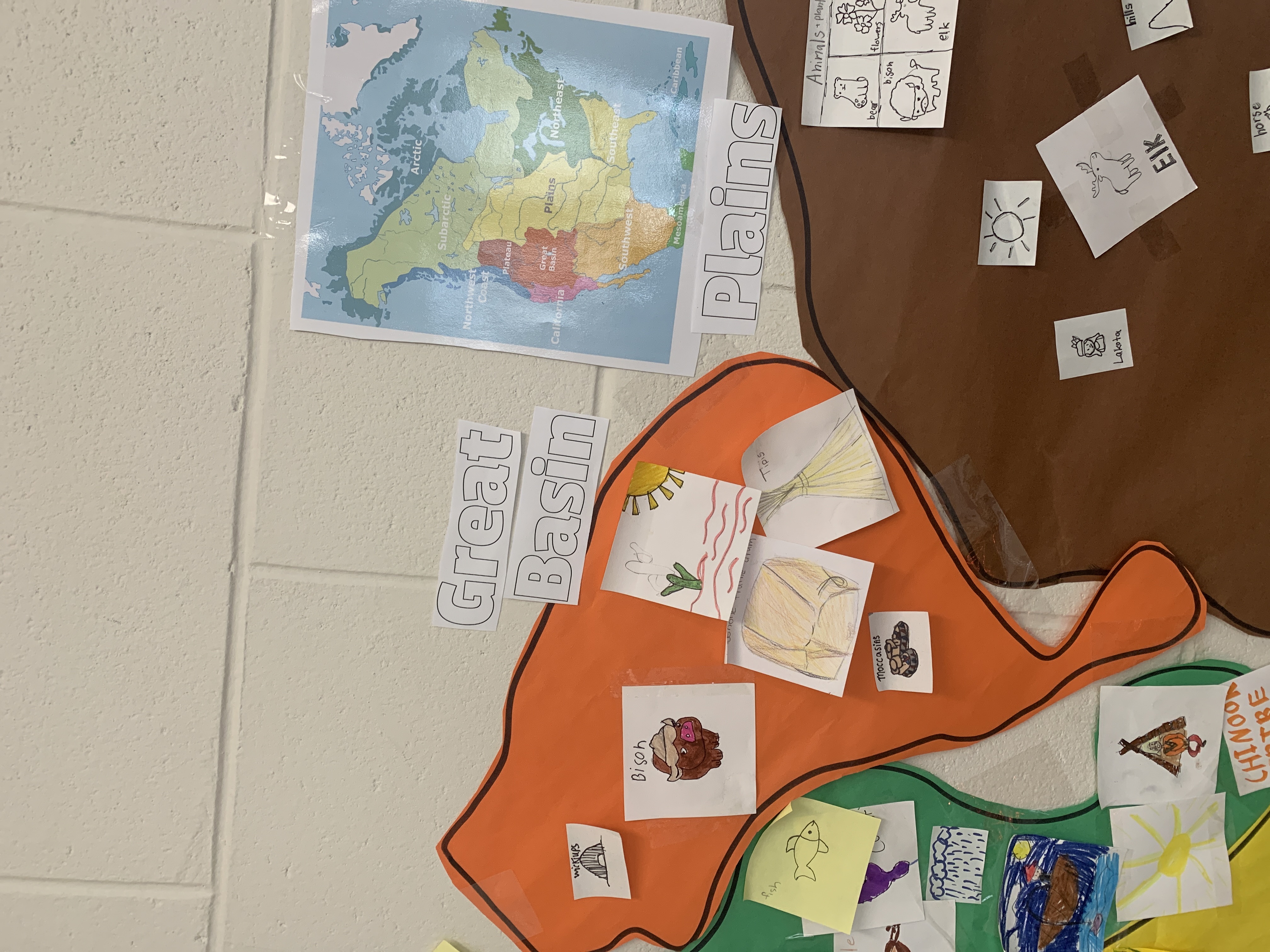
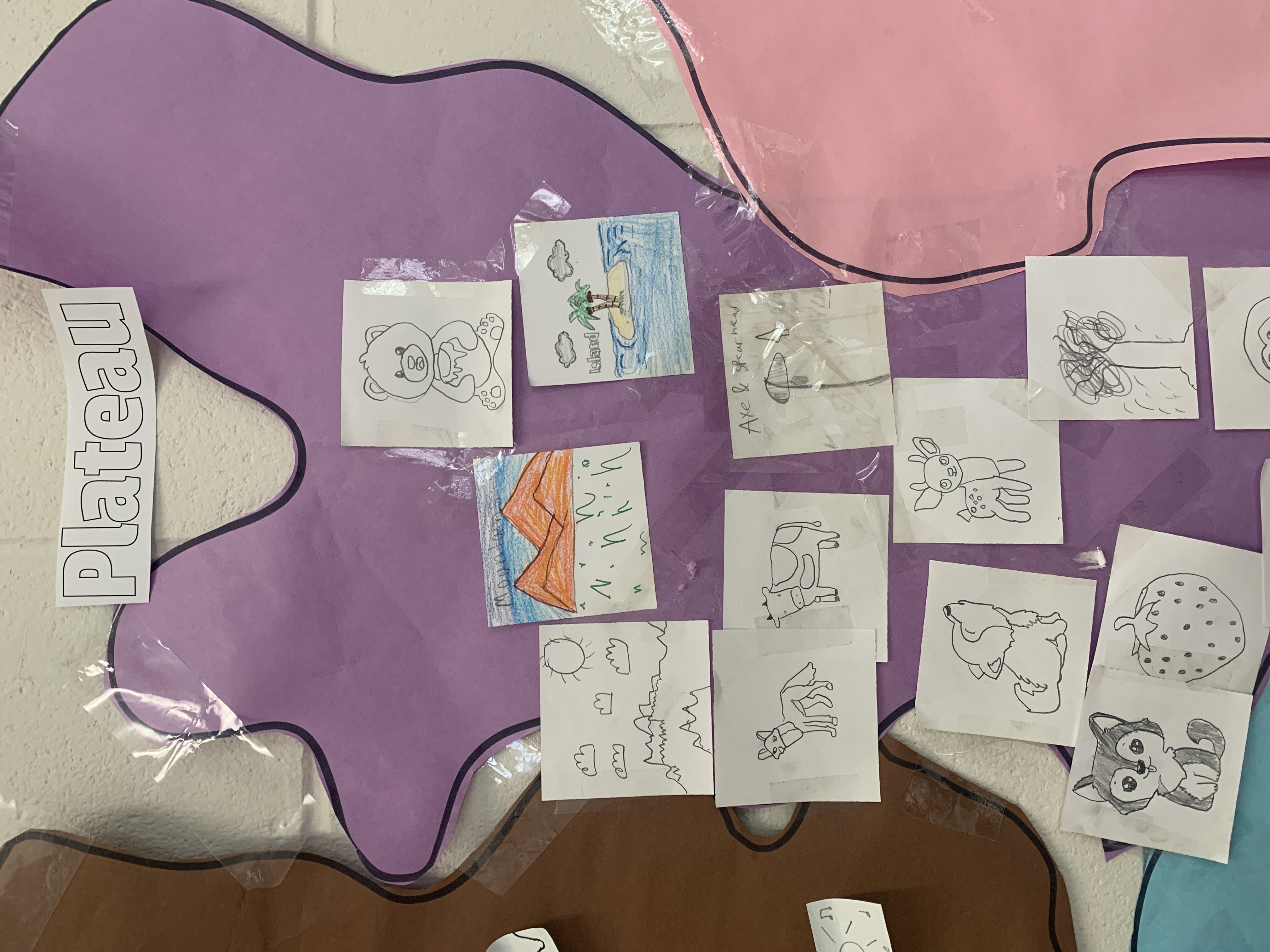
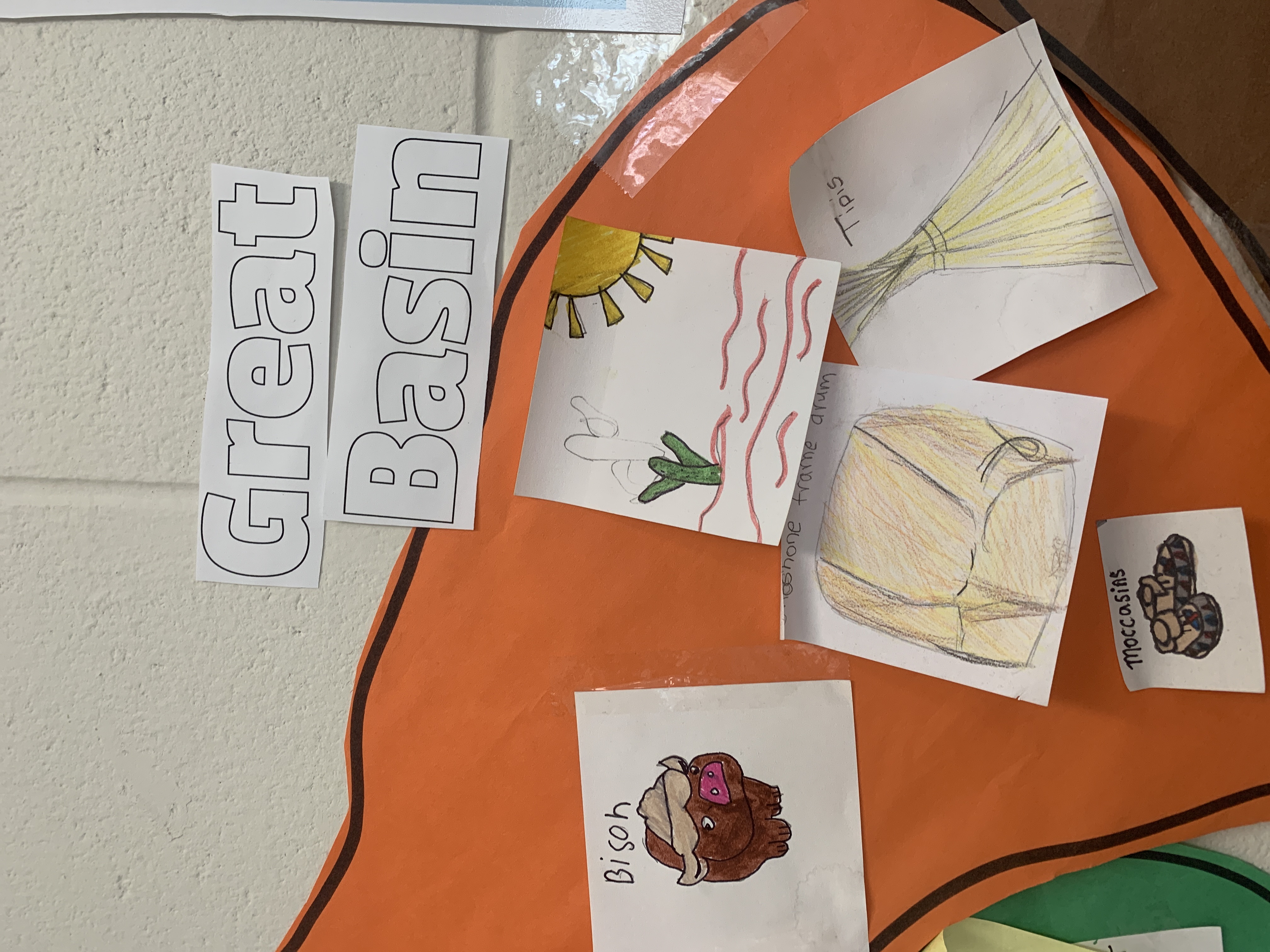
My students love adding drawings to the region they are investigating! Celebrating Native America culture has been a blast for these 5th graders!
Additional Info
Brielle Morgan from South Brunswick School District: NJ, 5th Grade
I like to use a jigsaw method when it comes to creating class anchor charts. This way, the students have more ownership of the information, and they have a chance to be leaders and present the information that they learned. The anchor chart that you see was created by student small groups who reread the text to collect information on the differences between the regional colonies. We also rephrase the essential question into our own words which helps ESL students and all students in my classroom to promote better understanding.
The Colonial Era
5th Grade
Wall Display

I like to use a jigsaw method when it comes to creating class anchor charts. This way, the students have more ownership of the information, and they have a chance to be leaders and present the information that they learned. The anchor chart that you see was created by student small groups who reread the text to collect information on the differences between the regional colonies. We also rephrase the essential question into our own words which helps ESL students and all students in my classroom to promote better understanding.
Additional Info
Elizabeth Nielsen from Skokie District 68: IL, 5th Grade
Students worked in small groups, presented to their classmates, and then we hung the posters in the hallway for the entire school to see.
Our State and Region
4th Grade
Final Product
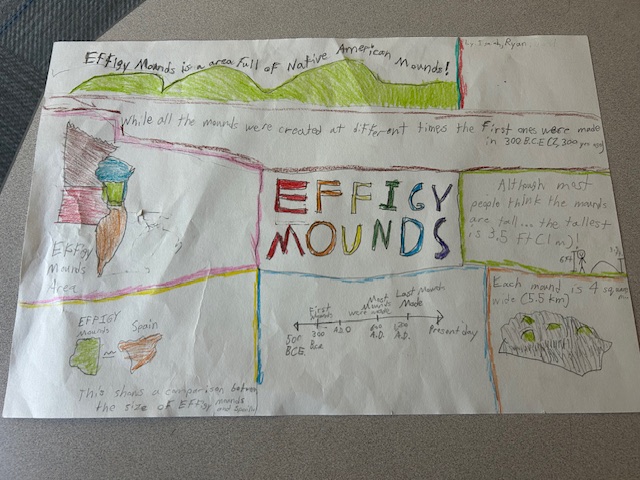
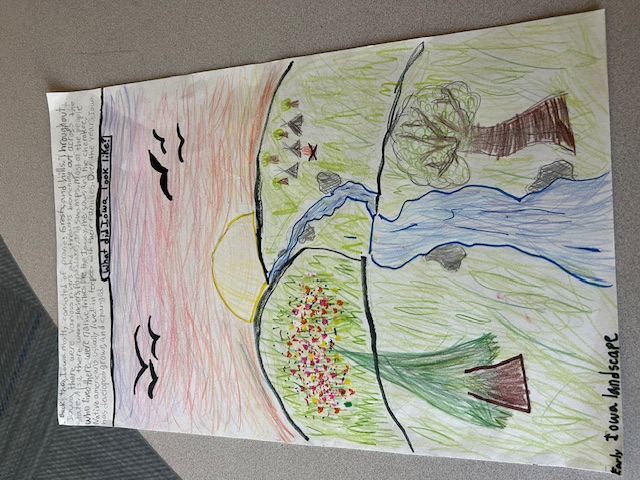
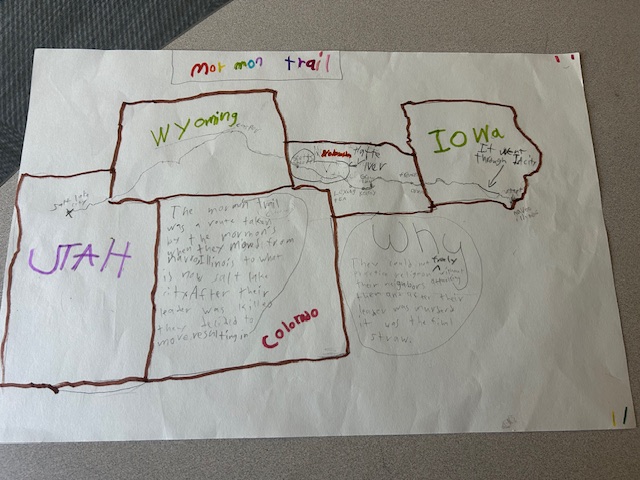
Students worked in small groups, presented to their classmates, and then we hung the posters in the hallway for the entire school to see.
Additional Info
Chelsea Dallman from Iowa City Community School District: IA, 4th Grade
No results found.
There are no results with this criteria. Try changing your search.