
Meet the 2026 Inquiry Work Contest winners
Teachers across the country shared inquiry work from their classrooms this fall, from anchor charts and student work to classroom video. Thank you to every teacher who entered. These are the classrooms that stood out.
Students doing the thinking
Entries were scored on how clearly the work shows students investigating a question, building evidence and sharing their own thinking.
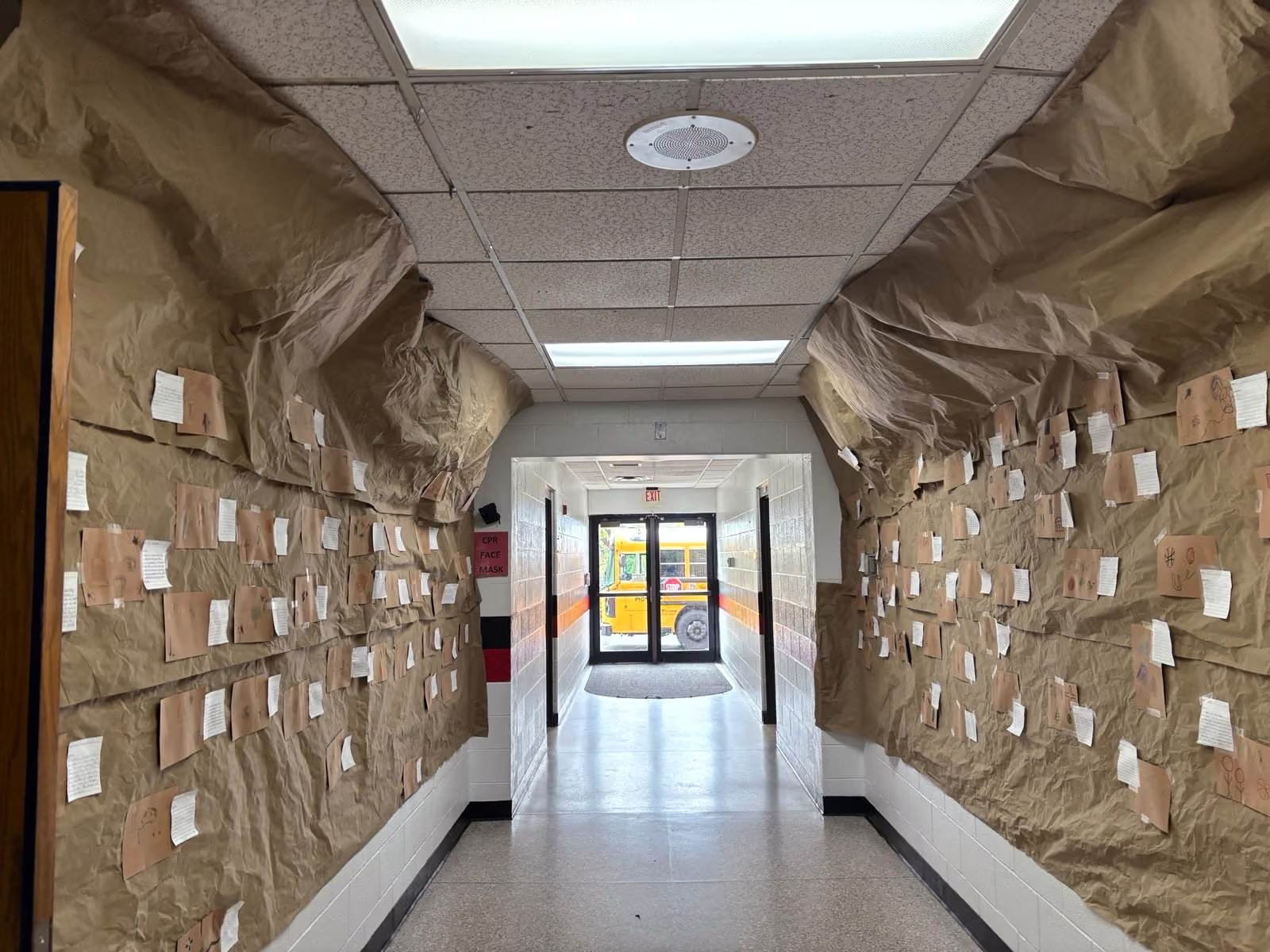
Telling the story of 6th grade through cave art
The Human Story
After studying early humans and the stories artifacts can tell, 6th graders created their own Paleolithic cave art. Using four symbols and no words, each student answered the question "What story would you tell?" Then they switched roles, analyzed the art as archaeologists and wrote museum placards to explain it. The finished pieces came together on a simulated cave wall that tells the story of 6th grade.
Sorting artifacts to uncover their stories
Native America
5th graders spent this inquiry investigating what artifacts can tell us and who they belong to. In the video, students work together to sort artifacts from Native American cultures into categories they came up with on their own, including materials, how items were used, time frame, tribe and how items were made. They then took a position on whether artifacts should be kept in museums or returned to their cultures of origin and wrote out their claims and reasoning, shown in the photo.
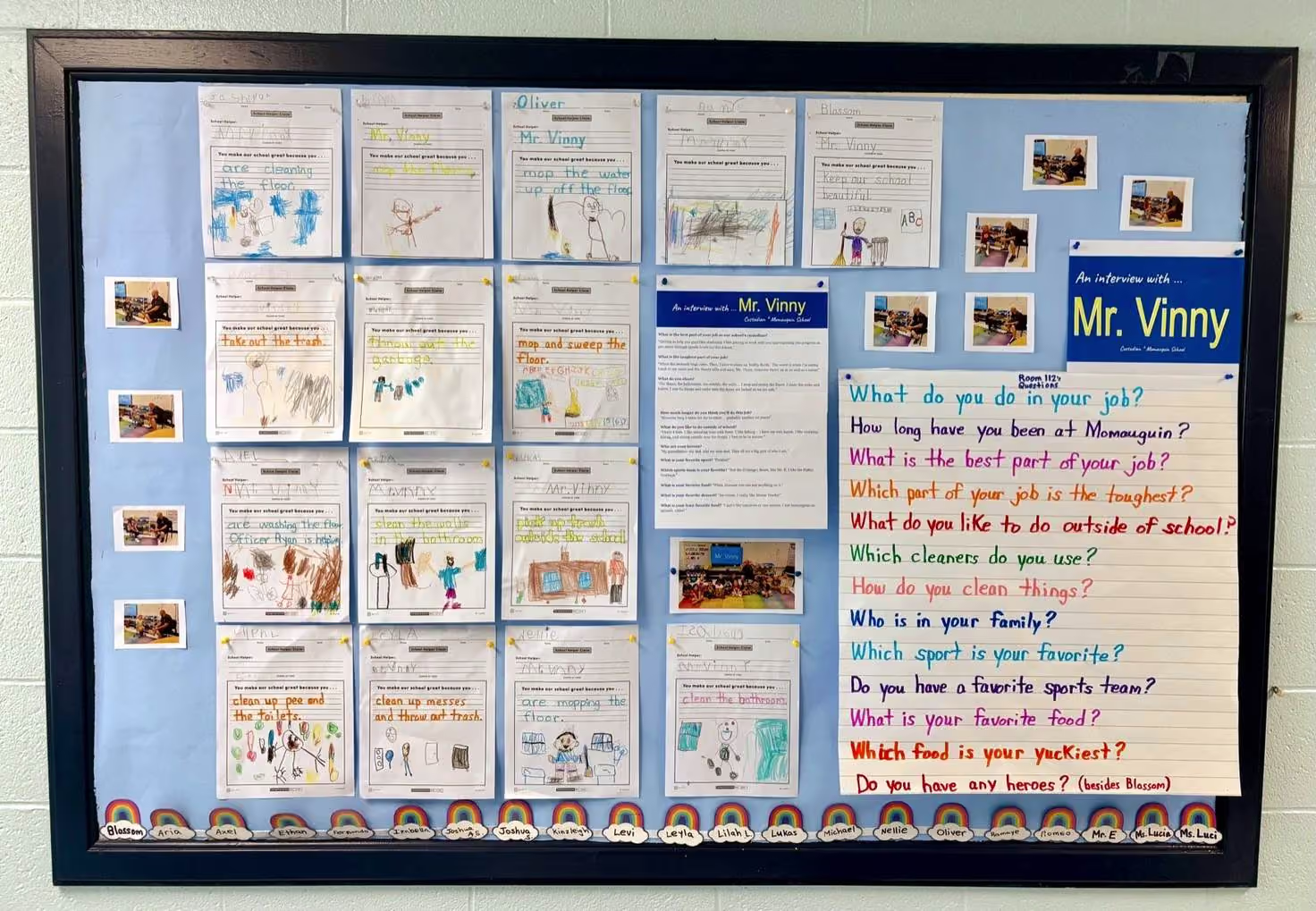
Interviewing the grown-ups who help our school
Navigating School
Kindergartners brainstormed the grown-ups who help at school and voted to interview their custodian. With teacher support, they wrote questions to learn about his role and his life outside of work, then illustrated and labeled what they learned.
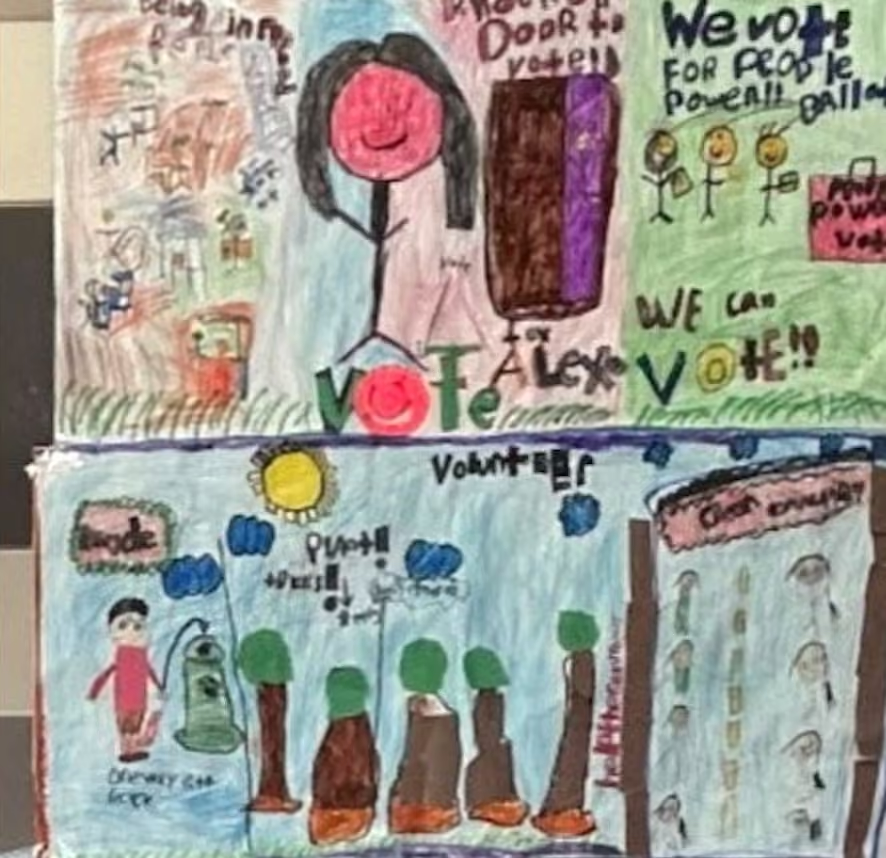
A layer cake for a healthy democracy
Rights and Responsibilities
3rd graders designed a layer cake to show their audience how people can take part in a democracy. They decided which layer should support the ones above it, from knowing how government works and using your rights to staying informed, volunteering and voting.
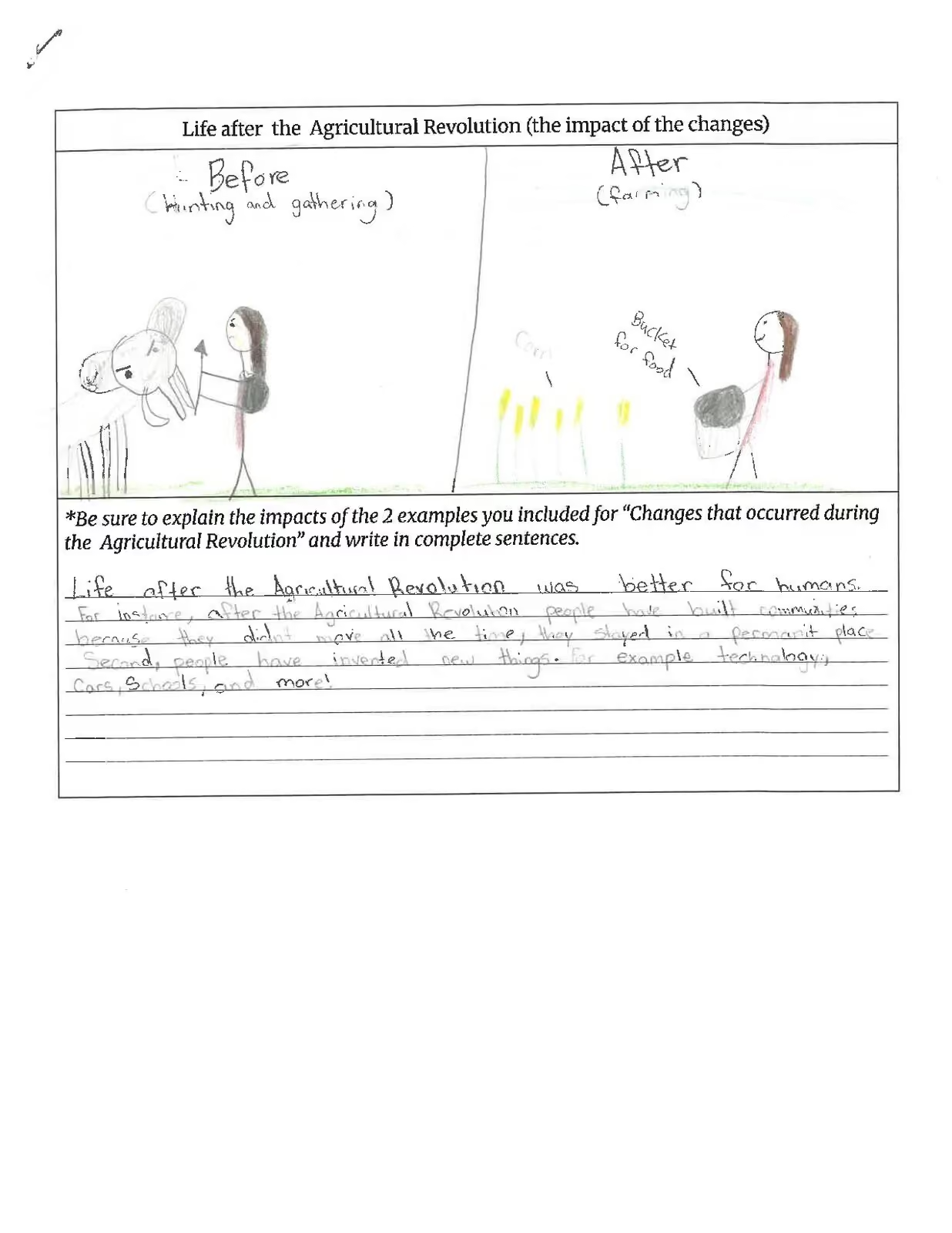
Comic strips on the Agricultural Revolution
The Human Story
6th graders created two-part comic strips about the Agricultural Revolution. First, they illustrated the changes it brought, like farming in place of hunting and gathering and people taking on different jobs. Then they showed the impact on daily life and weighed the tradeoffs, such as a steadier food supply against crop failures and disease from domesticated animals.
More standout classrooms
These classrooms will also be featured in this year's showcase.
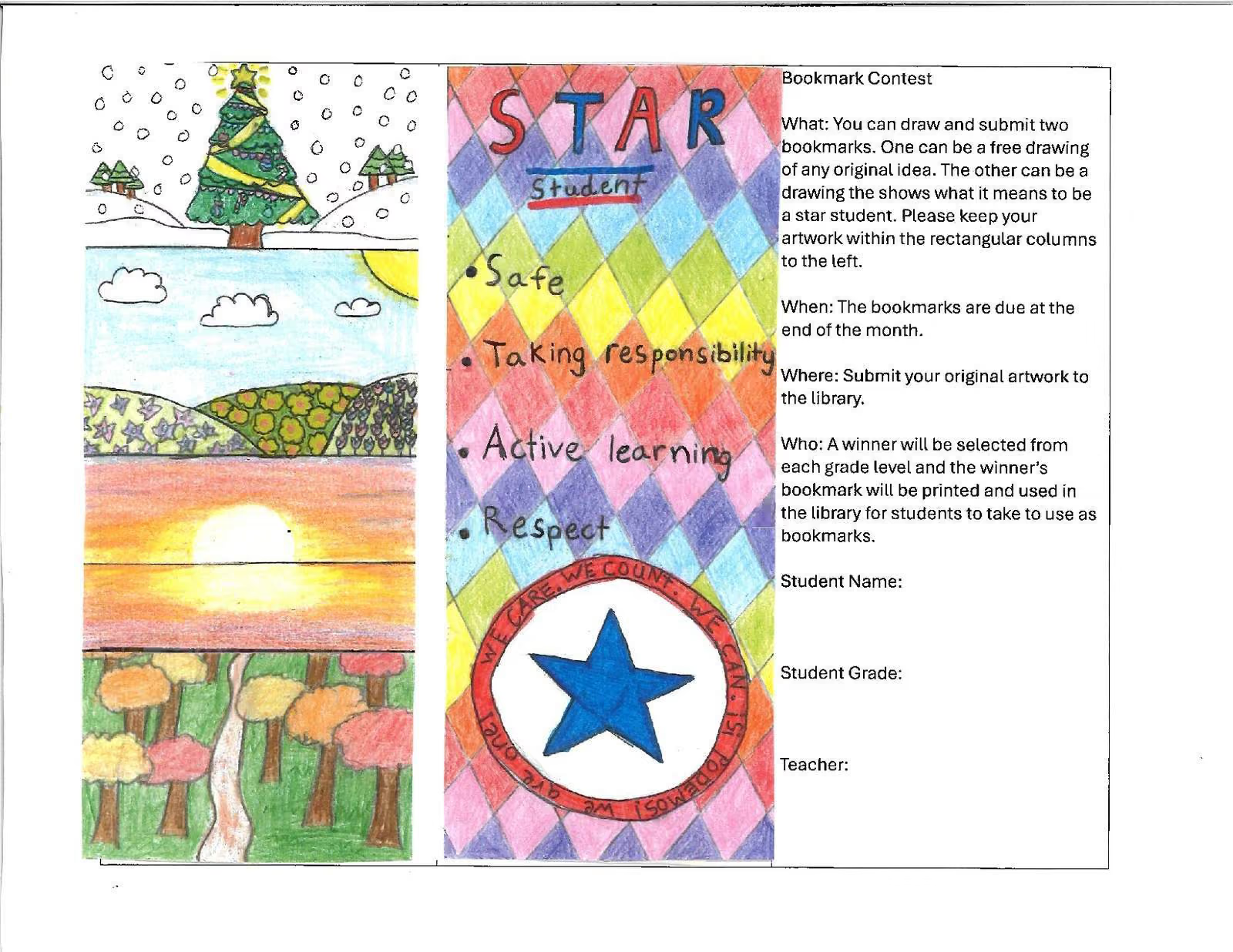
Star student bookmarks
My Team and Self
Students designed bookmarks about being a star student, and the winning designs are printed in color and handed out with library books.
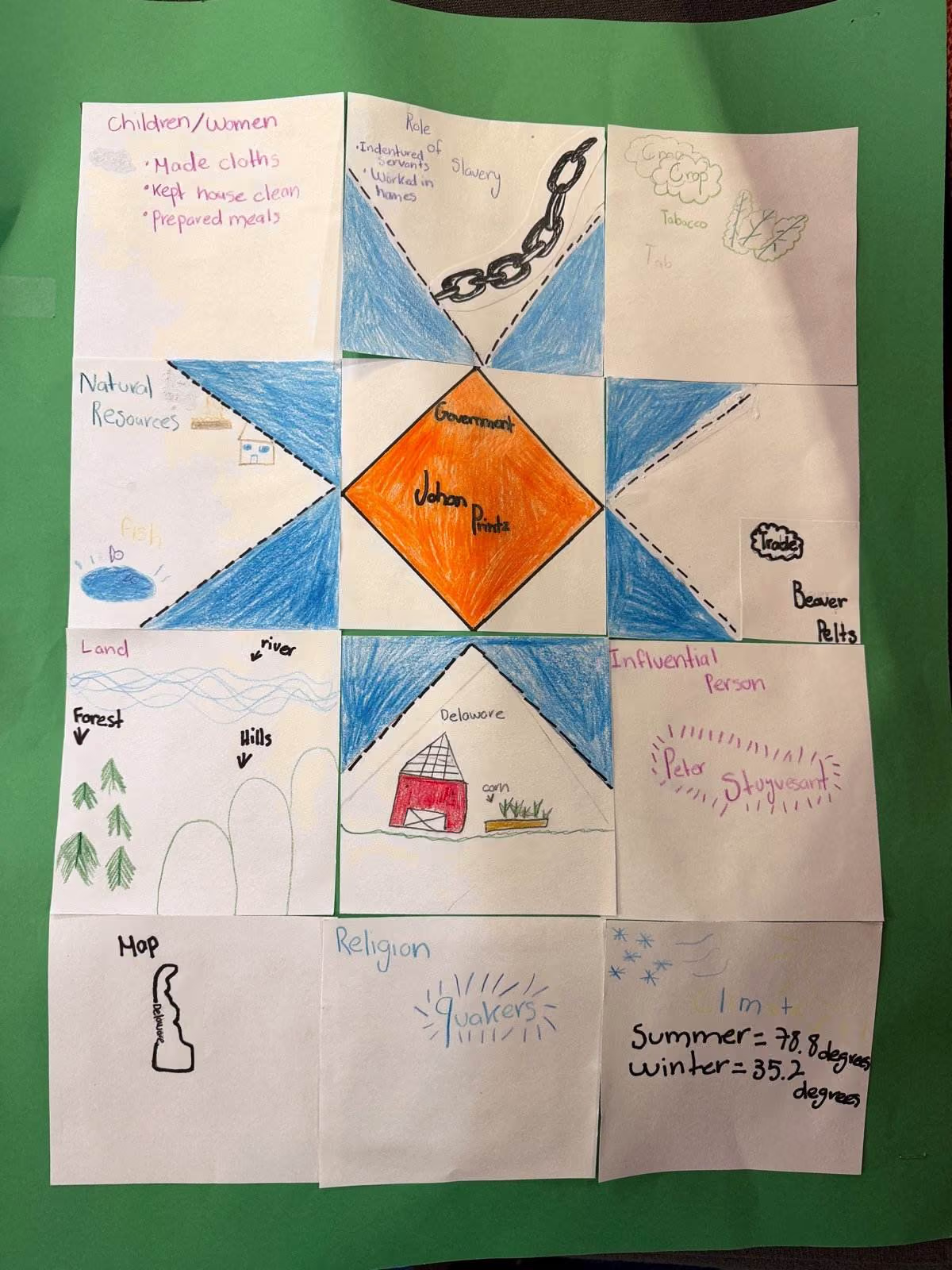
A colonial regions quilt
The Colonial Era
Students researched how culture, geography and economics shaped each colonial region, then designed quilt blocks based on historical regional patterns that came together as a bulletin-board-sized quilt.
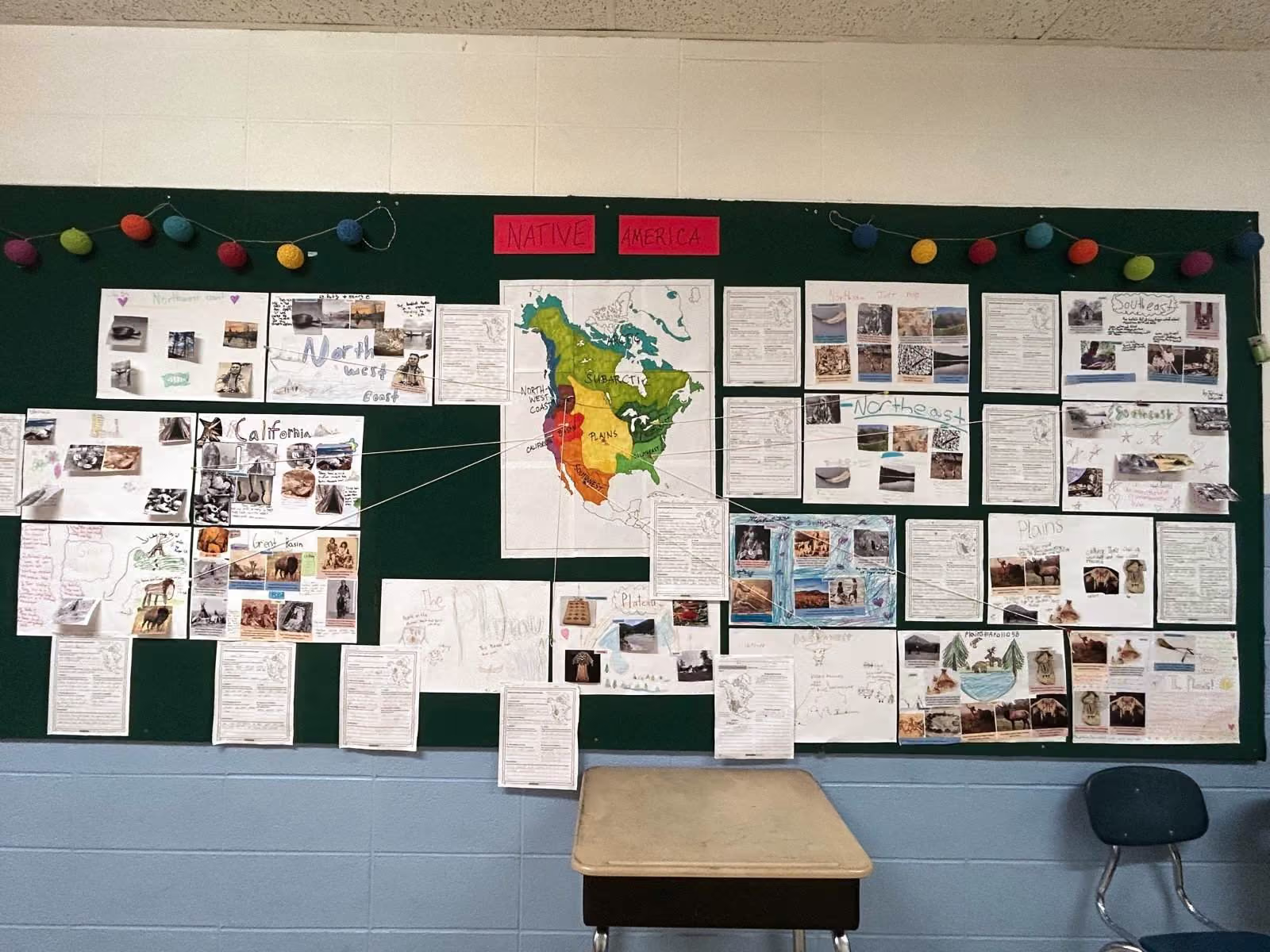
Native America inquiry wall
Native America
Students turned their research into large posters connected to each region on a hallway map that families explored during conferences.
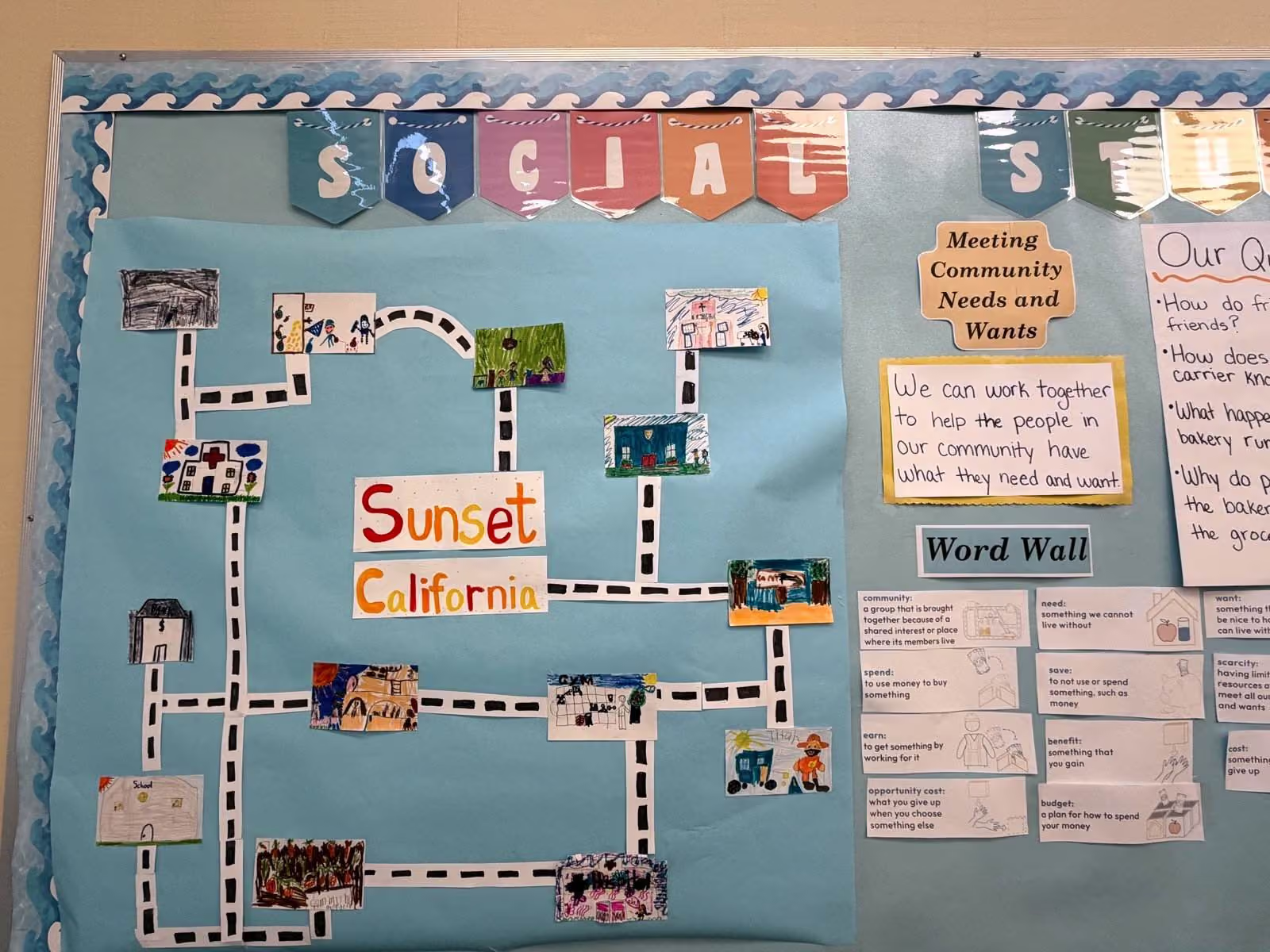
Mapping a community's needs and wants
Meeting Needs and Wants
Students built a class community called Sunset California and created a word splash connecting their vocabulary, with many placing scarcity at the center.
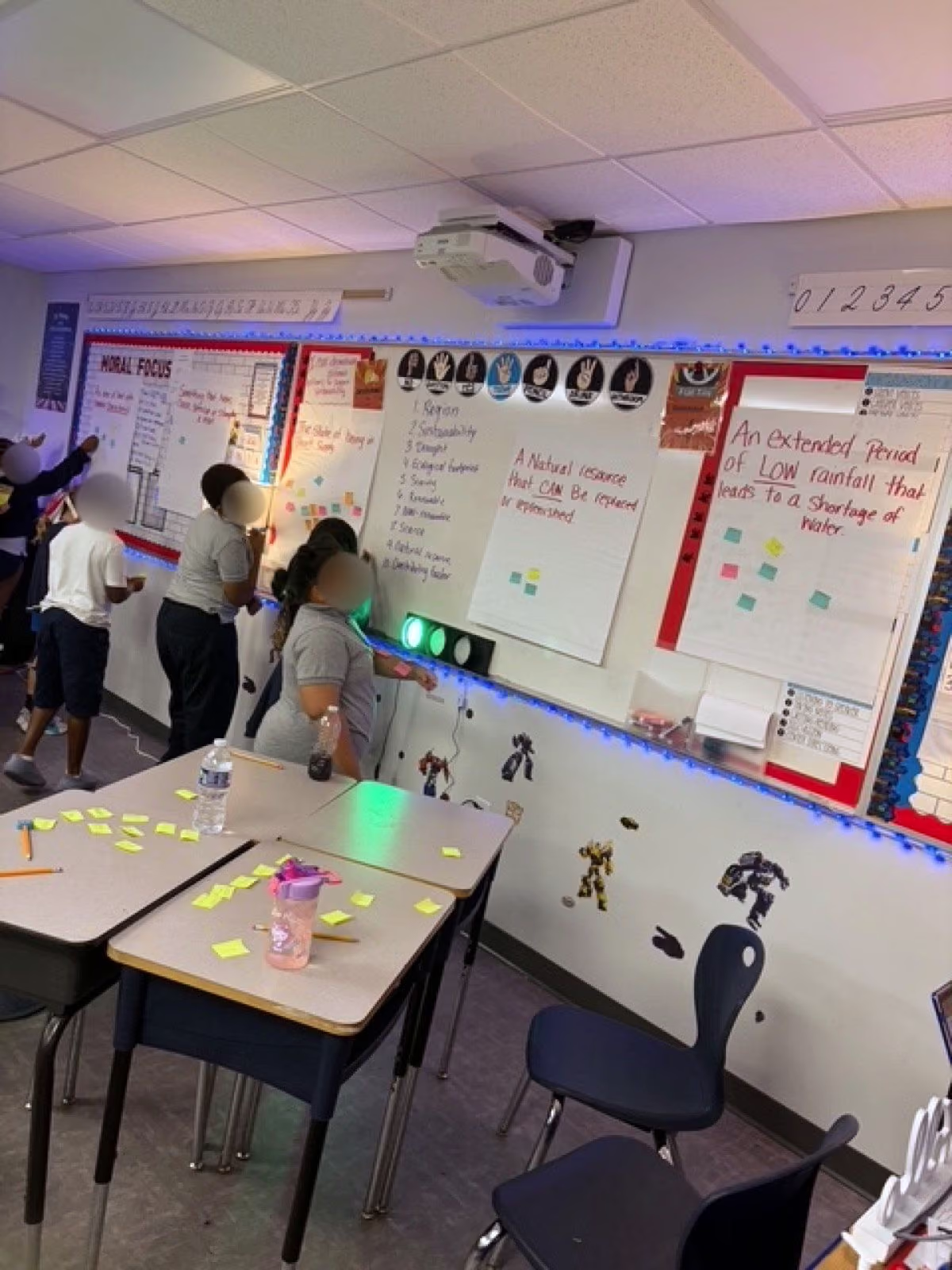
Vocabulary anchor chart challenge
Natural Resources of the U.S.
Students reviewed unit vocabulary by racing to place each term on the correct anchor chart.
Student Works
Explore examples from the Inquiry Work Gallery.
Click on a thumbnail below to expand and view more images.

Students explored Washington State's history, and as they've uncovered many fascinating stories, there might have been some important aspects that were not included in the modules based on the Reflection Cards they completed at the end of each module. This project invited them to research and present one of these overlooked topics, helping to complete the story of our state. Students created a tri-fold display that highlighted a significant yet often overlooked aspect of Washington State's history, culture, or geography.
Our State and Region
5th Grade
Final Product


Students explored Washington State's history, and as they've uncovered many fascinating stories, there might have been some important aspects that were not included in the modules based on the Reflection Cards they completed at the end of each module. This project invited them to research and present one of these overlooked topics, helping to complete the story of our state. Students created a tri-fold display that highlighted a significant yet often overlooked aspect of Washington State's history, culture, or geography.
Additional Info
Saimoon Banerjee from Lake Washington School District: WA, 5th Grade, 4th Grade

Students work on identifying urban, suburban and rural settings. They drew their observations rather than listed specific features.
Our Special Location
1st Grade
Handout
Students work on identifying urban, suburban and rural settings. They drew their observations rather than listed specific features.
Additional Info
Barbara Mastin from Deerfield Public Schools District 109: IL, 1st Grade

Documenting history, students took pictures of current playground. They illustrated changes to landscape as solar panels will be added to building and playground will be redesigned.
Our Changing Landscape
2nd Grade
Inquiry-Long Display


Documenting history, students took pictures of current playground. They illustrated changes to landscape as solar panels will be added to building and playground will be redesigned.
Additional Info
Jennie Greene from Skokie District 68: IL, 2nd Grade

Students chose an issue they felt needed some positive change. They researched the issue and prepared a short speech and signs asking for that change. In an assembly, students spoke about their issue, explaining what change they wanted and why it was needed. Students then marched around the building sharing their opinion in a peaceful protest.
The 20th Century Civil Rights Movement
3rd Grade
Final Product


Students chose an issue they felt needed some positive change. They researched the issue and prepared a short speech and signs asking for that change. In an assembly, students spoke about their issue, explaining what change they wanted and why it was needed. Students then marched around the building sharing their opinion in a peaceful protest.
Additional Info
Barbara Mastin from Deerfield Public Schools District 109: IL, 3rd Grade

Winter Counts created by students! Walden School, Deerfield School District 109
Native America
5th Grade
Handout


Winter Counts created by students! Walden School, Deerfield School District 109
Additional Info
Barbara Mastin from Deerfield Public Schools District 109: IL, 5th Grade

Students created a museum display on the importance of elections based on the Rights and Responsibilities unit in fifth grade. We considered information like the structure of government and how they solve problems, as well as a citizen's right to vote and what they can do to go above and beyond that right.
Rights and Responsibilities
5th Grade
Final Product


Students created a museum display on the importance of elections based on the Rights and Responsibilities unit in fifth grade. We considered information like the structure of government and how they solve problems, as well as a citizen's right to vote and what they can do to go above and beyond that right.
Additional Info
John Ormson from Lake Washington School District: WA, 5th Grade

Our Special Location The students used their collaboration skills to create a school mural that had symbols that represented our community and our special location. Students investigate how location, natural features, and climate shape daily life, and how goods and services are produced to address community needs and wants.
Our Special Location
1st Grade
Wall Display


Our Special Location The students used their collaboration skills to create a school mural that had symbols that represented our community and our special location. Students investigate how location, natural features, and climate shape daily life, and how goods and services are produced to address community needs and wants.
Additional Info
Chrissy Milliken from Agnes Irwin School: PA, 1st Grade

We thought of something that has multiple parts that work together to make something. Our class came up with a rainbow, and each color had a group of 3 or 4 students work together to design the part of the rainbow. Each color represented something that we learned about teamwork: strengths, sharing, kindness, collaboration, etc. The students got to choose what materials to use and how to show what they learned.
My Team and Self
Kindergarten
Final Product
We thought of something that has multiple parts that work together to make something. Our class came up with a rainbow, and each color had a group of 3 or 4 students work together to design the part of the rainbow. Each color represented something that we learned about teamwork: strengths, sharing, kindness, collaboration, etc. The students got to choose what materials to use and how to show what they learned.
Additional Info
Rachel Jordan from Elmhurst District 205 Public Schools: IL, Kindergarten

Students researched their own family immigration history or chose another history they thought might be interesting. Using the Wax Museum model, students dressed as the person and prepared a short explanation of who they were including the country of origin, the reasons for immigration, and the challenges they faced. An Immigration Fair was held allowing students to share their work. On the back of the display sheet students held was their written summary. As guests approached, students told their story. The experience allowed newer immigrants to have a voice and share their unique experiences!
Migration and Movement
3rd Grade
Final Product


Students researched their own family immigration history or chose another history they thought might be interesting. Using the Wax Museum model, students dressed as the person and prepared a short explanation of who they were including the country of origin, the reasons for immigration, and the challenges they faced. An Immigration Fair was held allowing students to share their work. On the back of the display sheet students held was their written summary. As guests approached, students told their story. The experience allowed newer immigrants to have a voice and share their unique experiences!
Additional Info
Barbara Mastin from Deerfield Public Schools District 109: IL, 3rd Grade

Ancient Egypt Anchor Chart
Ancient Egypt
6th Grade
Investigation Questions Anchor Chart

Ancient Egypt Anchor Chart
Additional Info
Allan Cupicciotti from Chicago Public Schools - Galileo Scholastic Academy Of Math And Science: IL, 6th Grade

State Scrapbook Page: Western Region
Natural Resources of the U.S.
4th Grade
Other


State Scrapbook Page: Western Region
Additional Info
Nicole Rossi from Dock Mennonite Academy: PA, 4th Grade

Our Changing Landscape classroom display with vocabulary word wall and anchor charts.
Our Changing Landscape
2nd Grade
Anchor Chart
Our Changing Landscape classroom display with vocabulary word wall and anchor charts.
Additional Info
Laura Netzer from Cherry Creek Schools: CO, 2nd Grade
No results found.
There are no results with this criteria. Try changing your search.