Exciting Updates and Improvements
When educators speak, we listen. Explore the updates and improvements we've made to support teachers.
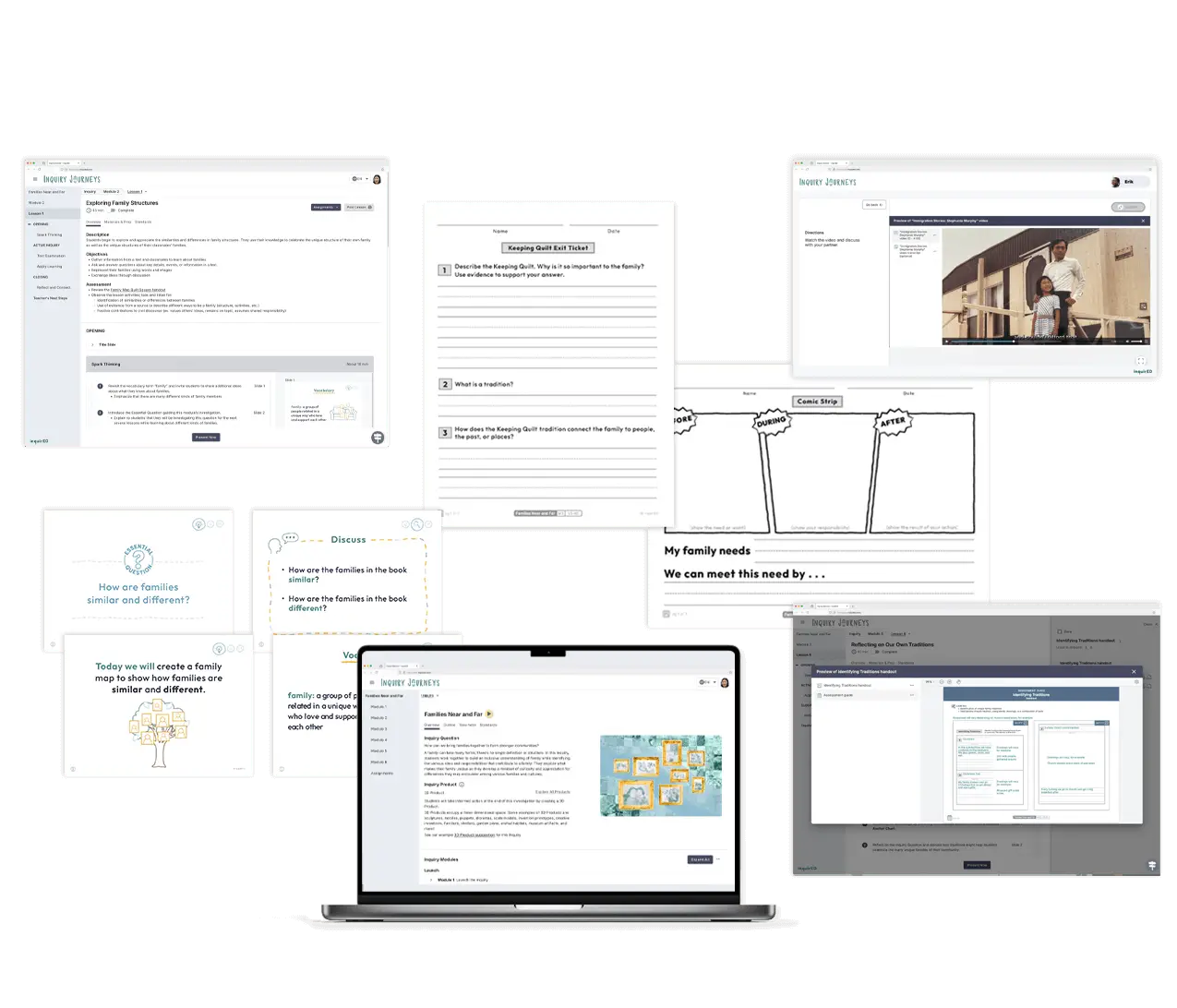

Co-Teacher Function
Your classroom, your collaborators
Multiple teachers can now work together in a single class, with roles and permissions that match how your district manages rostering. Co-teachers, interventionists, and long-term subs each get their own access with no shared logins.
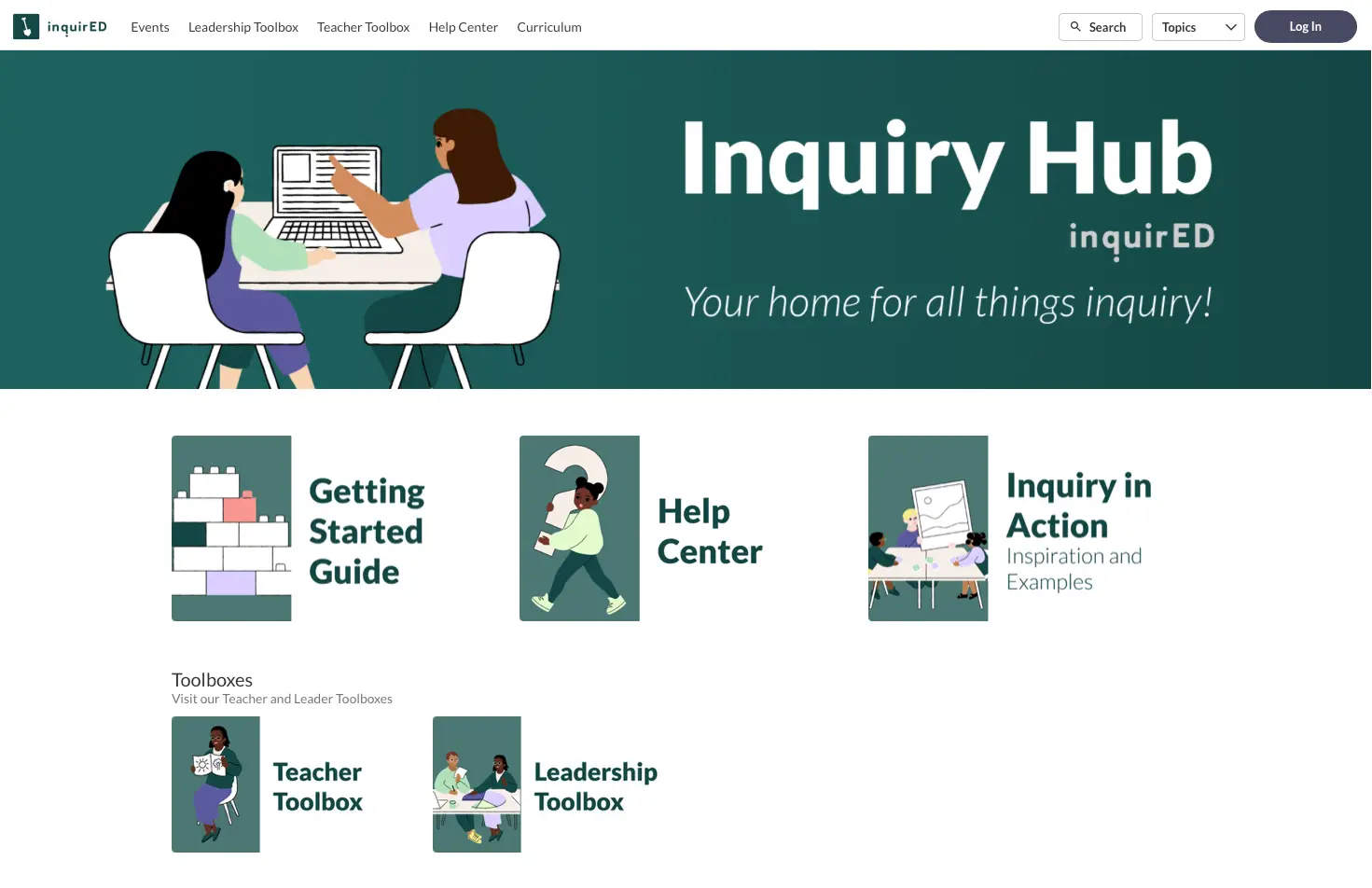
Inquiry Hub Updates
A hub that works hard for you
The Inquiry Hub has been updated with clearer organization, improved navigation, and new resources designed for how you actually use it. Whether you're planning a unit, preparing for a team meeting, or supporting a new teacher, what you need is easier to find.
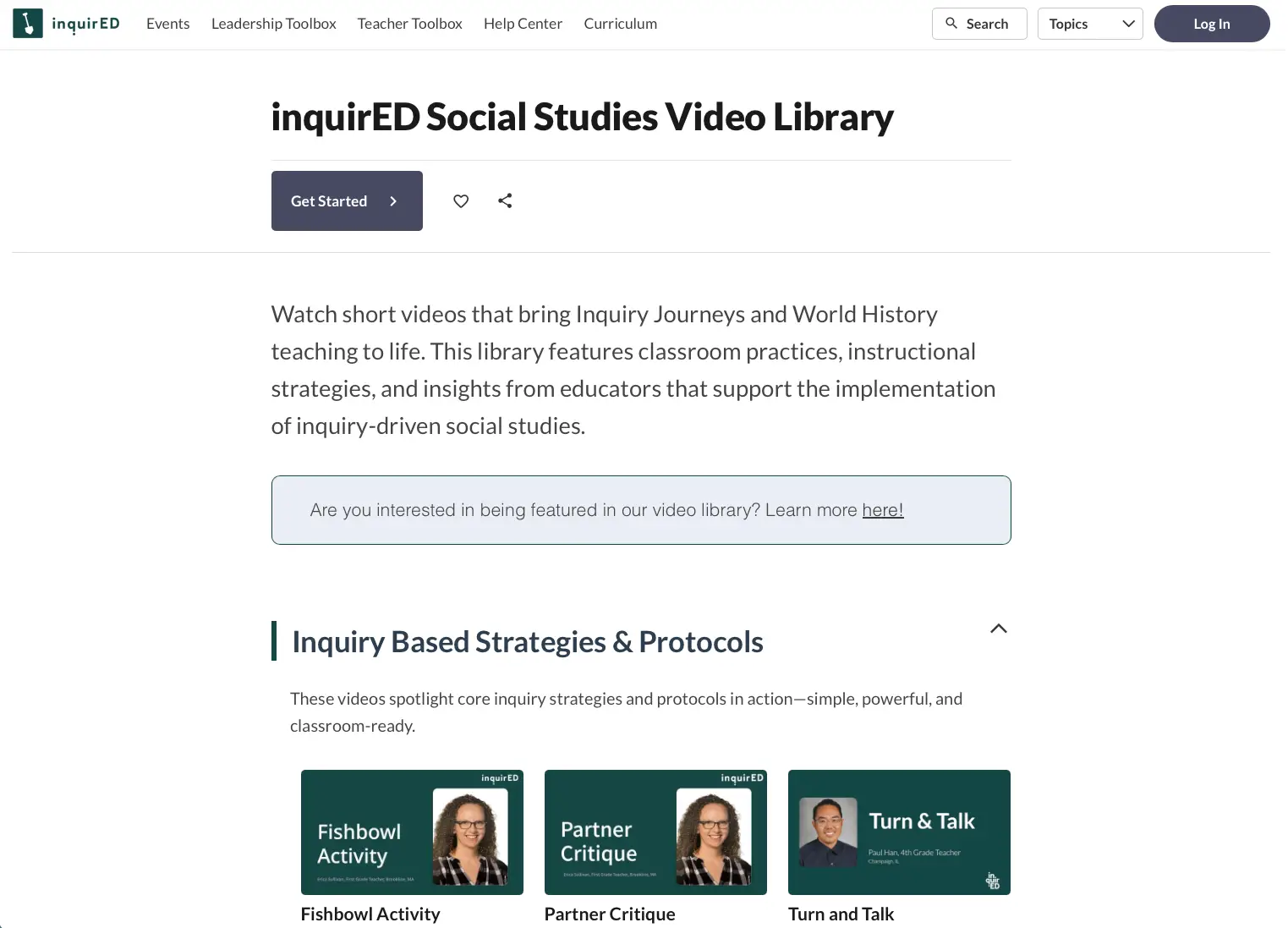
Social Studies Video Library
See what inquiry looks like in classrooms
The Inquiry Hub now includes a video library with classroom footage, protocol walkthroughs, and real examples of structured inquiry across grade levels. Share something at a team meeting, walk a new teacher through a discussion protocol, or see how other classrooms handle a specific moment.
Integrations
Less setup and more teaching
Automated rostering with Clever and ClassLink keeps teachers, students, and classes in sync with no manual setup required. LTI 1.3 integrations with Canvas and Schoology let teachers launch assignments directly from their LMS.

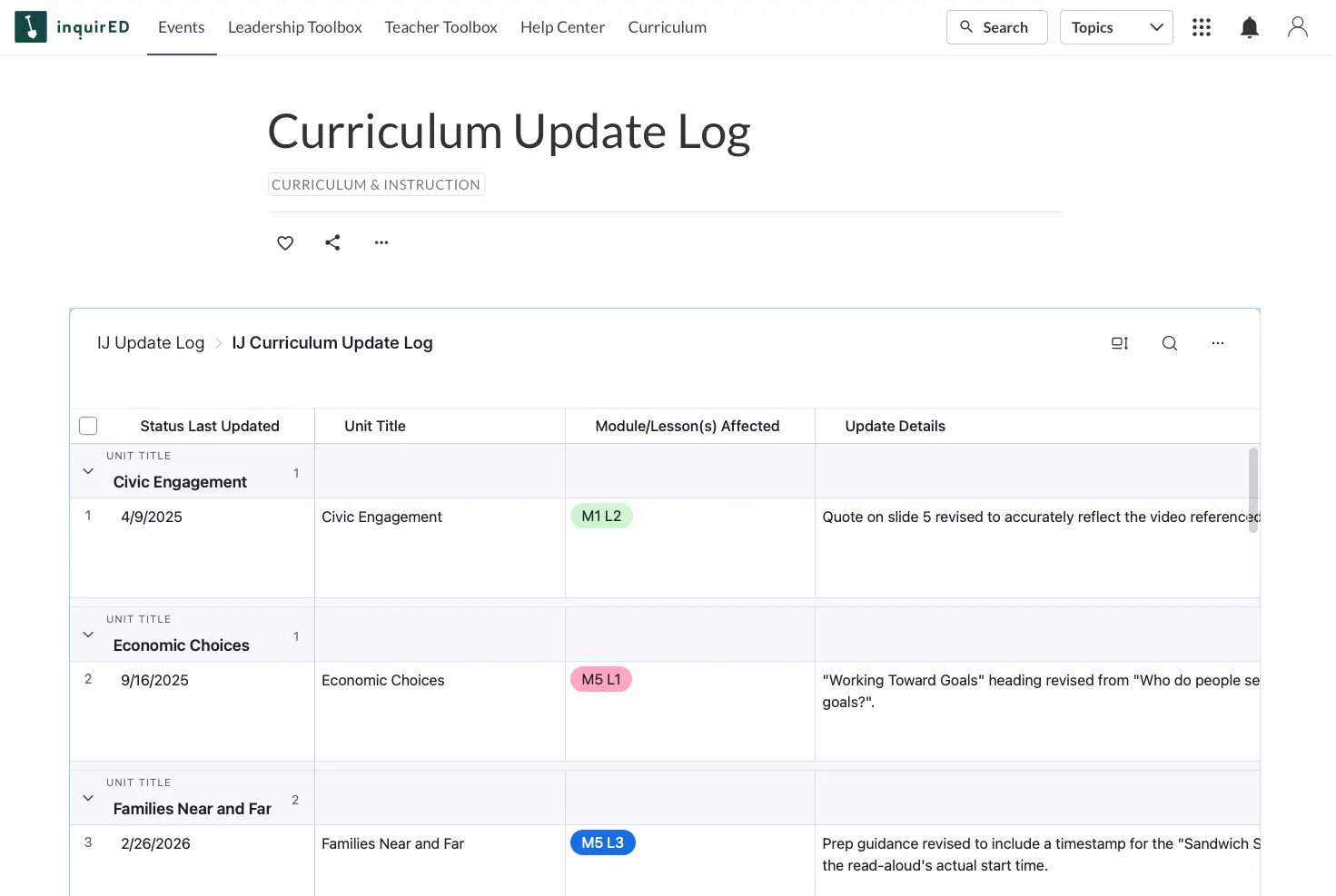
Curriculum Update Log
Always know what changed
The Inquiry Hub now includes a running log of curriculum updates, pulled directly from our content team as changes happen. You can see what changed and open the update log.
Inquiry Work Gallery
Check out the amazing work that inquirED teachers and leaders have shared this school year
Click on a thumbnail below to expand and view more images.
We attend an IB school. We love inquiry. This is our community project. We wanted to help our community by solving the Lanternfly problem. We started with a questions. What we wonder and what we already knew. We read books and researched on the computer. We wrote the problem and reported our findings. We took action and killed them. We tally how much we killed in one week. We mapped where they are and where they are going. We presented our findings to guest visitors. We took feedback and reflected on our decision to kill them. We talked about other ways to help our community.
Navigating School
Kindergarten
Anchor Chart
We attend an IB school. We love inquiry. This is our community project. We wanted to help our community by solving the Lanternfly problem. We started with a questions. What we wonder and what we already knew. We read books and researched on the computer. We wrote the problem and reported our findings. We took action and killed them. We tally how much we killed in one week. We mapped where they are and where they are going. We presented our findings to guest visitors. We took feedback and reflected on our decision to kill them. We talked about other ways to help our community.
Additional Info
Beverly Shelton from Alexandria City Public Schools: VA, Kindergarten
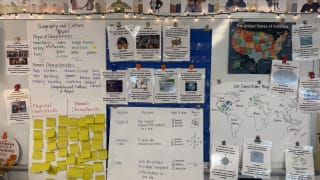
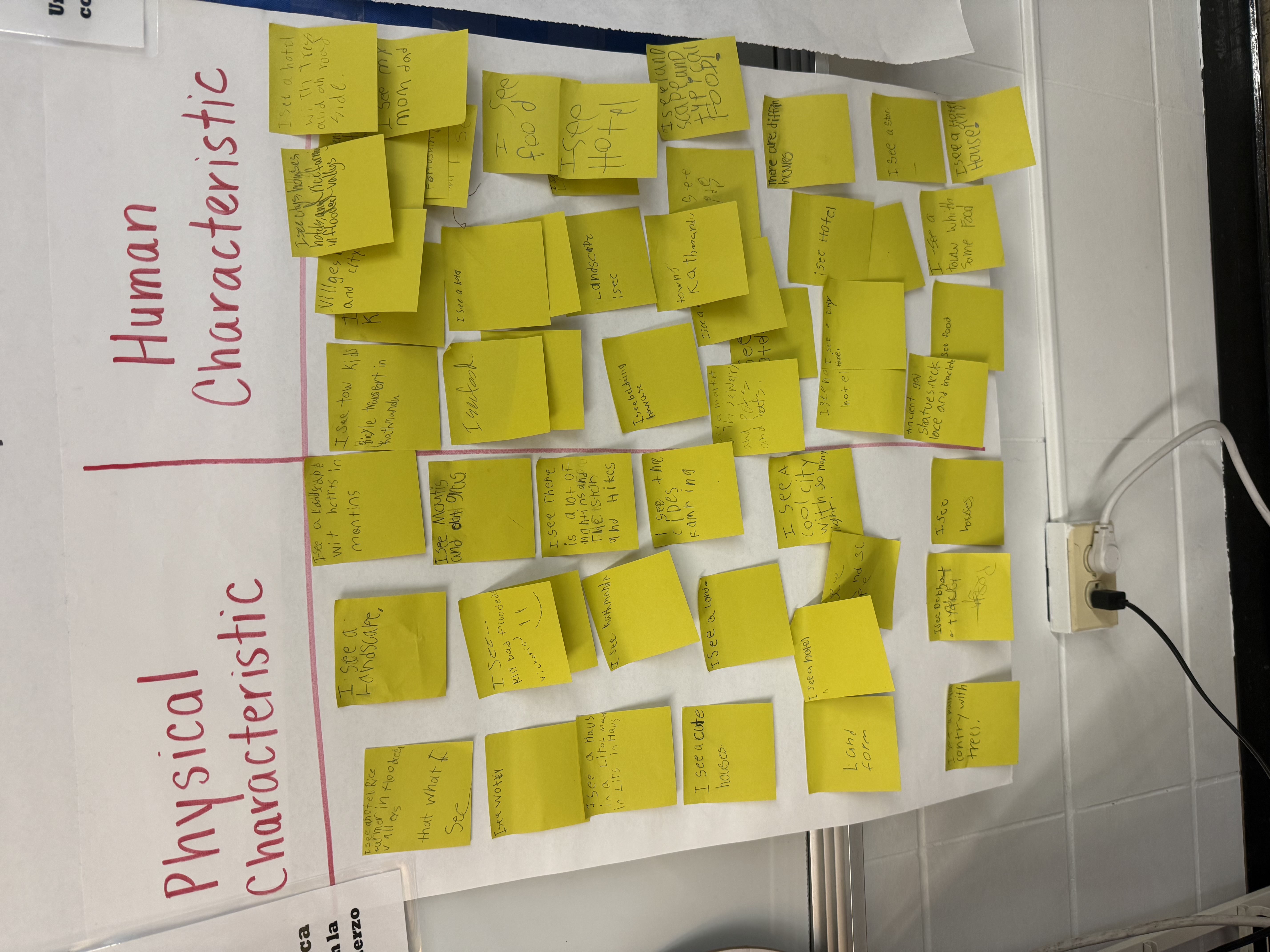
Our 3rd grade classes, during a Think-Pair-Share, generated a list of the physical and human characteristics of Nepal. Next, they wrote out “I See” statements on sticky notes and then added them to our inquiry wall on the Geography and Culture Anchor Chart. Then they examined the images of the countries from their Plane Ticket to find out more about the physical and human characteristics of those countries.
Global Connections
3rd Grade
Wall Display
Our 3rd grade classes, during a Think-Pair-Share, generated a list of the physical and human characteristics of Nepal. Next, they wrote out “I See” statements on sticky notes and then added them to our inquiry wall on the Geography and Culture Anchor Chart. Then they examined the images of the countries from their Plane Ticket to find out more about the physical and human characteristics of those countries.
Additional Info
Jennifer Duzinskas from Maywood School District 89: IL, 3rd Grade
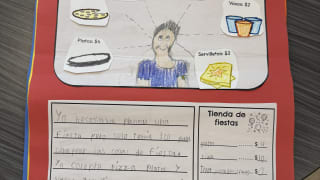
Students had $20 to budget for a party using one of the lessons from the unit. I open up a store with little cards that they receive with the items they decide to purchase. Then they draw a picture and glue their items on it. Finally students write a paragraph that with a topic sentence, details and conclusion. Their paragraph should include things they chose to buy, something they would've liked to buy but couldn't afford and finally if they had any money left over. I then put these out in the hallway on our bulletin board for parents to see during parent conferences in the fall.
Meeting Needs and Wants
2nd Grade
Handout
Students had $20 to budget for a party using one of the lessons from the unit. I open up a store with little cards that they receive with the items they decide to purchase. Then they draw a picture and glue their items on it. Finally students write a paragraph that with a topic sentence, details and conclusion. Their paragraph should include things they chose to buy, something they would've liked to buy but couldn't afford and finally if they had any money left over. I then put these out in the hallway on our bulletin board for parents to see during parent conferences in the fall.
Additional Info
Cynthia Lopez from Canby School District: OR, 2nd Grade
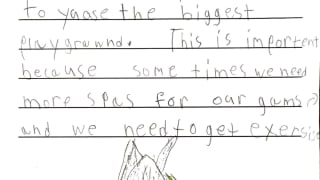
The students had choice in their product. Some chose to write a letter while others chose to create a slideshow in Seesaw. They wanted to address the "injustice" of not being allowed on one part of our playground or the need for more water fountains in our cafeteria.
Civic Engagement
1st Grade
Final Product
The students had choice in their product. Some chose to write a letter while others chose to create a slideshow in Seesaw. They wanted to address the "injustice" of not being allowed on one part of our playground or the need for more water fountains in our cafeteria.
Additional Info
Beth Caruso from South Brunswick School District: NJ, 1st Grade
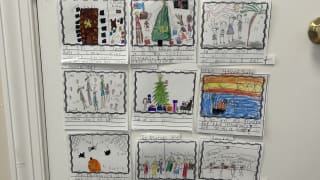
My students loved this project! Each student explained a holiday that their family celebrates and some of the traditions they participate in. Highly recommend!
Families Near and Far
1st Grade
Anchor Chart
My students loved this project! Each student explained a holiday that their family celebrates and some of the traditions they participate in. Highly recommend!
Additional Info
Chrissy Milliken from Agnes Irwin School: PA, 1st Grade
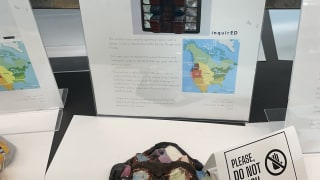
The students chose an artifact from the cultural area that they researched and made a replica out of clay, wood, paint and other materials. In order to inspire and educate our broader community, these replicas were displayed at our local library along with a photograph of the original artifact and information about the cultures of origin. We heard such positive feedback from the library on the interaction of the community with the projects-looking, reading and learning from the student writing and the maps and images included alongside the student work. Having an authentic audience was important to creating quality work.
Native America
5th Grade
Final Product
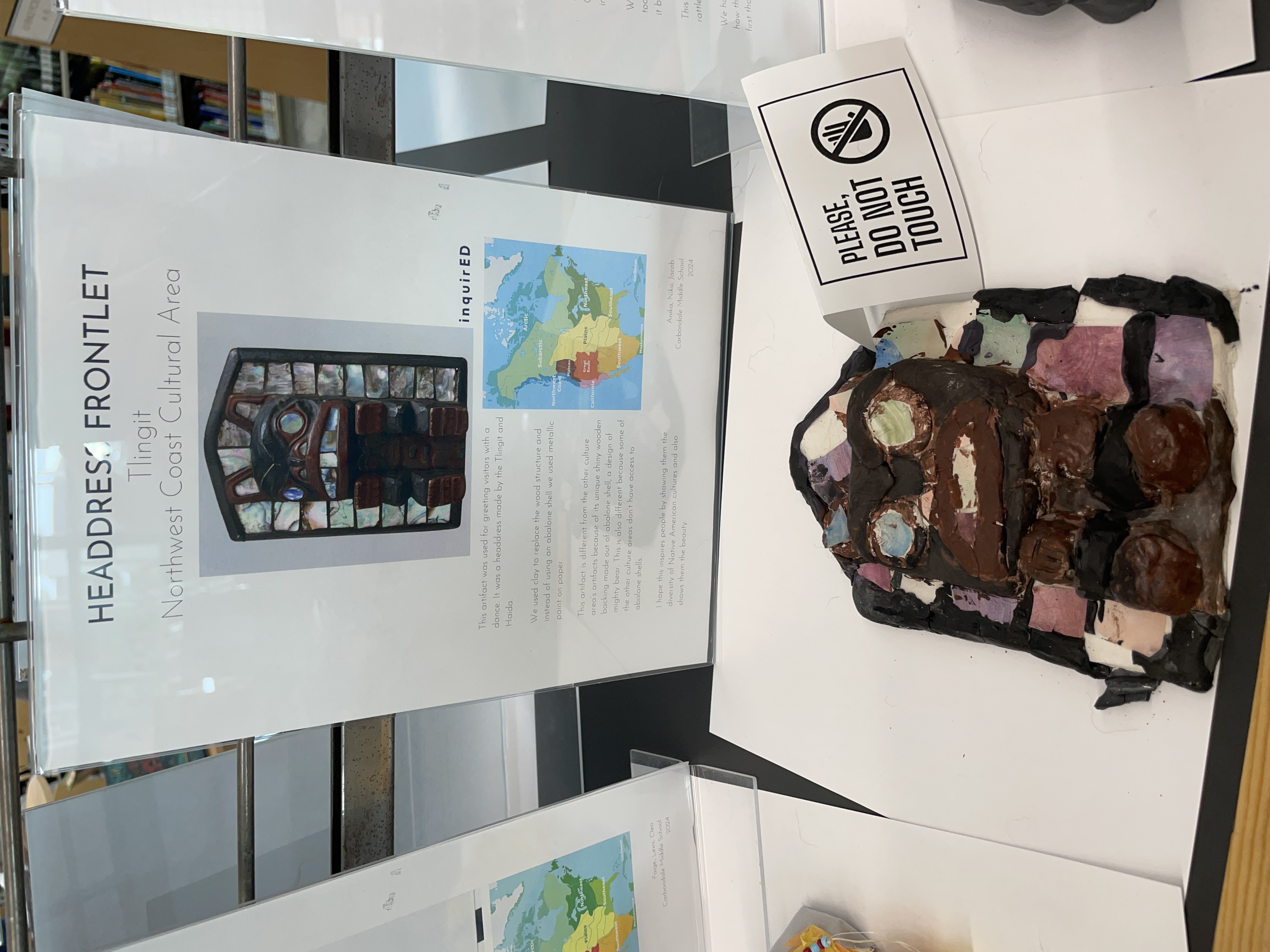
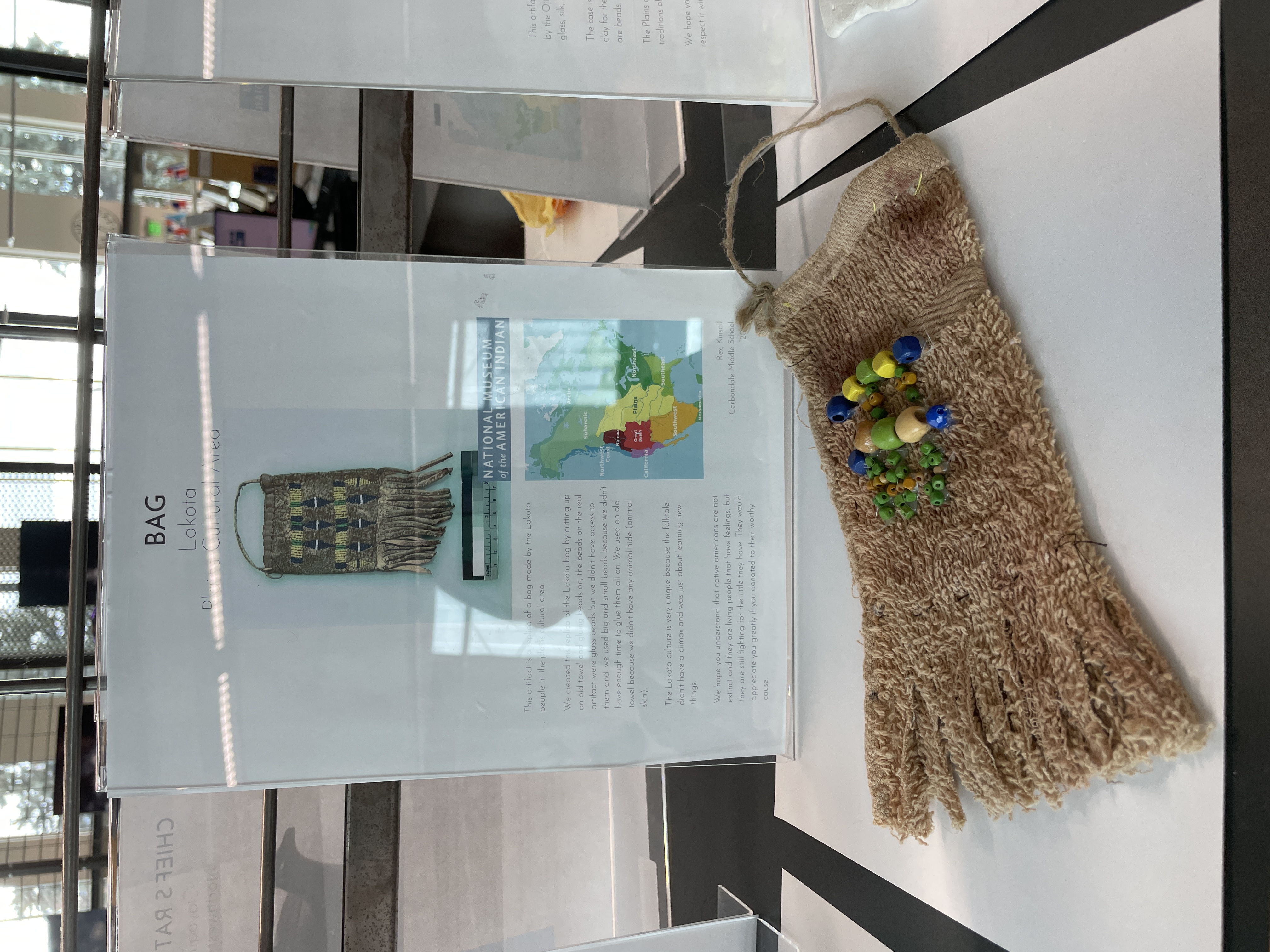
The students chose an artifact from the cultural area that they researched and made a replica out of clay, wood, paint and other materials. In order to inspire and educate our broader community, these replicas were displayed at our local library along with a photograph of the original artifact and information about the cultures of origin. We heard such positive feedback from the library on the interaction of the community with the projects-looking, reading and learning from the student writing and the maps and images included alongside the student work. Having an authentic audience was important to creating quality work.
Additional Info
Betsy McMichael from Roaring Fork School District: CO, 5th Grade
After the election, our fifth graders were disheartened by the low voter turnout at the local, state, and national levels. To address this, we integrated our writing unit with the inquiry project, creating brochures to emphasize the importance of participating in elections at every level.
Rights and Responsibilities
5th Grade
Final Product
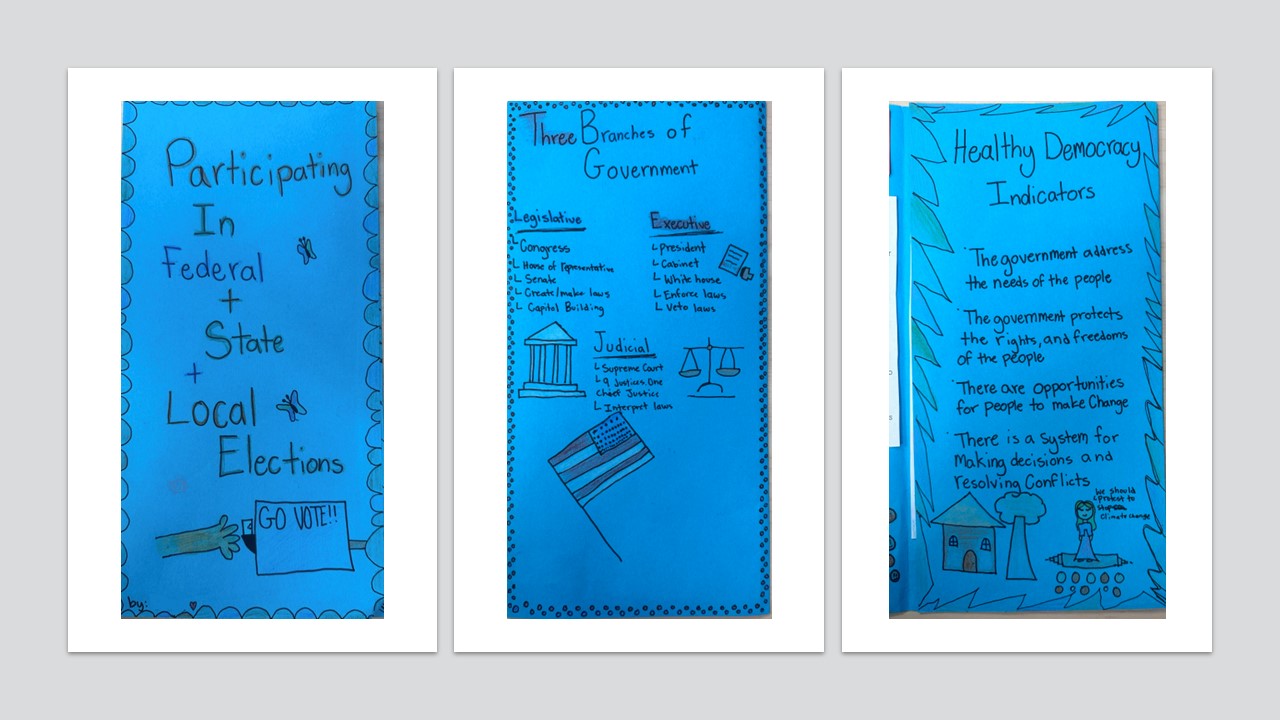
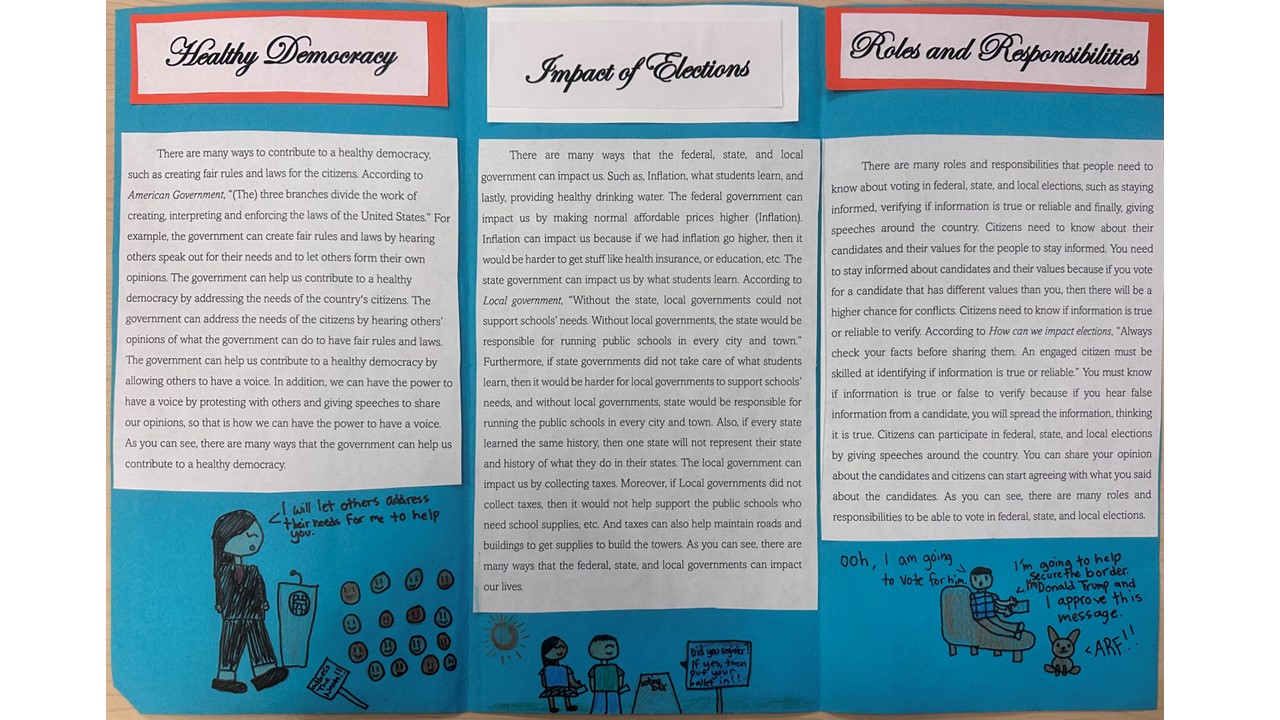
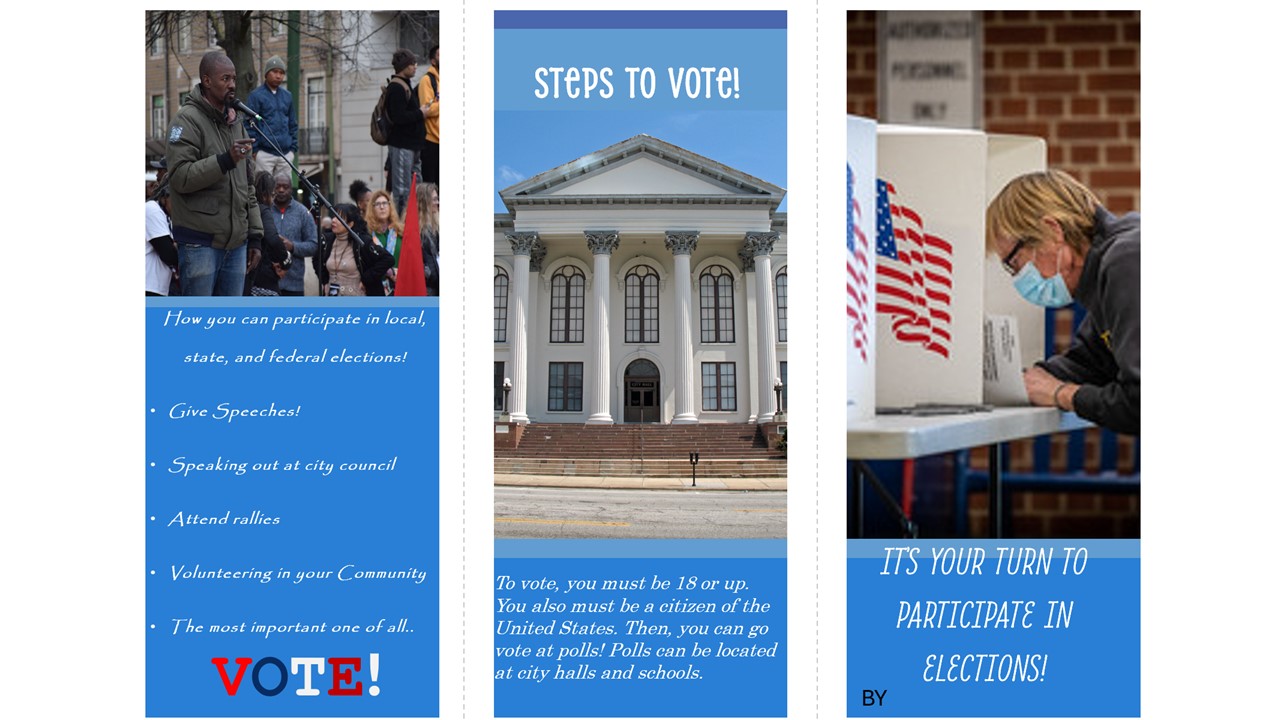
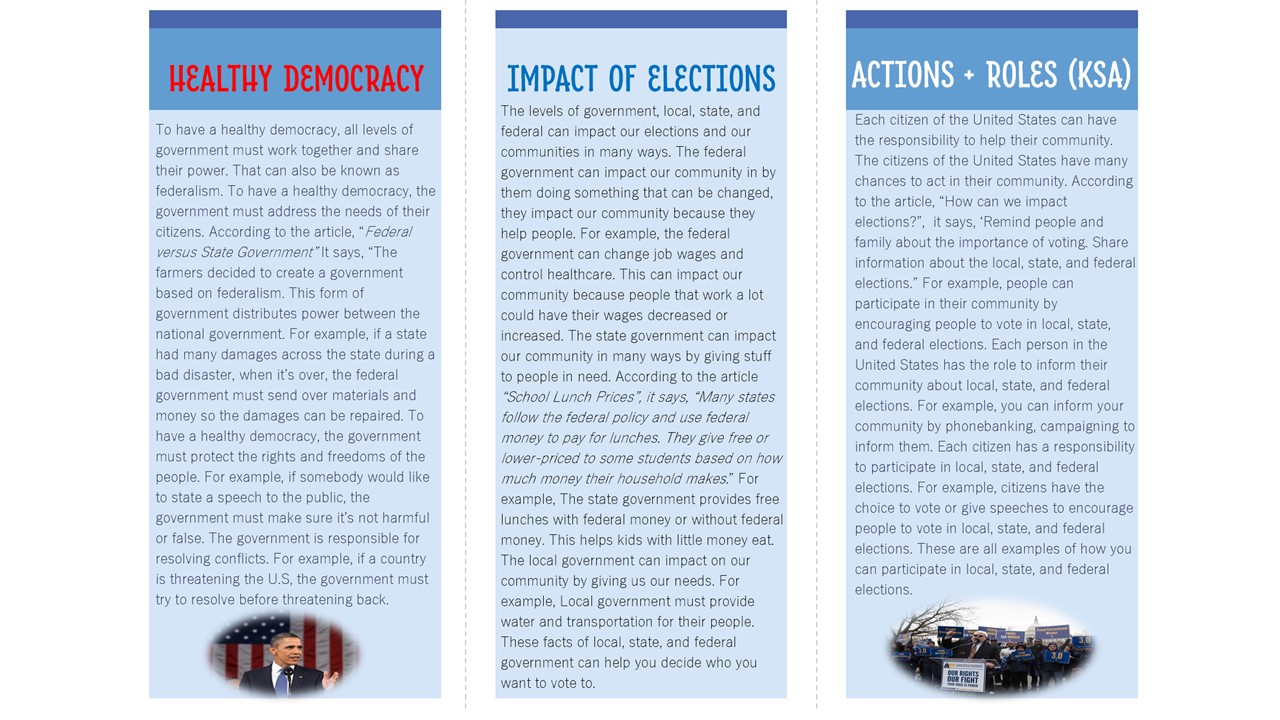
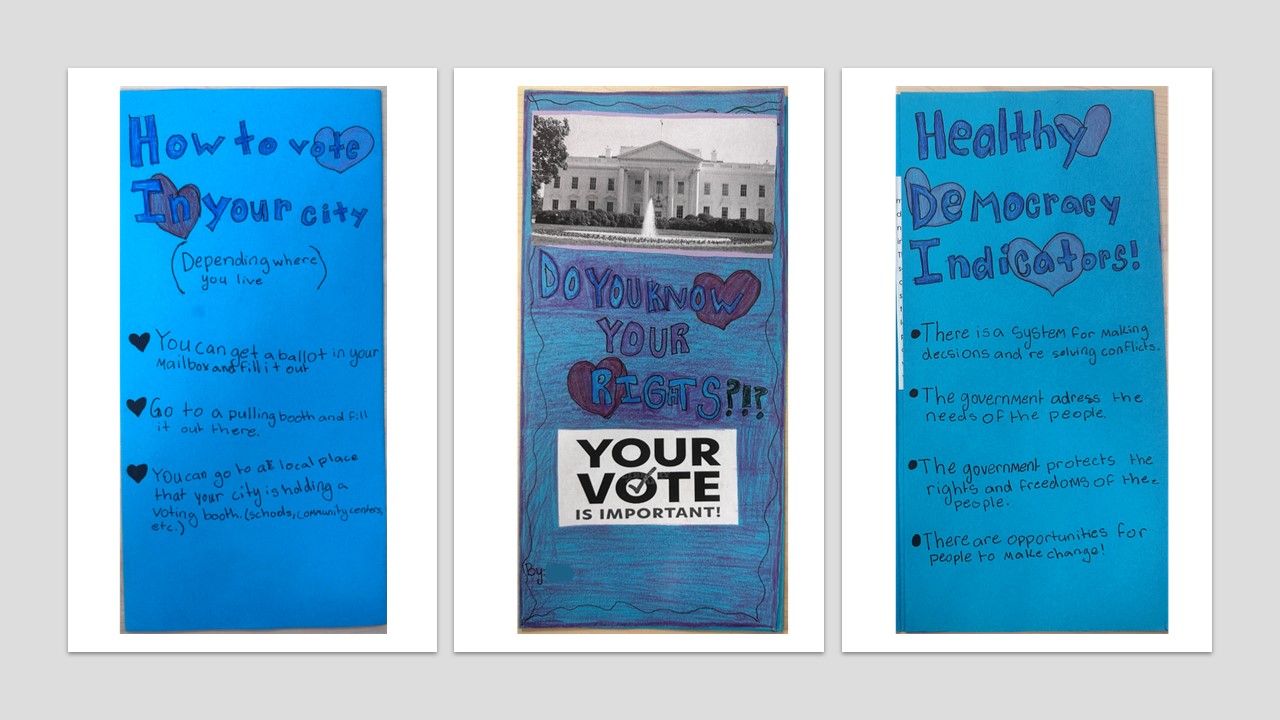
After the election, our fifth graders were disheartened by the low voter turnout at the local, state, and national levels. To address this, we integrated our writing unit with the inquiry project, creating brochures to emphasize the importance of participating in elections at every level.
Additional Info
Seymour, Morgan from Lake Washington School District: WA, 5th Grade
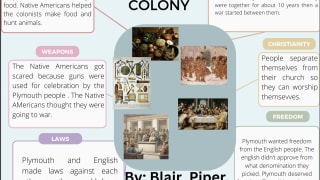
Students researched early settlements looking for examples of cooperation and conflict. They created Mind Maps showing what they learned. Walden School, Deerfield School District 109
The Colonial Era
5th Grade
Handout

Students researched early settlements looking for examples of cooperation and conflict. They created Mind Maps showing what they learned. Walden School, Deerfield School District 109
Additional Info
Barbara Mastin from Deerfield Public Schools District 109: IL, 5th Grade
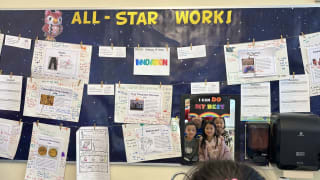
My second grade students LOVED this unit. We kicked the unit off with the QFT, and students did a gallery walk as they annotated the different invention posters. They shared their noticings and wonderings. You can see their “innovative” vocabulary sheets where their understandings of the term evolved throughout the lesson. We finished the unit with a biography presentation on an innovator of their choice!
Innovation
2nd Grade
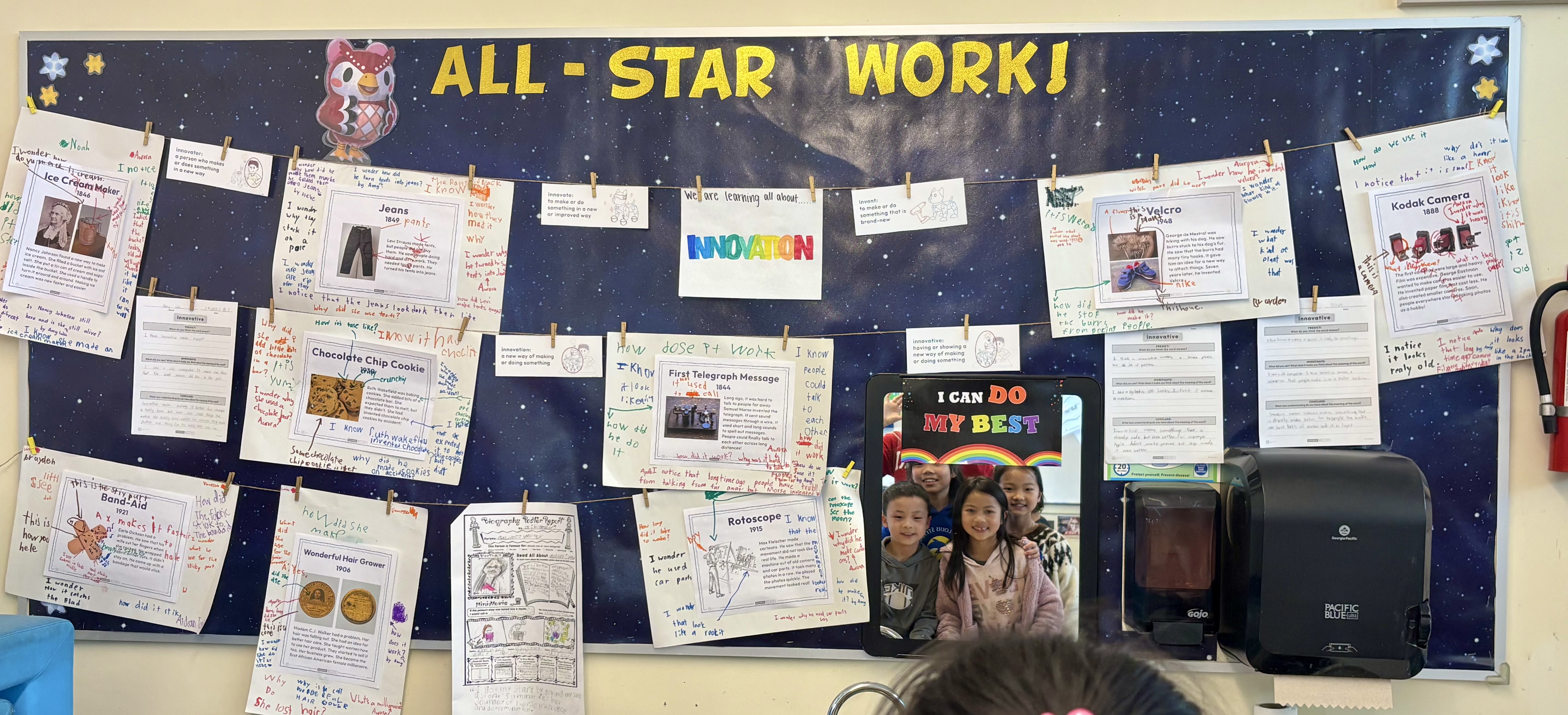
My second grade students LOVED this unit. We kicked the unit off with the QFT, and students did a gallery walk as they annotated the different invention posters. They shared their noticings and wonderings. You can see their “innovative” vocabulary sheets where their understandings of the term evolved throughout the lesson. We finished the unit with a biography presentation on an innovator of their choice!
Additional Info
Lindsay Goddard from San Francisco Unified School District: CA, 2nd Grade
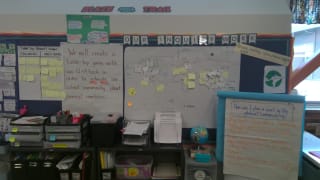
We used the map for the first 5 modules, and then for module 6 my students decided that they want to make a game board that goes with a country Question & Answer book they made (from each of the countries in Module 3). They have looked at models (game boards) to determine what they want to have in their game, and we just came up with Team norms. Next, we will split into groups to create parts of our class game.
Global Connections
3rd Grade
Final Product
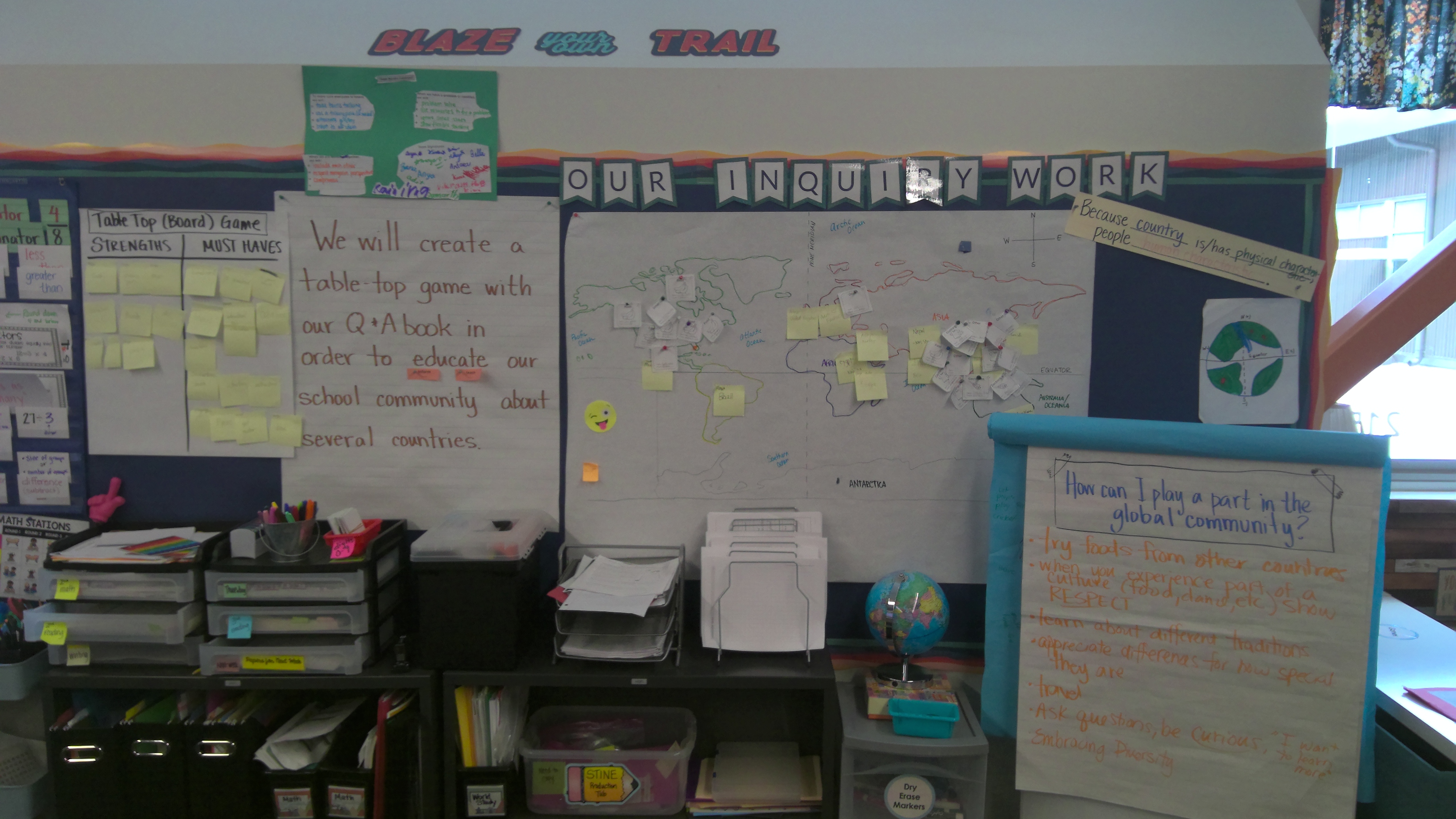
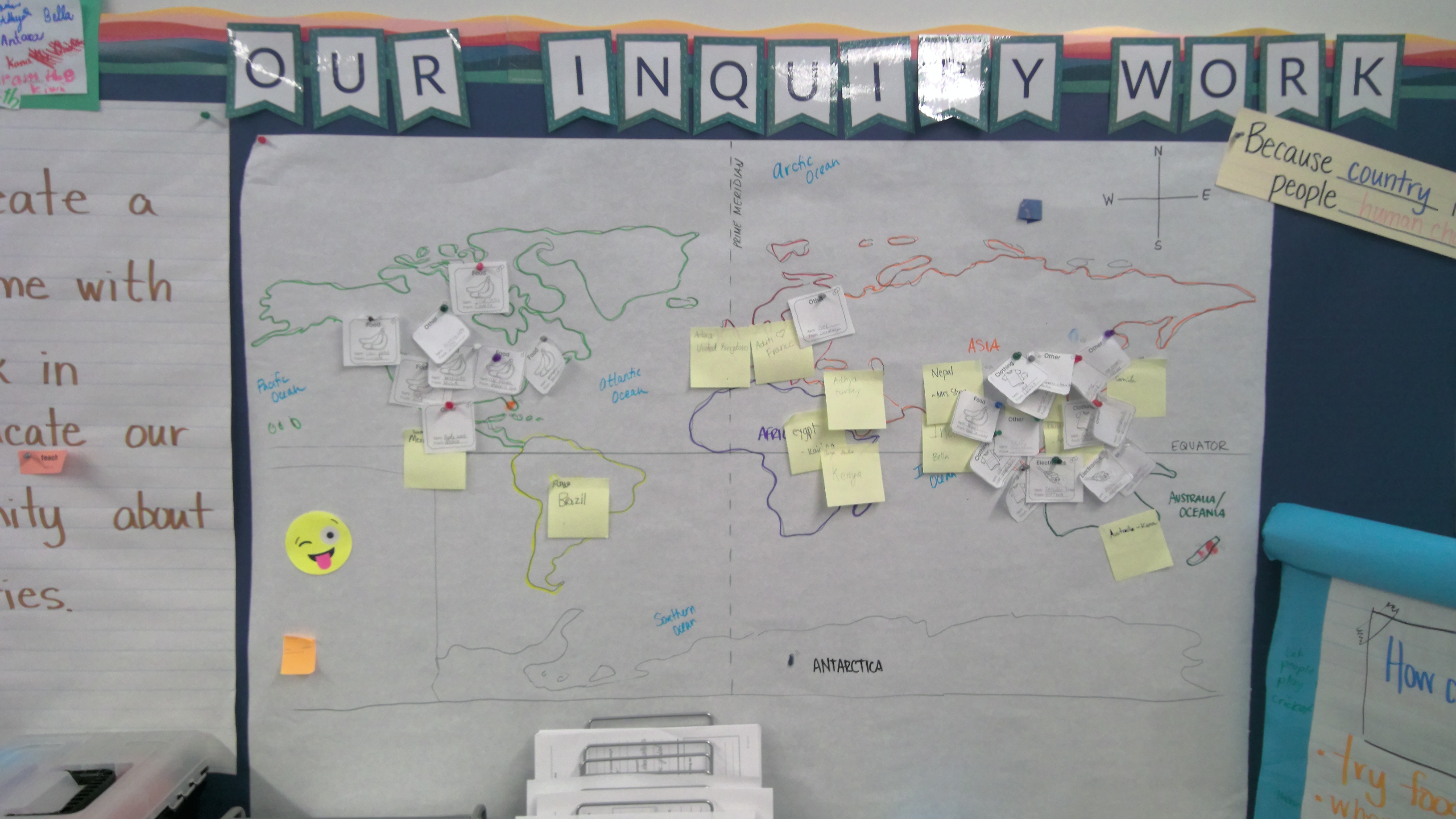
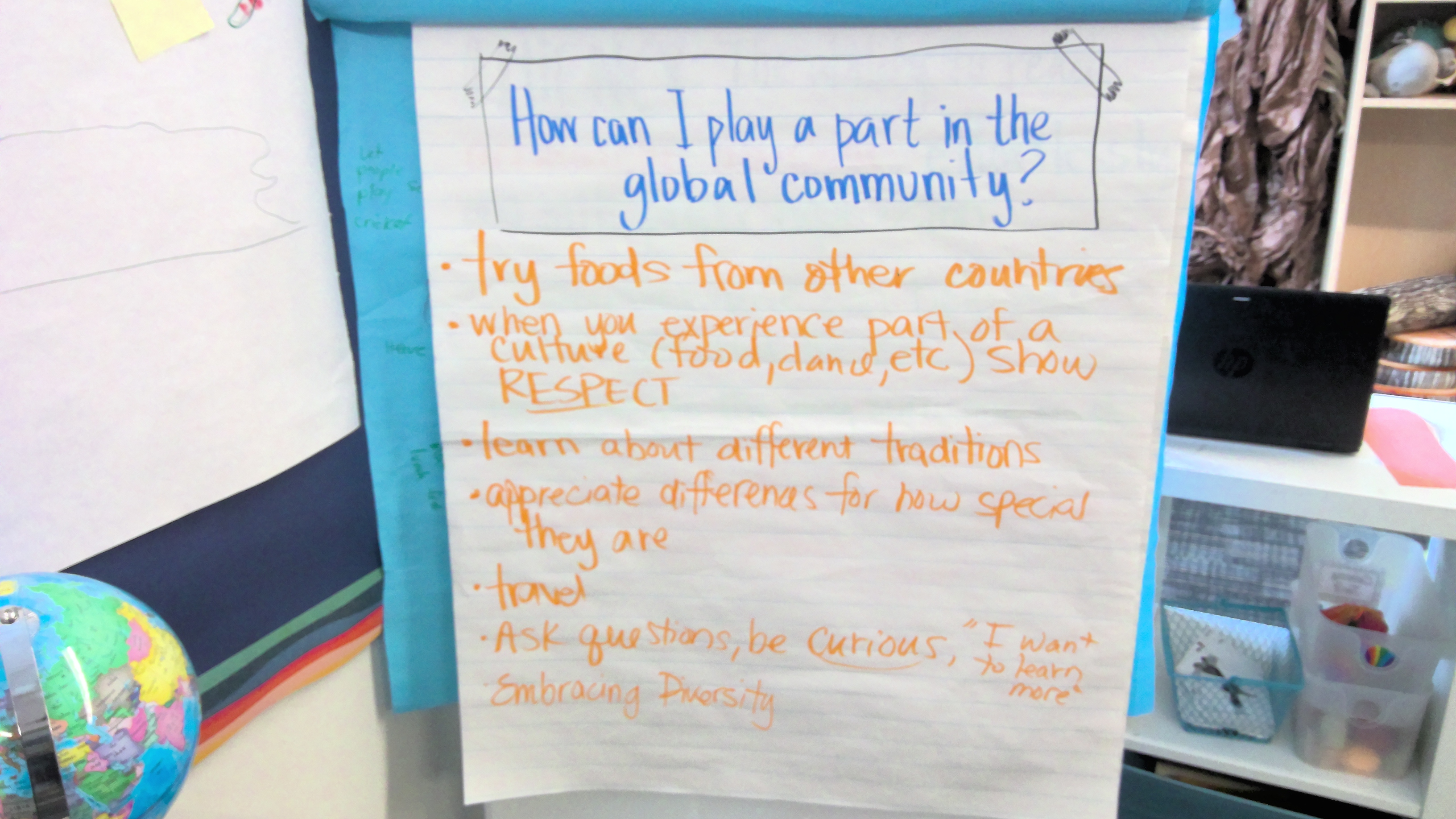
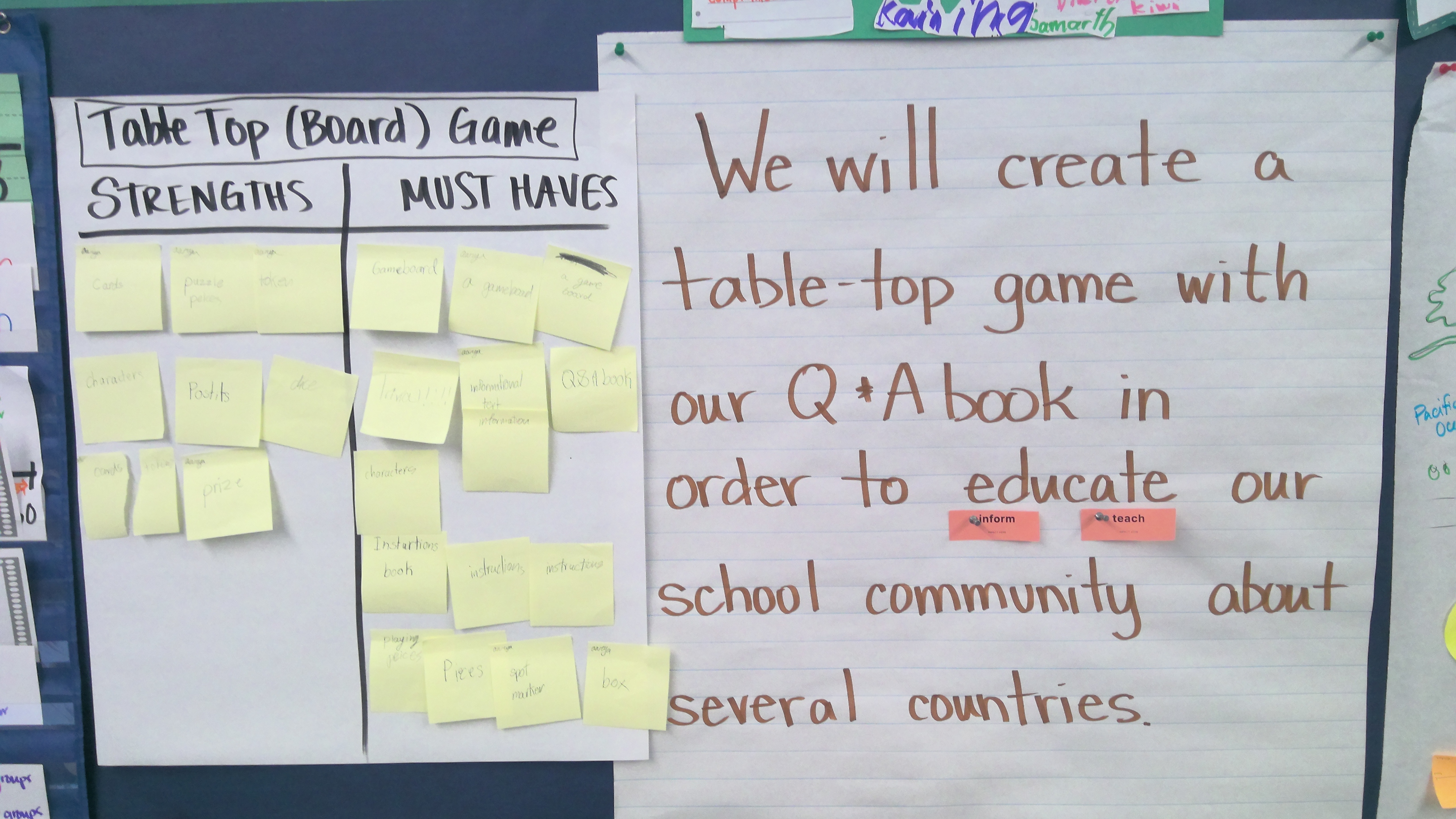
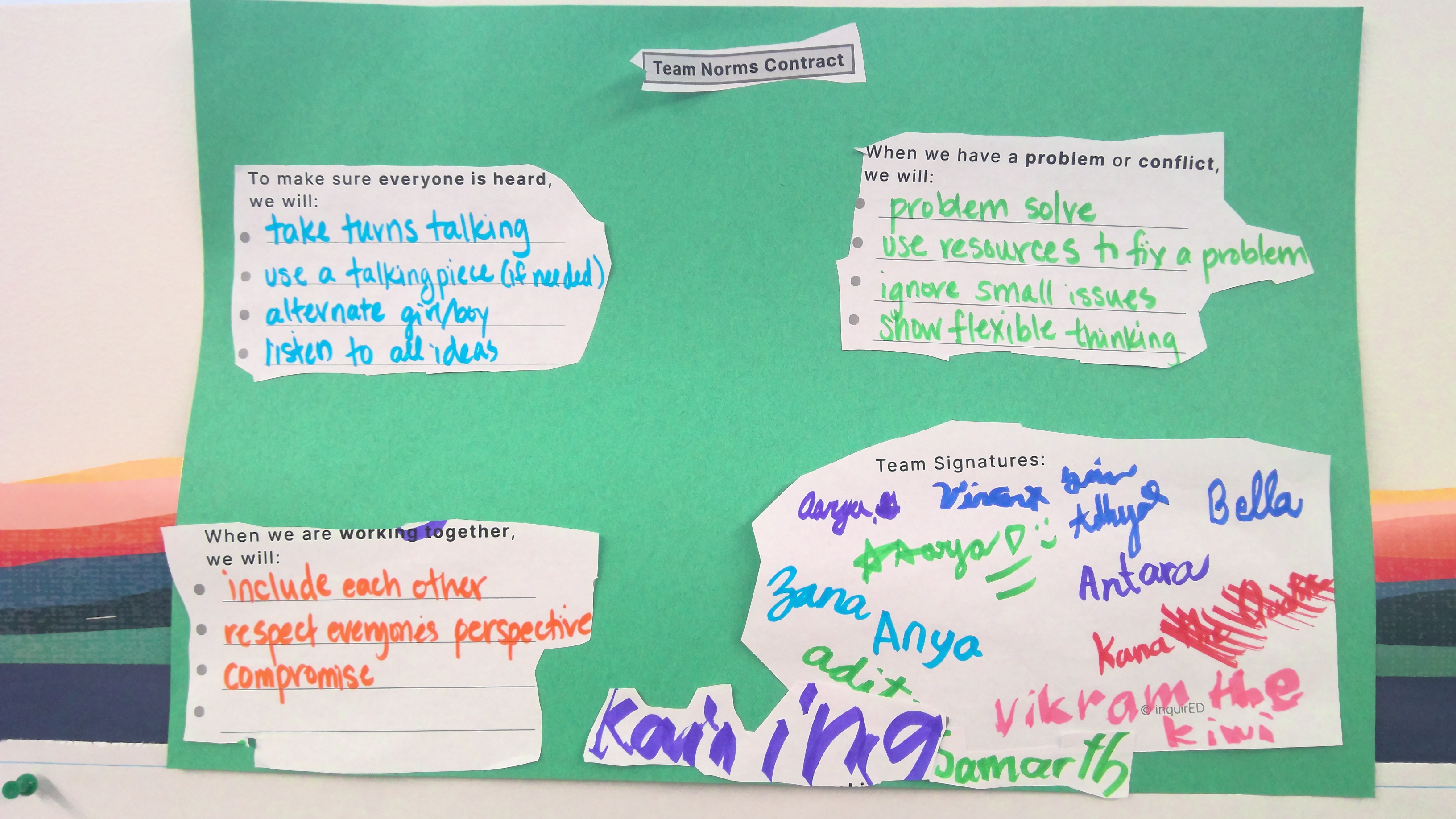
We used the map for the first 5 modules, and then for module 6 my students decided that they want to make a game board that goes with a country Question & Answer book they made (from each of the countries in Module 3). They have looked at models (game boards) to determine what they want to have in their game, and we just came up with Team norms. Next, we will split into groups to create parts of our class game.
Additional Info
Natalya Stine from Lake Washington School District: WA, 3rd Grade, 2nd Grade

Students started by making a self portrait. Then, they created flags from their family's country of origin. They also wrote and drew about a family tradition in the speech bubble. Once all the individual pieces were created, we worked together to decide on a mural background and then painted it in teams.
Families Near and Far
1st Grade
Final Product
Students started by making a self portrait. Then, they created flags from their family's country of origin. They also wrote and drew about a family tradition in the speech bubble. Once all the individual pieces were created, we worked together to decide on a mural background and then painted it in teams.
Additional Info
Kait Doherty from Public Schools of Brookline: MA, 1st Grade
As a final inquiry project, students considered hallway behavior that they felt could be improved upon. They designed signs that they thought would promote safe and respectful behavior in different areas of the school.
Civic Engagement
1st Grade
Final Product
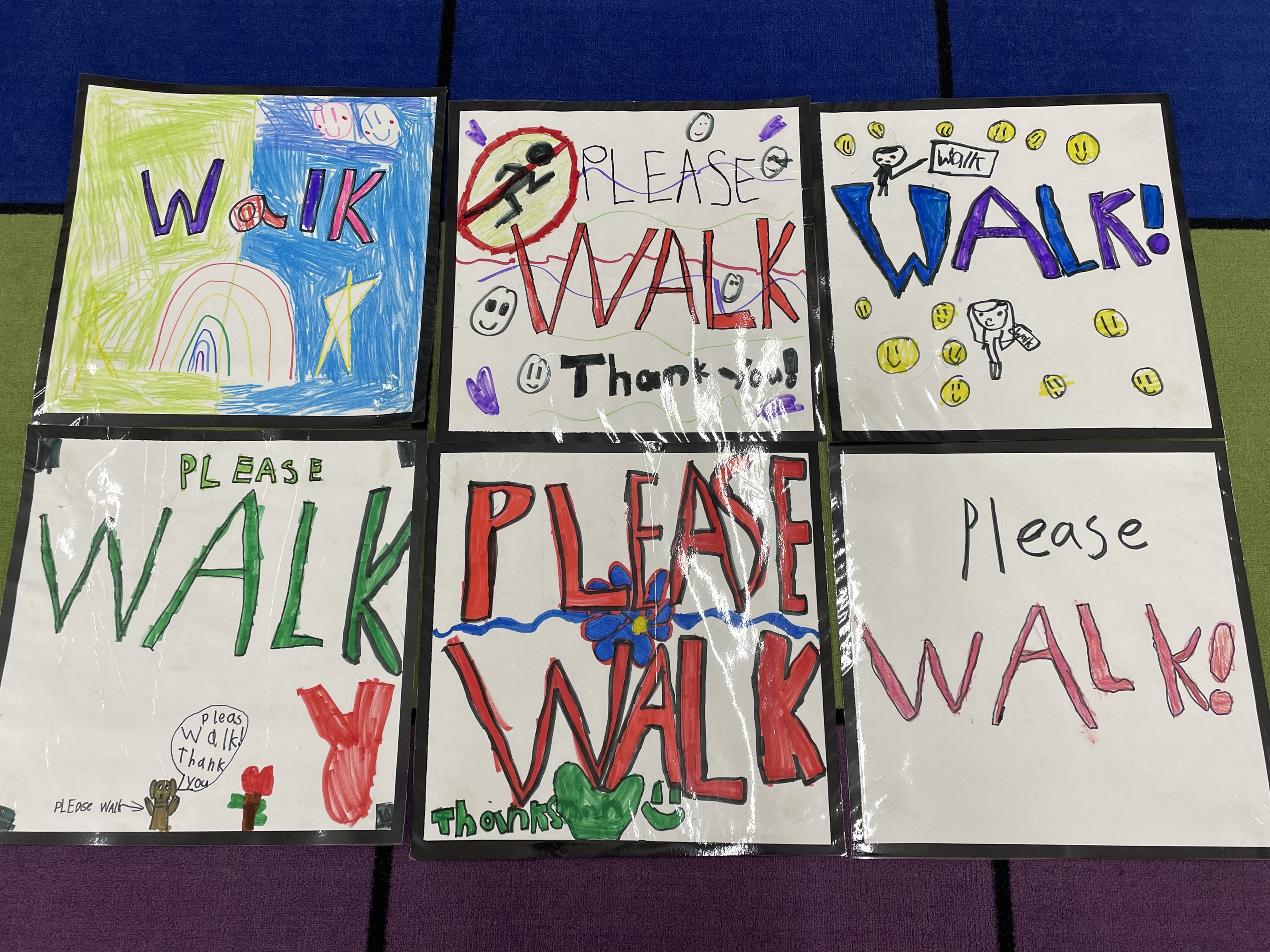
As a final inquiry project, students considered hallway behavior that they felt could be improved upon. They designed signs that they thought would promote safe and respectful behavior in different areas of the school.
Additional Info
Barbara Mastin from Deerfield Public Schools District 109: IL, 1st Grade
No results found.
There are no results with this criteria. Try changing your search.