Pre-K/TK Curriculum
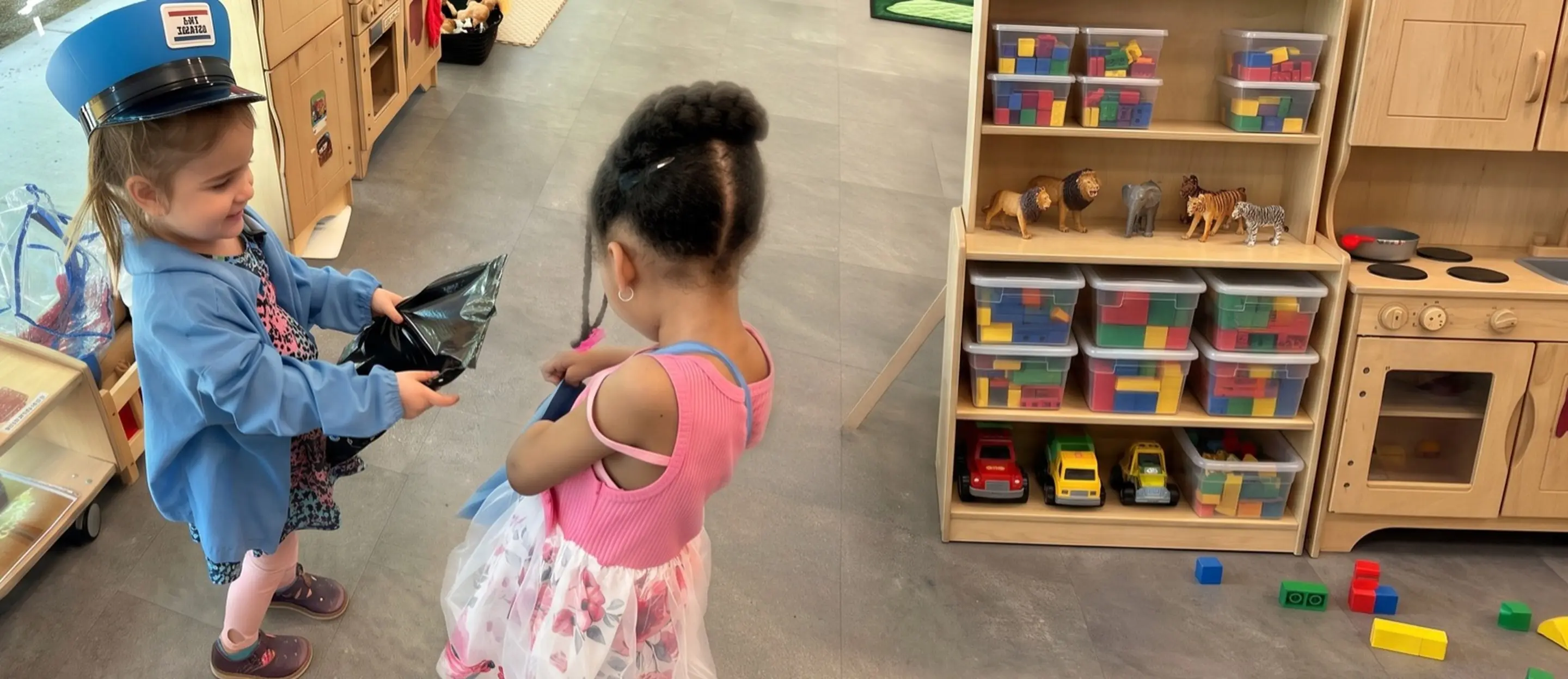
Great First Eight Pre-K/TK strengthens early literacy, math, and other key areas of development through a play-based and responsive approach.
Schedule a demoDesigned by leading researchers and scholars
Dr. Nell K. Duke has brought together a team of leading researchers and practitioners to create a curriculum where every instructional move can be traced to the evidence behind it.

Dr. Nell K. Duke
Co-Director, Infant–Grade 2
Dr. Nell K. Duke is an elected member of the National Academy of Education and a Reading Hall of Fame inductee. She serves as Executive Director of the Center for Early Literacy and Learning Success at Stand for Children, Professor of Education and Psychology at the University of Michigan, and Strategic Advisor for Literacy for inquirED.
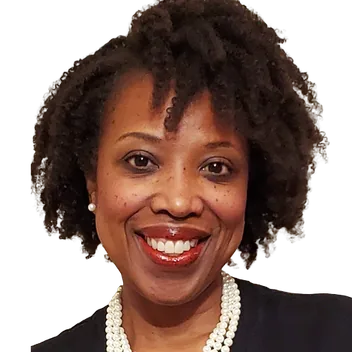
Dr. Marisha L. Humphries
Co-Director, Pre-K/TK–Grade 2
Dr. Marisha L. Humphries is a licensed clinical psychologist whose developmental and prevention science research examines how schools can support African American children's social and emotional competence through equitable learning environments. She serves as Professor of Educational Psychology at the University of Illinois Chicago.

Dr. Claire D. Vallotton
Co-Director, Infant–Pre-K/TK
Dr. Claire D. Vallotton is Professor and Director of Graduate Studies in Human Development & Family Studies at Michigan State University. She is the founding coordinator of the Collaborative for Understanding the Pedagogy of Infant & Toddler Development (CUPID), a group of scholars across universities working to improve how the field prepares early childhood educators.
Meet the early childhood researchers for other domains

Dr. Andres Bustamante
Science and Engineering

Dr. Eduardo Bustamante
Health Literacy

Dr. Sandra Chapman
Social Identity

Dr. Shana Cinquemani
Art

Dr. Nicole Gardner-Neblett
Language & Linguistic Diversity

Dr. Beatriz Ilari
Music

Dr. Diana Leyva
Family Engagement

Dr. Katherina Payne
Social Studies

Dr. Geetha Ramani
Mathematics
Project-based and interdisciplinary, by design
Each unit opens with a question that sparks curiosity and drives learning. Children spend the unit investigating it, going deeper each week, as they grow in literacy, math, social and emotional development, and other key domains.
One big question in each unit…
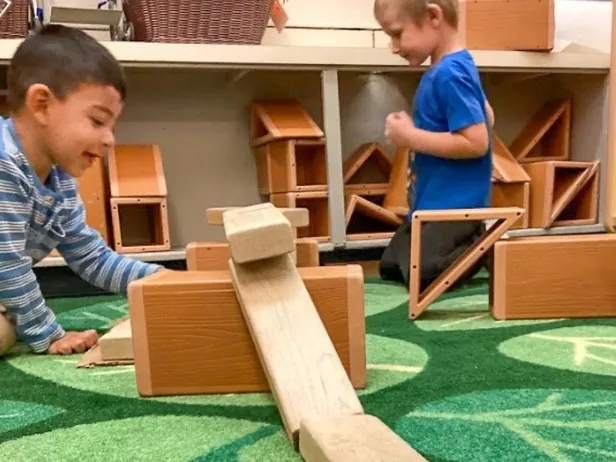
Example unit: Ramp It UpHow can we use ramps and wheels to move things and help people?

…drives investigation across domains…
 Literacy
 Mathematics
 Science and Engineering
 Social Studies
 Social and Emotional Learning
 Art
Art Music
Music Health Literacy
 Communication
 Social Justice
 Approaches to Learning
The evidence
Top marks in review. Growth in the classroom.
Massachusetts EEC and AIR curriculum review, July 2025
- 4.0/4Developmentally appropriate and intellectually challenging
- 4.0/4Learning goals and assessment
- 4.0/4Implementation supports
- 4.0/4Inclusiveness and individualization
All 17 indicators scored 4, the highest rating.
When Massachusetts asked the American Institutes for Research to review pre-K and TK curricula, Great First Eight scored highest. It was the only curriculum in that review to reach top marks in literacy, math, and social and emotional learning at once.
In the first year of using Great First Eight Pre-K/TK, the percentage of children reaching "Building Middle" or higher on the Desired Results Developmental Profile (DRDP) rose substantially compared with the cohort the year before implementation of Great First Eight.
See Great First Eight in action
Register for a demo webinar to explore Great First Eight Pre-K/TK. Discover how the curriculum supports purposeful, play-based instruction in every classroom.
Register now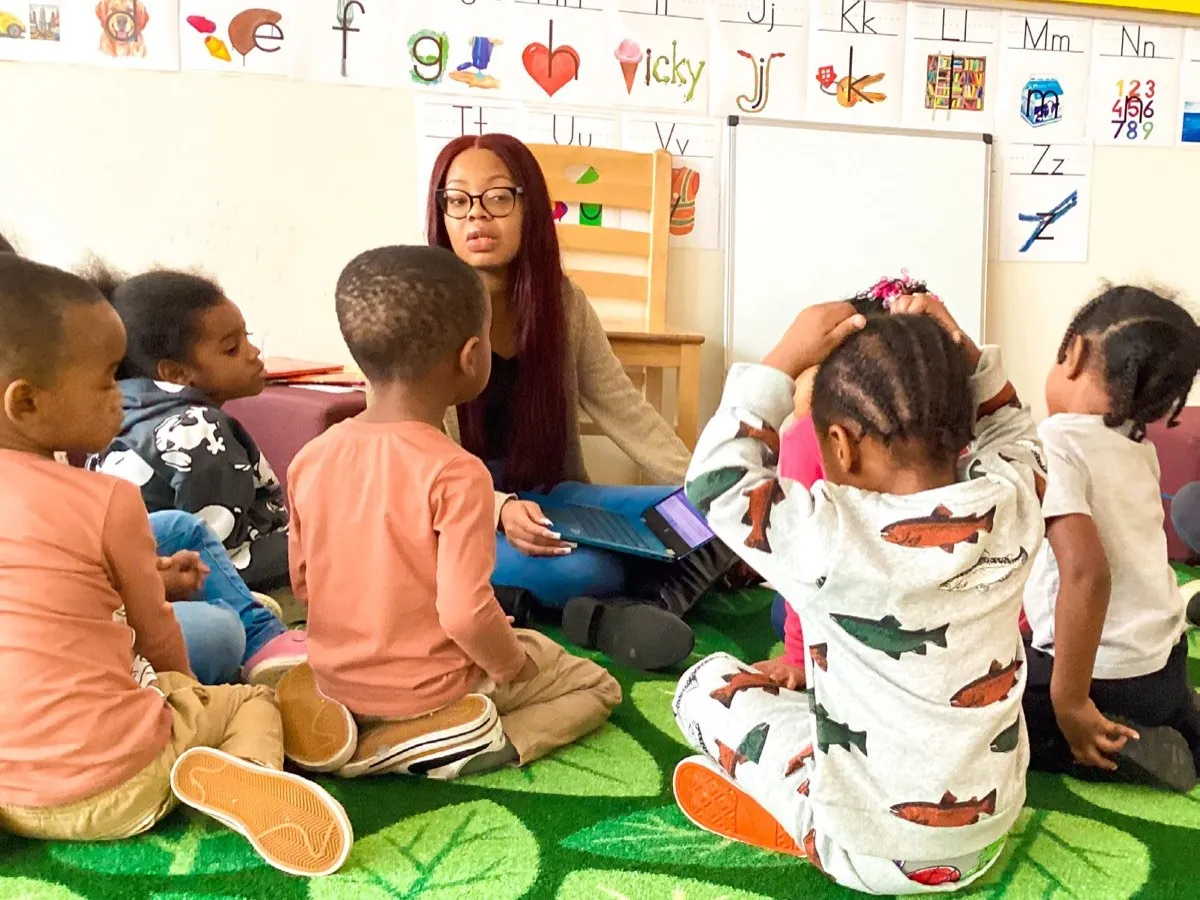
What leaders are seeing in their classrooms
We have definitely seen incredible changes, not just in terms of curriculum but also in terms of practice.
Thomas Peri
Principal, Eliza Chappell Elementary
Great First Eight is the best curriculum out there. It speaks to the communities we serve and believes in the brilliance of every child.
Celina Byrd
Former Principal, Marygrove Early Education Center
It’s a well-structured, research-informed curriculum. The gains have been huge. And you really see that spark of curiosity being reborn from the teachers.
Raema Avalos
Mentoring Supervisor/Coach at Educare, Los Angeles at Long Beach
See what a unit holds and how a day unfolds
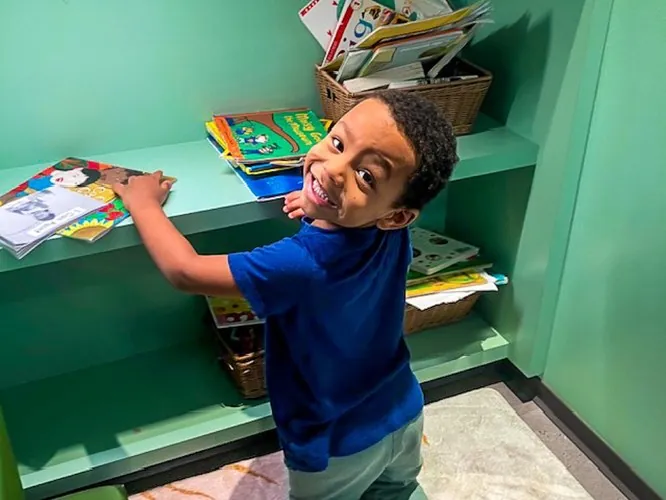
Constructing Our Classroom Community
How can we create a classroom community that helps us learn?
Children and teachers build their classroom community together, learning routines, exploring spaces and materials, creating agreements, and solving a shared need through engineering. They organize and label the room, learn about one another, and create A Guide to Our Classroom Community.
At a Glance
- Days 1-5: Who are my classmates and teachers? What do we do together at school?
- Days 6-10: What do I like to do with my family? What do we like to do in our classroom?
- Days 11-15: How can we create a classroom that is safe and fun for everyone? How can we construct something useful for our classroom?
- Days 16-20: How can I care for myself and others? How do we work together as a classroom community?
Ramp It Up
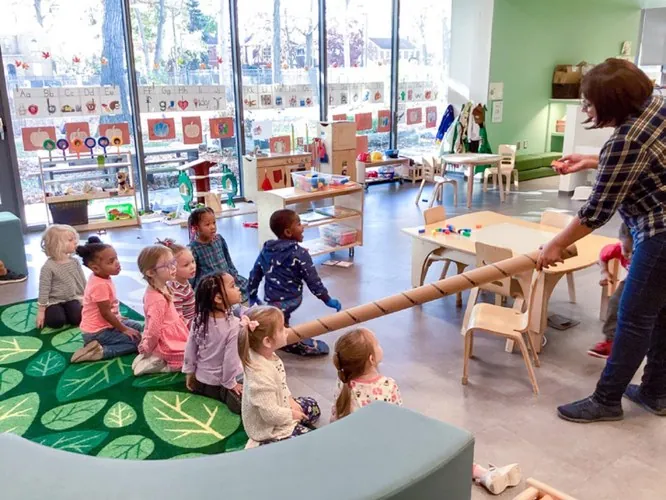
How can we use ramps and wheels to move things and help people?
Children discover how ramps and wheels help people, then investigate force, motion, and cause and effect by building, testing, and revising ideas together. They document their discoveries in a book of diagrams to share with families and other classrooms, and apply their learning to create a delivery service that serves their community.
At a Glance
- Days 1-5: What is a ramp and how do people use it?
- Days 6-10: What are wheels and other things that roll, and how do people use them?
- Days 11-15: Who in our community needs something delivered? How could we help?
- Days 16-20: How can we use the engineering design cycle to create a delivery service?
Farm to Table
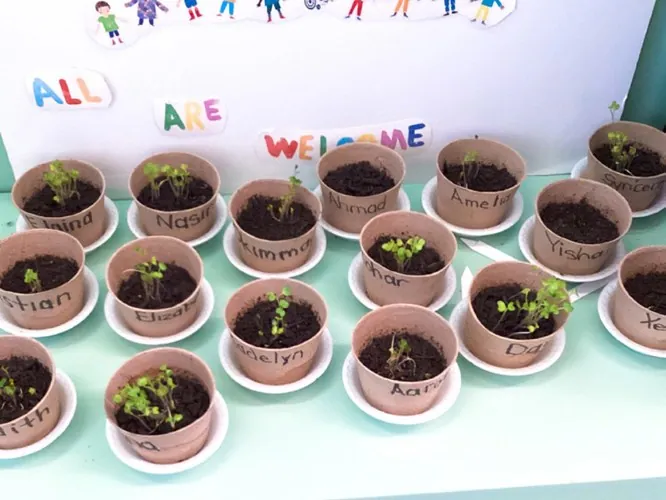
How does the food we eat get to our plates?
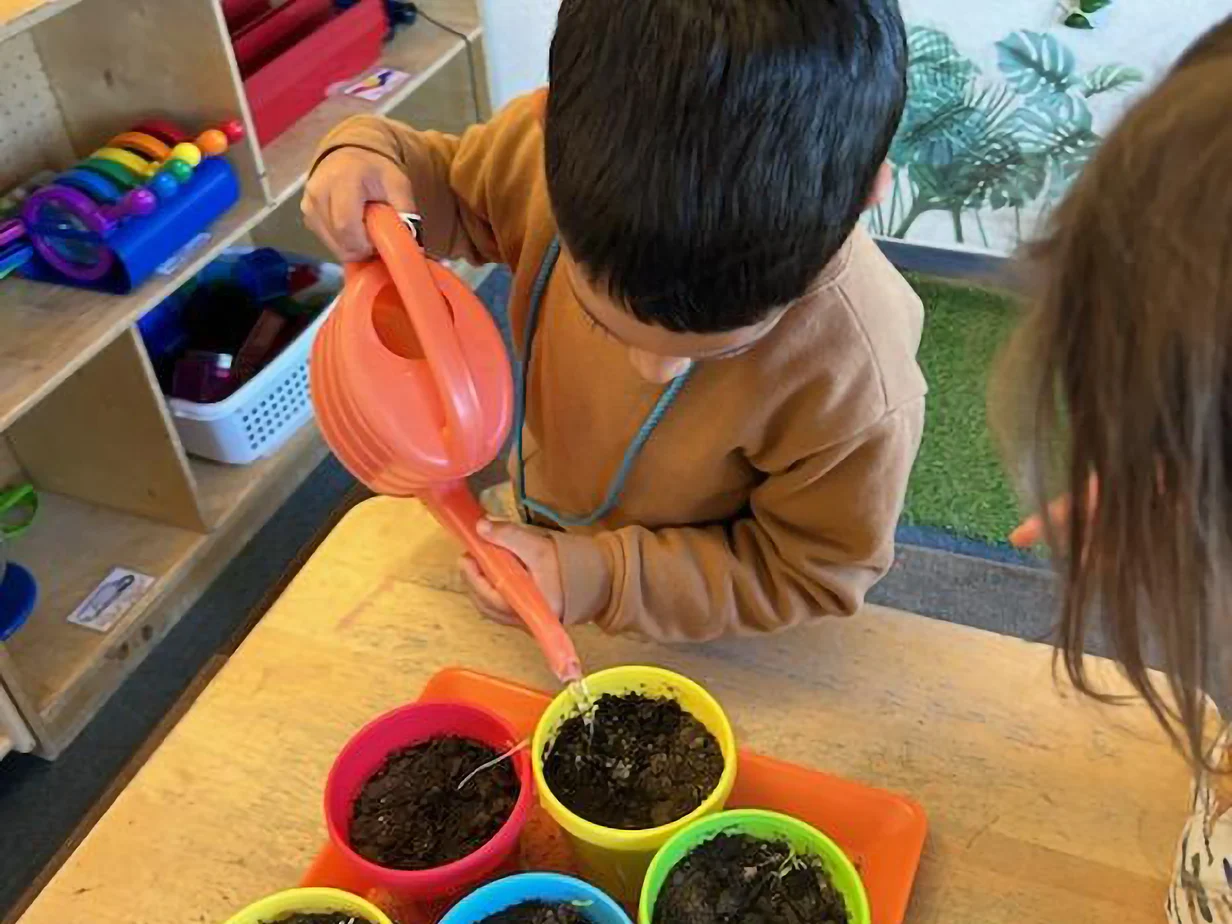
Children build knowledge about how food gets to our plates, tracing the journey from where foods come from to how they are grown, transported, prepared, and enjoyed by families. They deepen this knowledge by growing, observing, measuring, and harvesting a garden, creating placemats about favorite family dishes, and preparing a harvested food dish to take home.
At a Glance
- Days 1-5: What are our favorite foods? Where do those foods come from?
- Days 6-10: What are our families' favorite foods? How are they prepared?
- Days 11-15: How do we care for the plants in our garden? How do we know when they are ready to harvest?
- Days 16-20: How can we prepare the food from our garden to share with families and each other?
Community Contributors
How can we contribute to our community to make it even better?
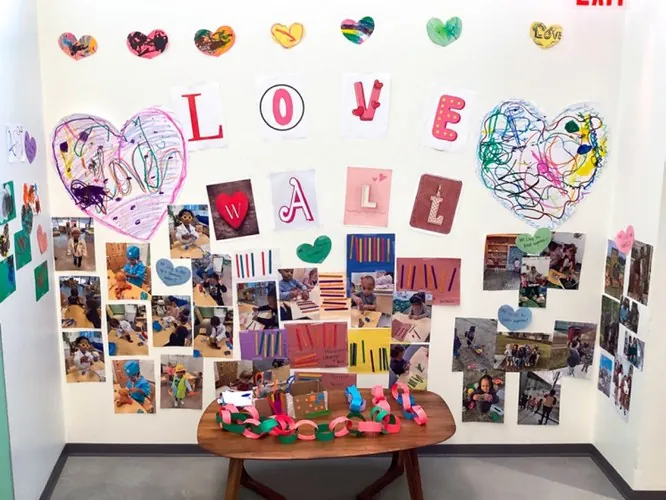
Children learn about how communities, including the kinds of work people do in communities and how that work helps meet our needs. They explore their community, share what they love about it, and identify ways they can help make it even better. Then they choose, plan, and carry out a Community Contribution Project and capture their learning on a Community Love Wall.
At a Glance
- Days 1-5: What is great about our school community? Who contributes to make our community great?
- Days 6-10: What else do we want to do and see in our community?
- Days 11-15: How can we work together to contribute to our community?
- Days 16-20: Let's contribute! How have we contributed to our community?
Teaching Time
How can we teach people in our community through the information we share?
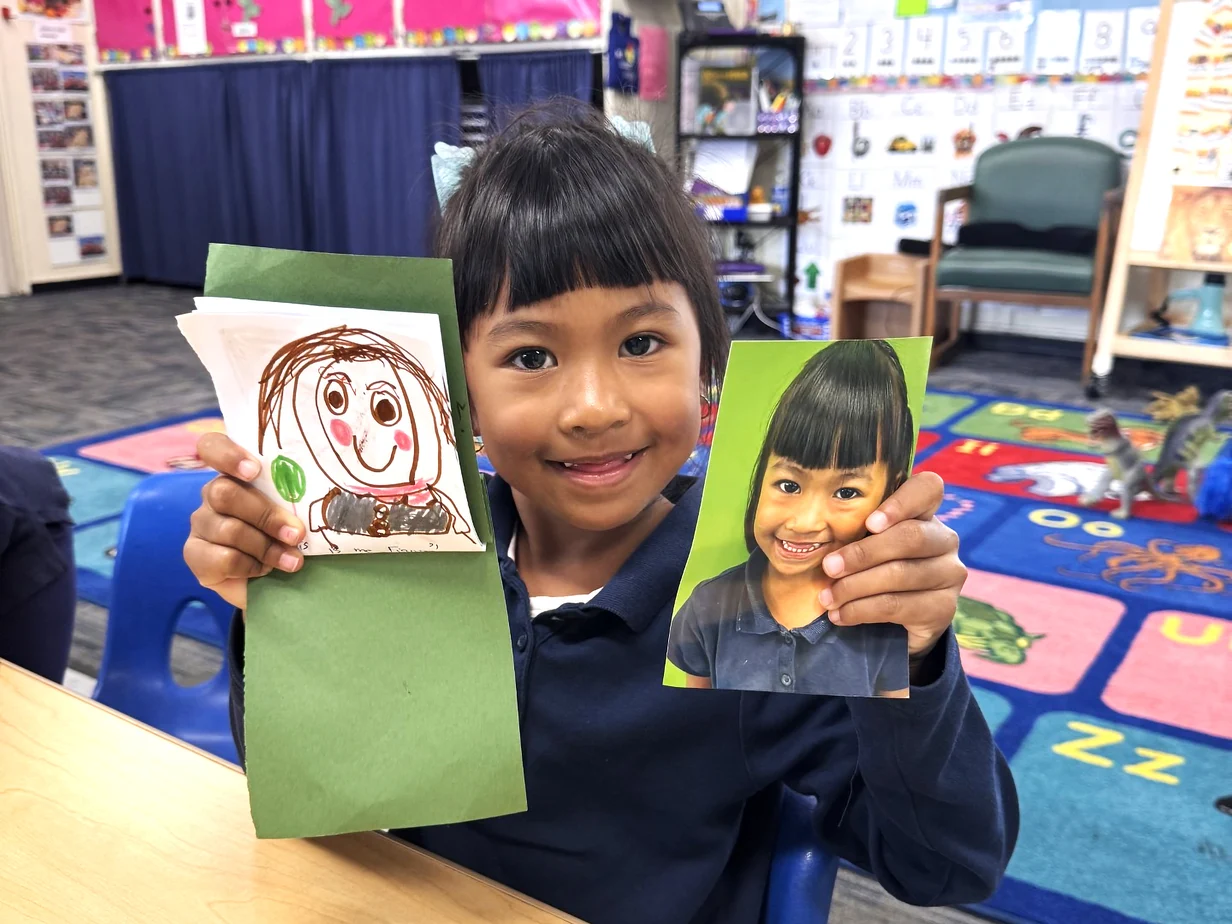
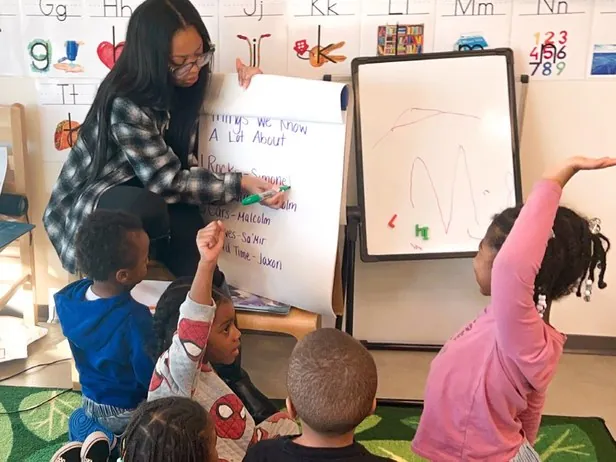
Children learn about expertise through the lens of rocks and paleontology and identify topics they know well. They explore ways to share information through writing, drawing, and video, and practice teaching others. They bring their learning together by creating and sharing class and individual videos that teach their community something new.
At a Glance
- Days 1-5: What do I know a lot about?
- Days 6-10: How do we share what we know?
- Days 11-15: What information will we share?
- Days 16-20: How can we teach people what we know?
Overcoming Obstacles
How can we make our bodies and minds strong and ready to overcome obstacles?
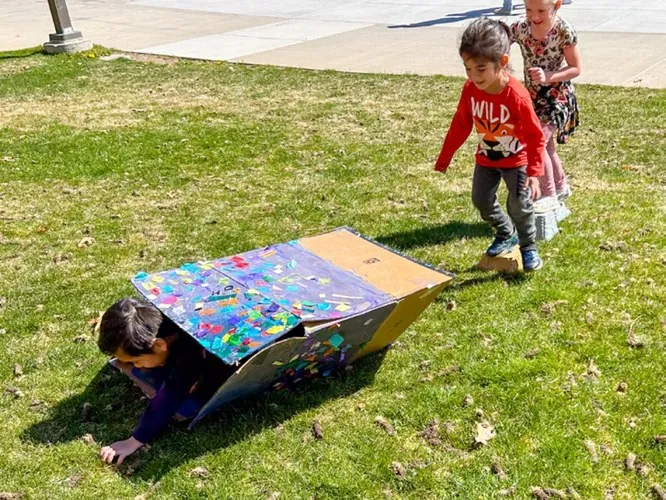
A pretend journey to Mars and back drives the health literacy of this unit: how bodies move, what food and sleep do, how to stay safe in water, and the persistence it takes to try again. Children build an obstacle course as they go, then lead their families through it to reach a family treasure chest they have created.
At a Glance
- Days 1-5: What are obstacle courses? Who are Space Buddies?
- Days 6-10: How can I move my body? How can I take care of myself with food and sleep?
- Days 11-15: How can I be safe in the water? Who are treasure hunters?
- Days 16-20: How can I navigate an obstacle course? Who and what do I treasure?
Nature in Our Neighborhood
What is the nature in our neighborhood and how can we take care of it?
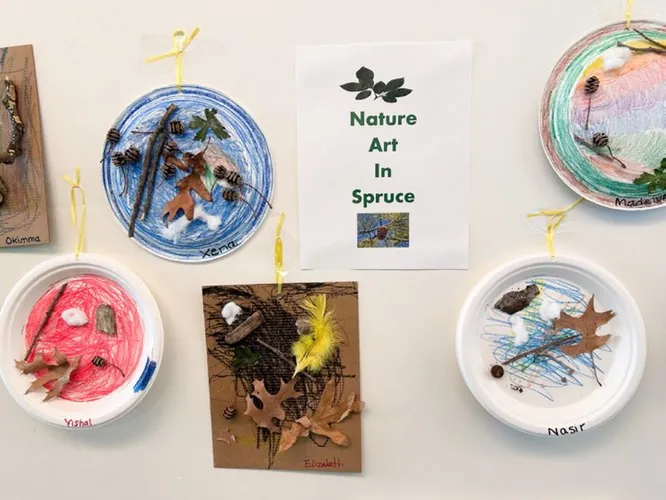
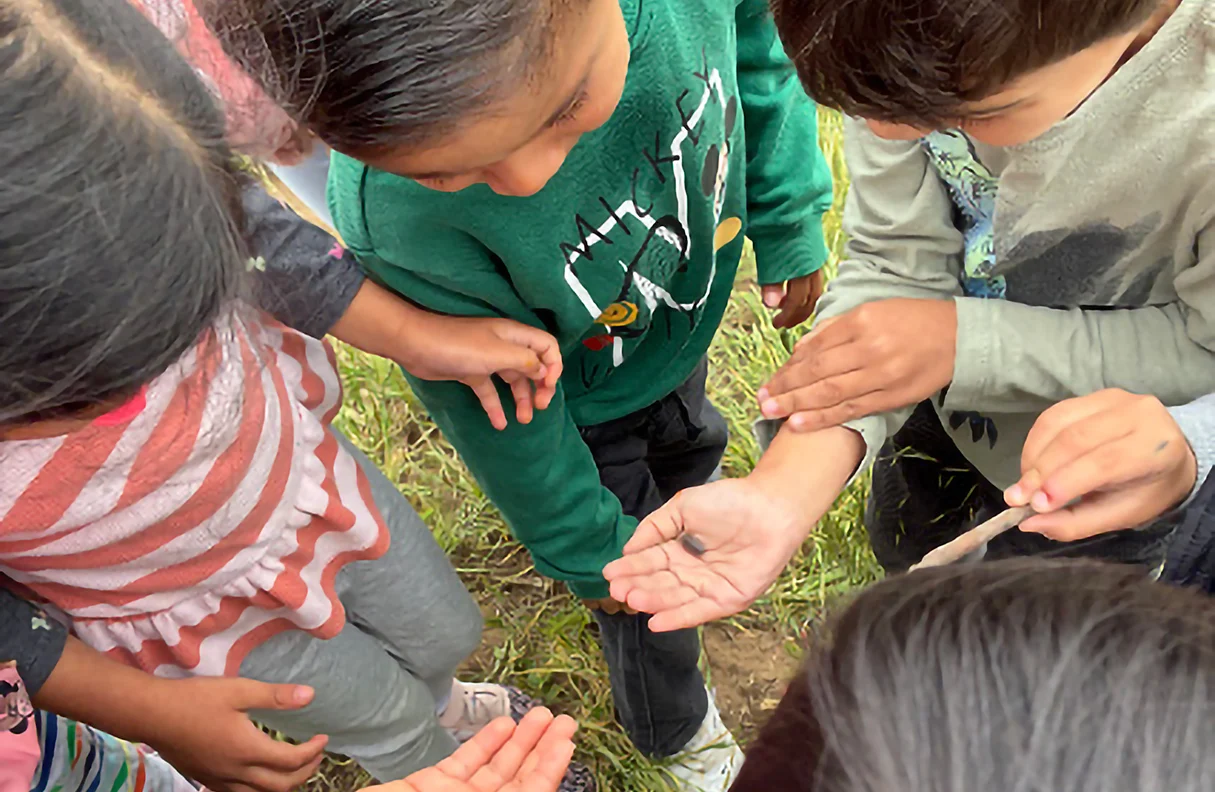
Children learn about the nature in their neighborhood and what it needs to thrive. They observe and document local nature, connect their discoveries to their families’ experiences, and investigate where nature is thriving or struggling. They use what they learn to design ways to protect nature and share their knowledge through a classroom nature museum and guide.
At a Glance
- Days 1-5: How can we discover and explore nature in the neighborhood?
- Days 6-10: What are some of my family's experiences with nature?
- Days 11-15: How can we protect the nature in the neighborhood?
- Days 16-20: What can we do to help nature thrive in the neighborhood? How do we present our Classroom Nature Museum?
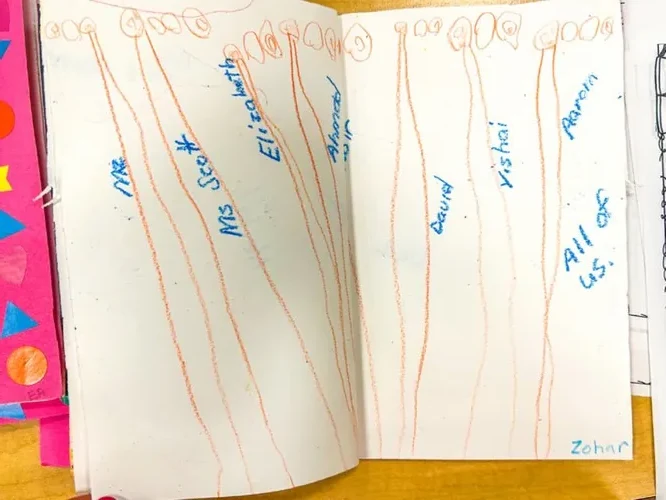
Sharing Memories, Creating Stories
How can we share our memories and make up stories together?
Children learn how stories can capture experiences, ideas, and memories. They begin by telling stories from their own lives, then use books and pictures to inspire new stories and create stories together. Finally, they draw on shared memories from the year, bringing their learning together in a class anthology of stories.
At a Glance
- Days 1-5: How can we tell stories about our own personal experiences?
- Days 6-10: How can we use books as inspiration to create our own stories?
- Days 11-15: How can we collaborate to create stories based on wordless picture books?
- Days 16-20: What were some of the events from the year that we remember? How can we document our memories and stories?
A day that moves the way children do
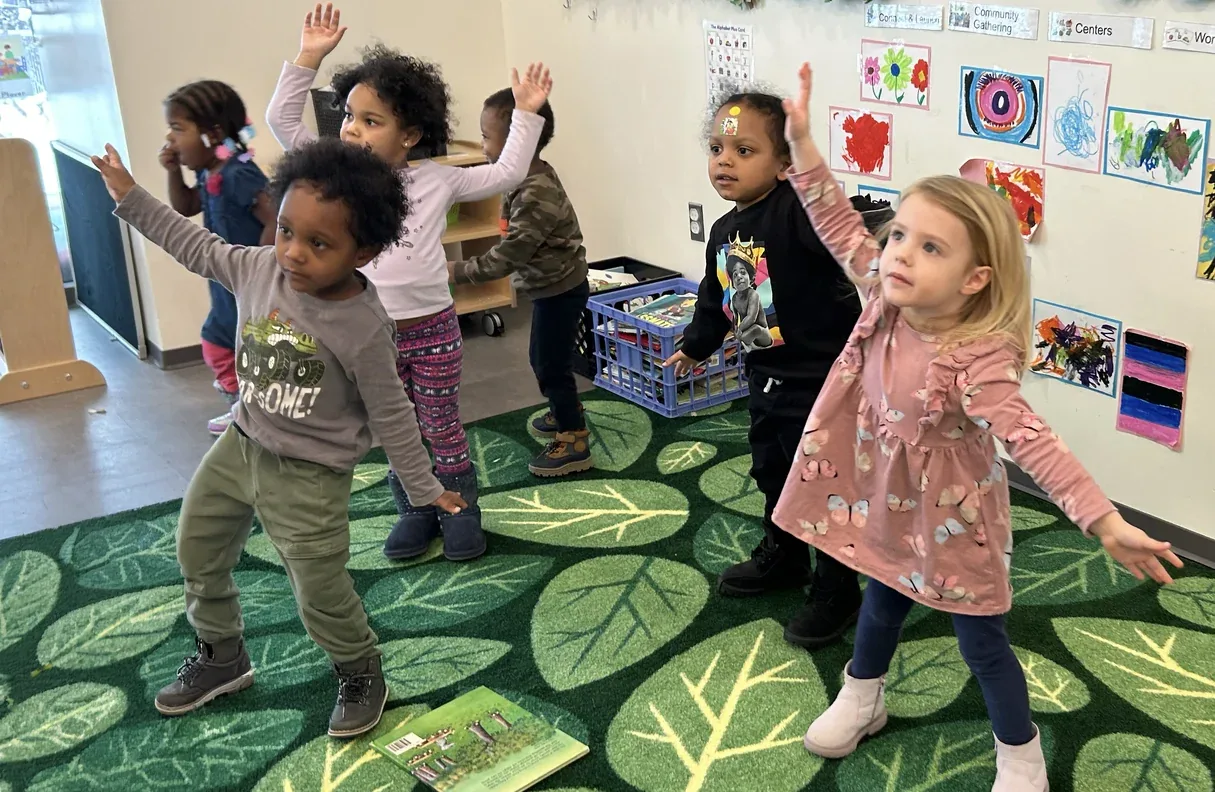
A Great First Eight day moves the way young children do: a song to start, short focused blocks, physical movement, and time to rest. Twice a day, children work in hands-on centers tied to the unit's driving question.
Full-Day Great First Eight schedule
A half-day version is also available that keeps many of the same parts of the day.
Connect & Launch
The first block of the day. Children put away belongings, sign in, and greet each other, and engage with their journals or valued classroom materials. Families, children, and teachers get time to build relationships.
Community Gathering
Whole-group time that always opens with a song chosen by the team's music education researcher, followed by project-related experiences, with movement woven in.
Centers 1 & Meet with the Teacher
Six centers plus small-group time with the teacher. Writing, investigating, and imagining and other learning through play occurs in the largest chunk of the Great First Eight day.
Word Wonders
Whole-group literacy foundations: concepts of print, phonemic awareness, alphabet knowledge, and more.
Move It! Move It!
Three movement stations a day, no more than five children at each, building balance, locomotion, and object control.
Unstructured/Free Outdoor Play
Two 25-minute blocks that meet American Academy of Pediatrics activity guidelines and support learning, health, and mood.
Math Marvels
Whole-group math that helps every child see themselves as a mathematician: sorting, counting, operations, measurement, geometry, and more.
Rest/Quiet Time
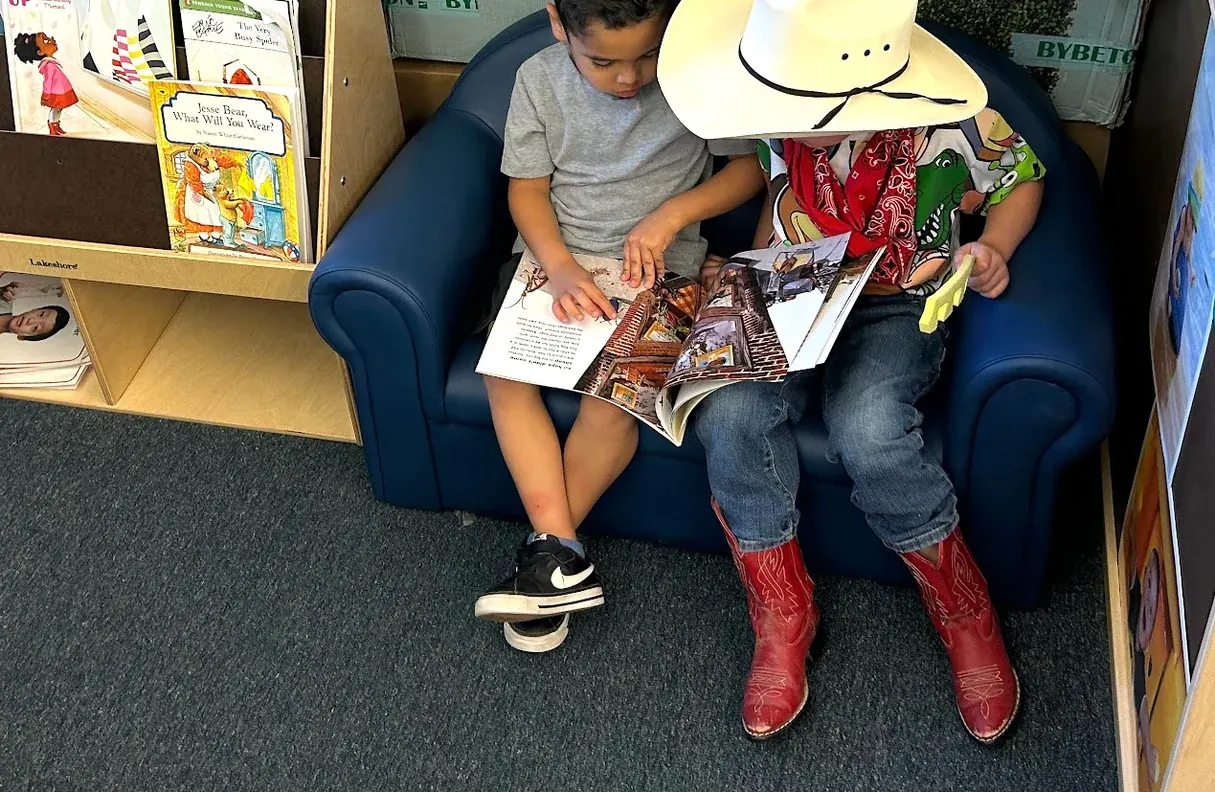
Children rest, listen to calming music, look through books, or draw.
Read Aloud
Interactive read alouds with print referencing, structured around discussion before, during, and after the book.
Centers 2 & Meet with the Teacher
A second centers block with additional small-group instruction with the teacher.
Clean Up & Peace Out
Closing the day with a song, cheer, or class gesture to wrap up a wonderful day.
The day also includes time for lunch.
The professional learning behind all pre-K/TK classrooms
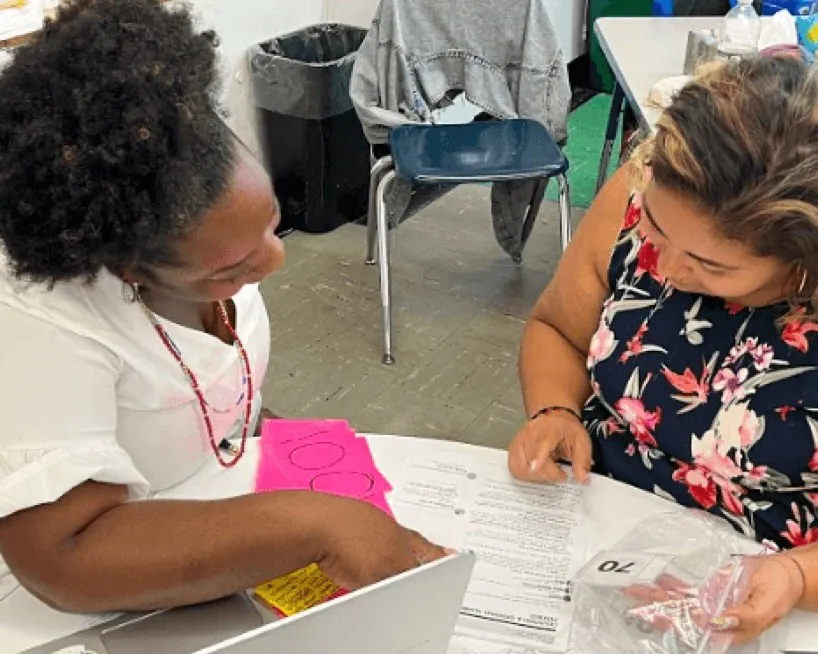
Teachers come to Pre-K with very different amounts of training, and turnover resets that mix every fall and throughout the year. That's why Great First Eight brings its own support for educators at every experience level: lesson plans that explain the thinking, professional learning modules, coaching calls, and office hours with the Great First Eight team.
"Implementation support is the best I've ever seen."
Kim Van Antwerp
Director of Elementary Instructional Services, Forest Hills Public Schools
Made for the way pre-K is funded and reviewed

Research and Alignment
Built from decades of research on how young children learn and develop across literacy, math, social and emotional learning, and other key domains. The outcomes are aligned to national and state frameworks. Crosswalk documents are available by request.

Built-in, flexible assessment
Three parts: guided observation woven into the daily schedule, a structured portfolio, and short child-direct assessments across eight domains that feel like games to children. If your state mandates a different observation tool, it can be substituted.

Growing approval across the country
Approved in many of the states with a formal Pre-K curriculum process including Illinois, Massachusetts, Michigan, Pennsylvania, and Virginia, with reviews underway in California, Maryland, and Ohio.

Use the funding you already braid together
Pre-K budgets are stitched together from several streams at once, each with its own rules and reporting. Great First Eight is a single purchase that can often be funded from streams a program already uses. Reach out to us to discuss your specific requirements.
Looking for more Great First Eight?
One curriculum supporting early childhood from birth through age eight
Infant & Toddler
An infant curriculum (0-12 months, usable up to 18 months) and a toddler curriculum (12-36 months, usable up to 42 months), both built on the same joyful, research-based foundation.
Explore now >>Kindergarten-2nd Grade
A full-day K-2 curriculum that addresses literacy, math, science and engineering, social studies, social and emotional learning, and other key domains, all in one coherent experience for children.
Explore now >>