
inquirED Blog
Your source for inquiry-based learning and teaching strategies.





All blog posts
Webinars
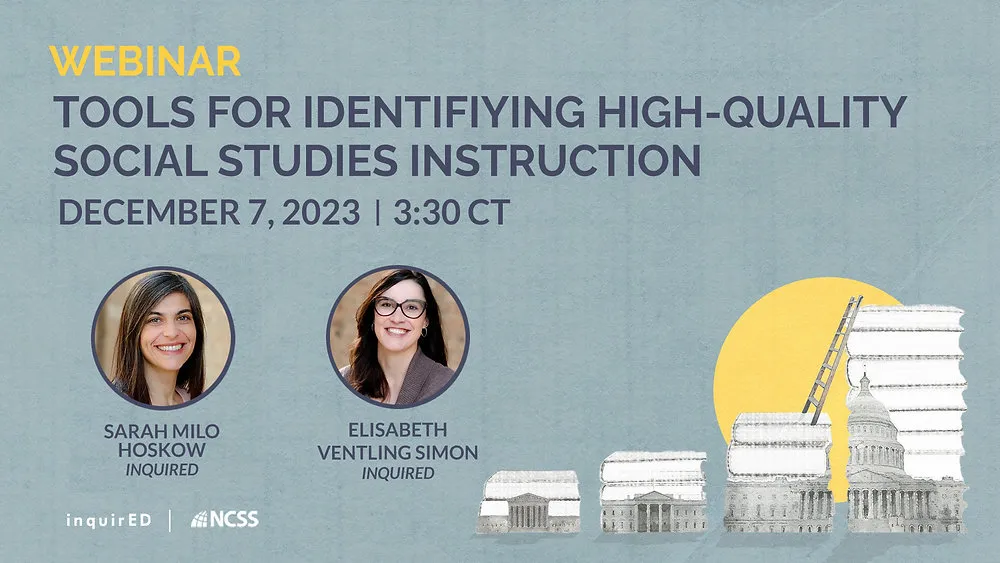
Tools for Identifying High-Quality Social Studies Instruction
What does high-quality K–8 social studies instruction actually look like in the classroom? We were joined on our webinar by Elisabeth Ventling Simon (Chief Academic Officer and Co-Founder, inquirED) and Sarah Milo Hoskow (Head of Partner Experience, inquirED) to examine inquiry-teaching practices and classroom tools for district leaders, coaches, and teachers to help them identify and explore the components of high-quality social studies instruction.
Webinars
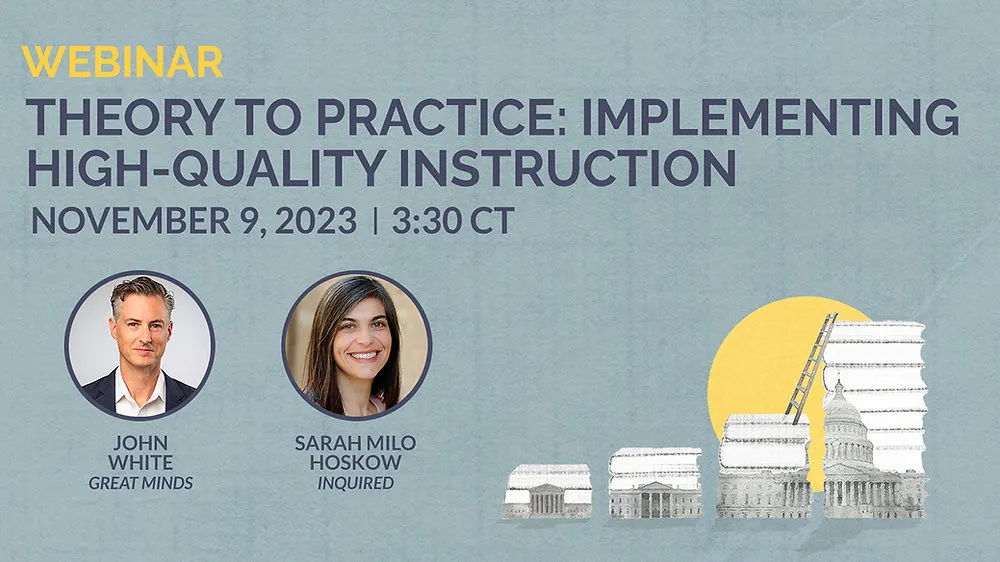
Theory to Practice: Implementing High-Quality Instruction
Our webinar explored how districts, instructional leaders, and curriculum providers collaborate to support K-8 teachers in implementing educational resources effectively. Explore key takeaways on curriculum coherence, strategic implementation, continuous support, and longevity in this insightful webinar recording by inquirED and NCSS.

Webinars
The Power of High-Quality Instructional Materials
Research shows that high-quality instructional materials can significantly improve outcomes for students. What can the social studies community learn from other subject areas that have prioritized these materials? We were joined on our webinar by Shanti Elangovan (CEO & Founder, inquirED) as she interviewed Larry Berger (Co-Founder & Chief Executive Officer, Amplify Education). Read the summary of their conversation below.
Webinars
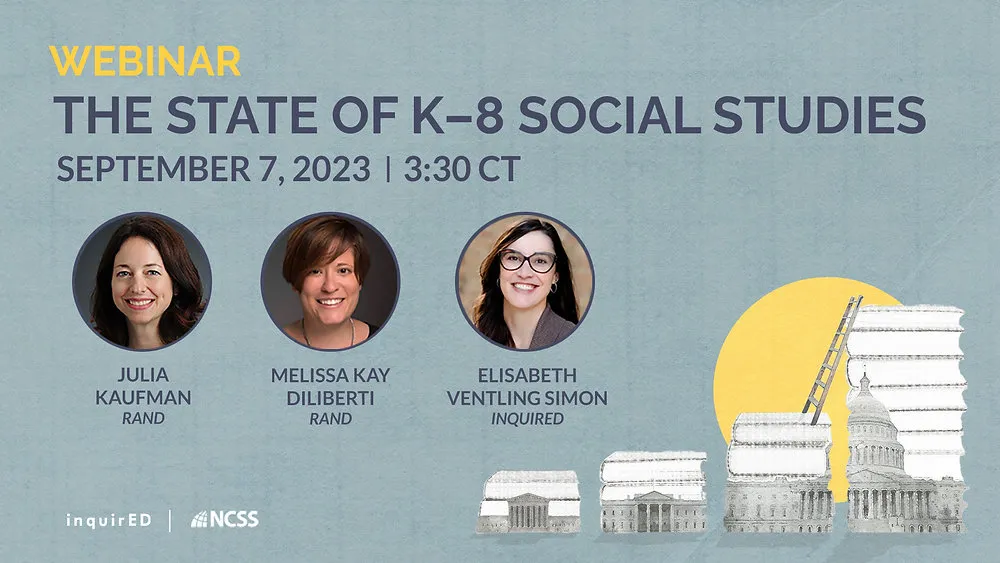
The State of K-8 Social Studies
What policies at the state, district, and school levels support teachers in K-8 social studies instruction? How does this affect student outcomes? NCSS and inquirED were joined by special guests Julia H. Kaufman (RAND), Melissa Kay Diliberti (RAND), and Elisabeth Ventling Simon (inquirED) to examine the state of K-8 social studies across the country and explore how current policies impact teaching practices and student learning.
Teacher Practice
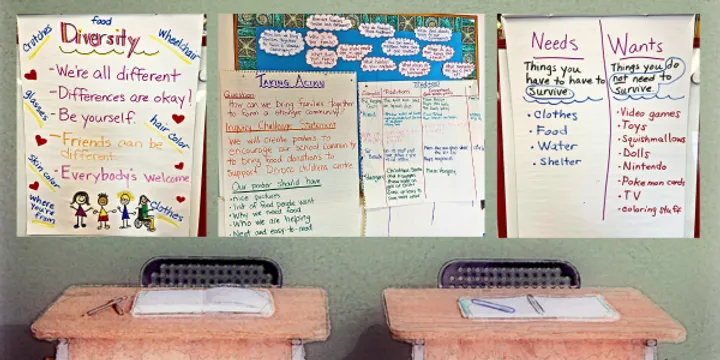
Anchor Charts: The Unseen Heroes of Inquiry-Based Learning
Anchor charts are a visually engaging way to support students' learning by providing clear, concise, and relevant information. They act as reference points, helping students to understand and recall concepts more effectively. Anchor charts can be used to introduce new ideas, clarify misconceptions, and summarize key points. They can be tailored to suit any subject, making them a versatile tool that can be used across the curriculum.

Social Studies
Picture Walks and Other Pre-Reading Strategies for Early Literacy Development
Early literacy development is crucial for young learners as they begin to navigate the world of reading and writing. Engaging in pre-reading strategies helps children build essential skills, such as oral language development, comprehension, and vocabulary One highly effective pre-reading strategy is the "picture walk." In this blog post, we will explore the benefits of picture walks and other pre-reading strategies that can be employed to support early literacy development in young learners.

No results found.
There are no results with this criteria. Try changing your search.


Take a closer look at Inkwell
Explore Inkwell, our K-2 core curriculum that teaches reading, writing, speaking, and listening inside content-rich social studies learning, so students build knowledge and literacy skills in the same block.