Integration in Elementary Instruction
Integrating ELA and social studies into a single instructional block supports deeper knowledge-building, stronger comprehension, and transfer across contexts.

What is integrated ELA and social studies?
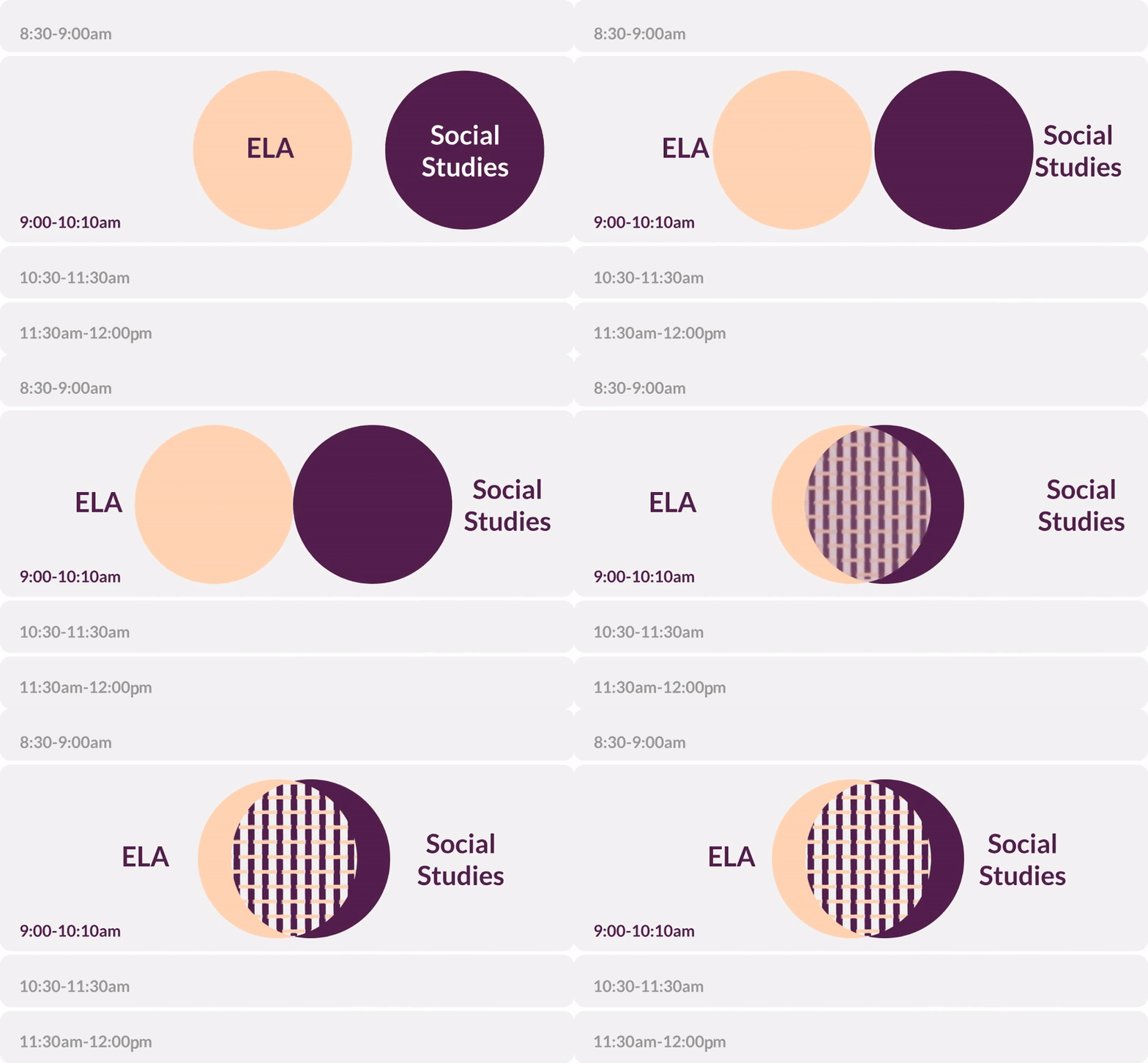
True integration means connecting ELA and social studies so deeply that their skills, concepts, and knowledge develop together and shape all lessons, texts, and tasks.
- Rather than coordinating two separate programs, integration creates one set of integrated high-quality instructional materials where standards, texts, and learning goals advance together by design.
- This approach preserves the rigor of both subjects. Students learn to read and write through real social studies ideas, and they learn social studies through authentic literacy work.
Why integration matters for students and teachers
Creates one coherent instructional experience
Elementary schedules are already stretched beyond what the day can hold, and teachers often struggle to fit required subjects into limited time (Duke, 2025).
Integrated instruction simplifies the day by creating a single block where reading, writing, and social studies reinforce one another.
This coherence reduces cognitive load (Sweller, 2012), helps teachers feel less fragmented (Berglund et al., 2024), and gives students a learning experience that feels connected and purposeful (Guthrie et al., 2013).
Builds deeper knowledge and comprehension
When literacy learning is anchored in meaningful, sequenced social studies content, vocabulary grows, Connor et al., 2017).
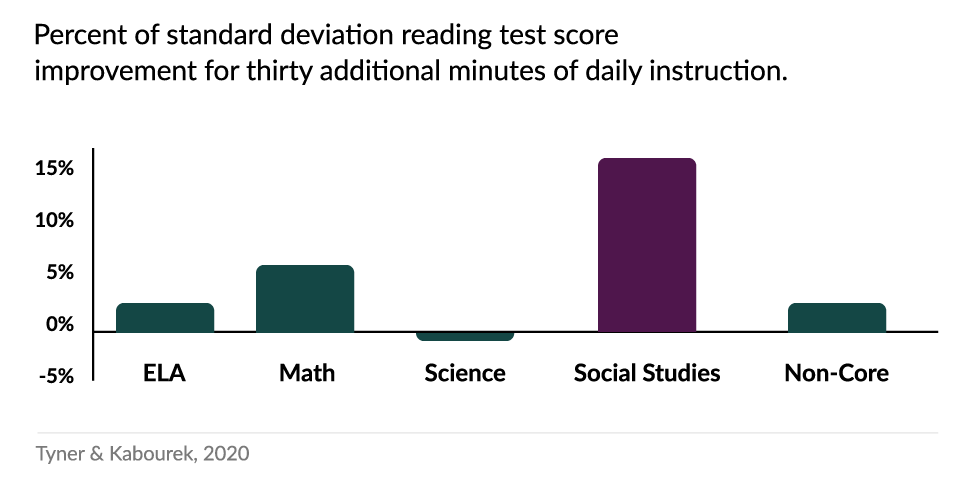
A national longitudinal study found that additional daily social studies time was associated with notable gains in reading achievement (Tyner & Kabourek, 2020). More science time offered minimal return, and even additional ELA time failed to produce comparable gains. Only social studies was linked to substantial improvements in reading.
Berglund, T., et al. (2024). Coherence in K–12 instructional systems. RAND Corporation.
Connor, C. M., et al. (2017). Acquiring science and social studies knowledge in K–4. Journal of Educational Psychology.
Duke, N. K. (2025, September). Putting the social studies in the Science of Reading. Social Studies Leadership Symposium.
Guthrie, J. T., et al. (2013). Motivating reading comprehension: Concept-Oriented Reading Instruction (CORI).
Sweller, J. (2012). Cognitive load theory. Learning and Instruction.
Tyner, A., & Kabourek, S. (2020). Social studies instruction and reading comprehension. Thomas B. Fordham Institute.

Looking for integrated ELA and social studies?
Meet Inkwell, a K–2 core curriculum that integrates ELA and social studies into one cohesive instructional block. Grounded in the Science of Reading, Inkwell supports mastery of ELA and social studies standards, embeds daily explicit writing instruction, and builds knowledge through content-rich social studies investigations.
Building deeper, connected understanding
Students learn best when the ideas they explore about the world stay connected to the reading and writing they do each day.
When ELA and social studies instruction are integrated, students build understanding by making connections across texts, ideas, and disciplines. Here’s how integrated instruction supports deeper learning across a single instructional block.
Reading across multiple texts supports literacy and social studies understanding as students revisit vocabulary and concepts over time (Connor et al., 2017).
Embedded grammar, language, and vocabulary instruction supports clear communication about texts and social studies concepts (Graham & Perin, 2007).
Integrated knowledge building helps students connect ideas and build lasting schema, improving long-term comprehension (Guthrie et al., 2013).
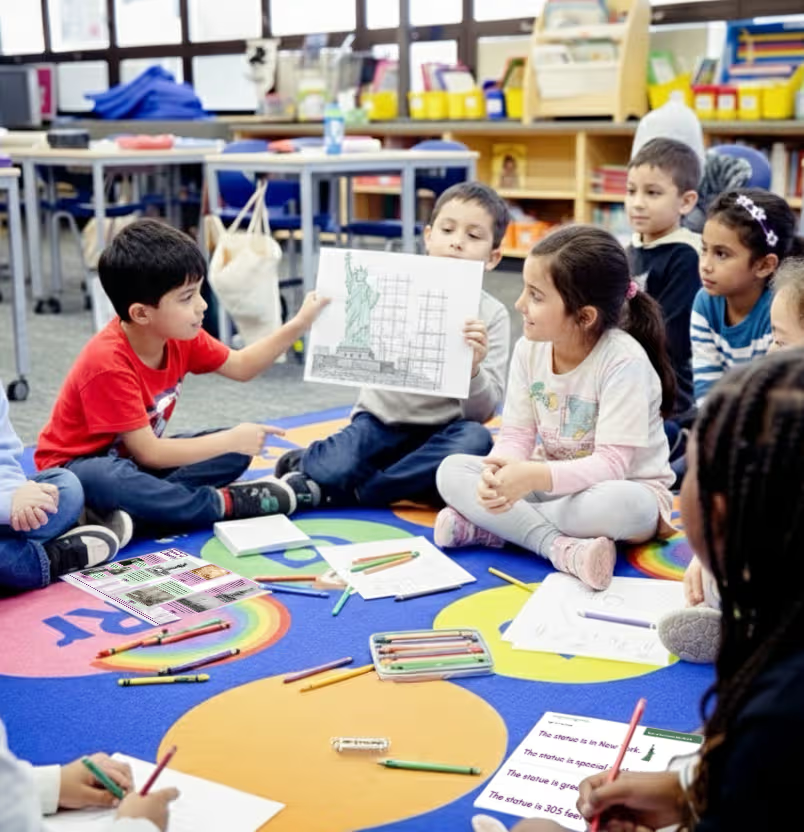
Structured speaking and listening support meaning-making across ELA and social studies texts and tasks (Murphy et al., 2009).
Daily, purposeful writing builds skills and understanding as students explain and support ideas in history, geography, economics, and civics (Graham & Hebert, 2010).
Connor, C. M., et al. (2017). Acquiring science and social studies knowledge in K–4. Journal of Educational Psychology.
Murphy, P. K., et al. (2009). Examining the effects of classroom discussion on students’ comprehension of text. Review of Educational Research.
Graham, S., & Perin, D. (2007). Writing next: Effective strategies to improve writing of adolescents. Alliance for Excellent Education.
Graham, S., & Hebert, M. (2010). Writing to read: Evidence for how writing can improve reading. Alliance for Excellent Education.
Guthrie, J. T., et al. (2013). Motivating reading comprehension: Concept-Oriented Reading Instruction (CORI).
Integration isn’t about adding content to ELA or squeezing subjects together.
It’s about designing instruction differently from the start.
Elisabeth Ventling Simon
Co-Founder and Chief Academic Officer, inquirED

Integration by design
Integration doesn’t happen by simply pairing a social studies topic with an ELA unit or adding informational texts to a literacy block.
- Integration changes how instruction is designed, not what teachers are asked to add.
Instead of layering social studies on top of ELA, integrated design starts with shared goals and builds lessons where reading, writing, discussion, and content knowledge develop together within the same instructional block. - Core ELA practices remain essential and are intentionally extended through social studies knowledge and skills.
Students still engage in close reading, evidence-based writing, vocabulary development, and discussion. The difference is that these practices are used to build and apply knowledge about history, geography, economics, and civics.
The table below highlights how integrated design shifts the purpose and use of texts, evidence, topics, and learning outcomes within a single instructional block.
Curriculum
Curriculum
Purpose of Knowledge
Text comprehension
Text comprehension
to build deeper understanding of the world
Use of Evidence
Shows comprehension
Shows comprehension as students analyze social studies content
Role of Topics
Entry points for text- based work
Entry points for text-based work that drives conceptual thinking
Source of Knowledge
Drawn from curated text sets
Drawn from text sets and diverse primary and secondary sources
Demonstration of Learning
Demonstrate text-based learning
Demonstrate text-based learning and transfer learning beyond the text
Focus of Learning
What happened in a given text
What happened in a text, why it matters, and how it connects to the world
What integrated instruction looks like across lessons
To understand how integration works in practice, it helps to zoom out and look across a full instructional module of 10–12 lessons. In an integrated ELA and social studies module, reading, writing, language, and social studies concepts develop together as students revisit a shared topic through increasingly complex texts and tasks.
Module Snapshot
Module focus: Civic cooperation
Central question: How do people work together to achieve shared goals?
Core texts:
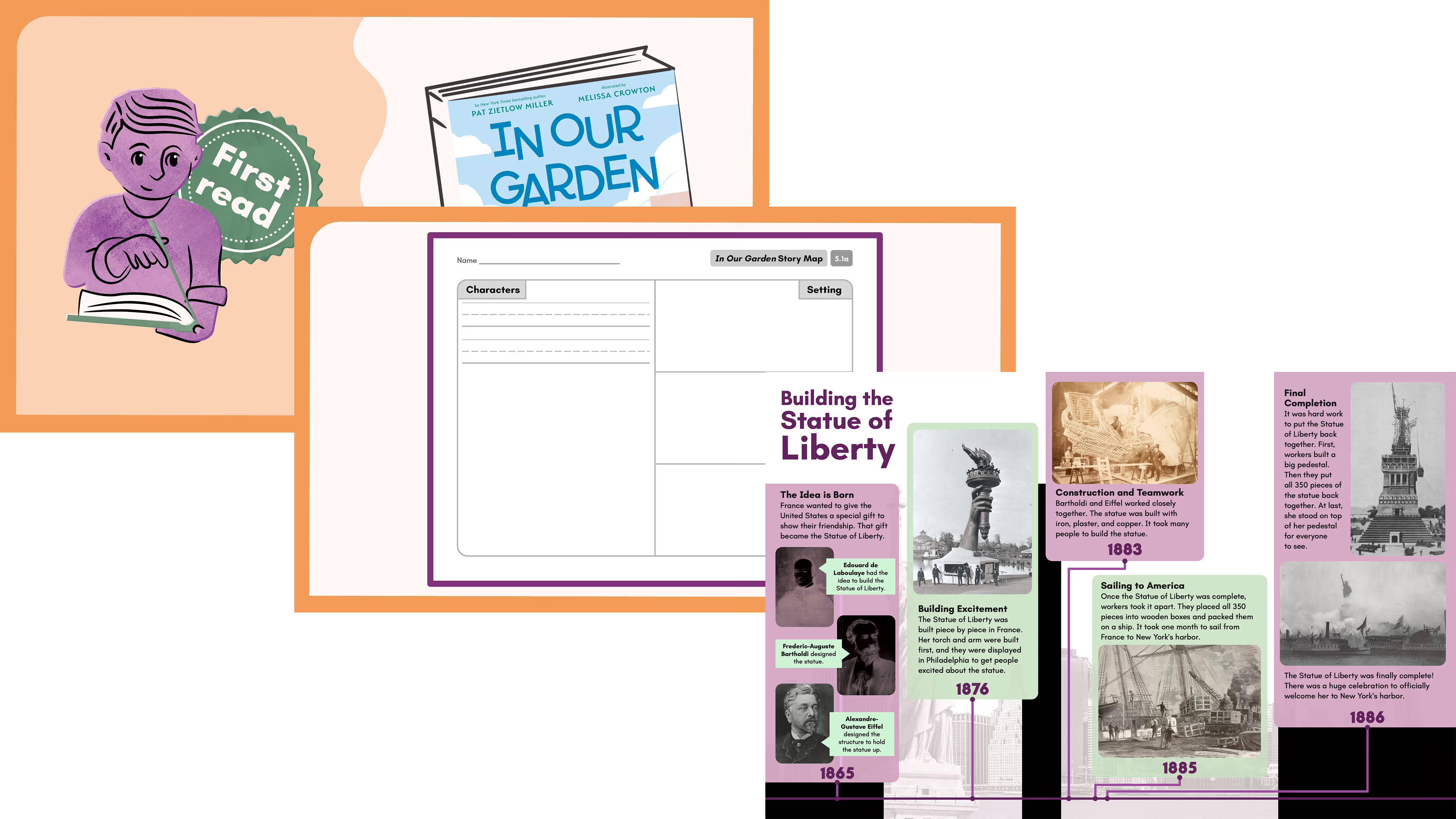
- In Our Garden (realistic fiction)
- The Power of Cooperation (informational text )
- Building the Statue of Liberty (informational text)
- Let Liberty Rise! (narrative nonfiction)
Reading across texts and sources
Students read a sequence of literary and informational texts that increase in complexity, supported by primary and secondary sources that build background knowledge and understanding.
- Early lessons focus on understanding characters, settings, and problems in a familiar school-based story (In Our Garden).
- Later lessons require students to analyze informational texts, visuals, and timelines to understand how cooperation operates in a city (The Power of Cooperation) and across nations (Building the Statue of Liberty).
Reading comprehension develops alongside growing social studies knowledge about communities, roles, and civic responsibility.
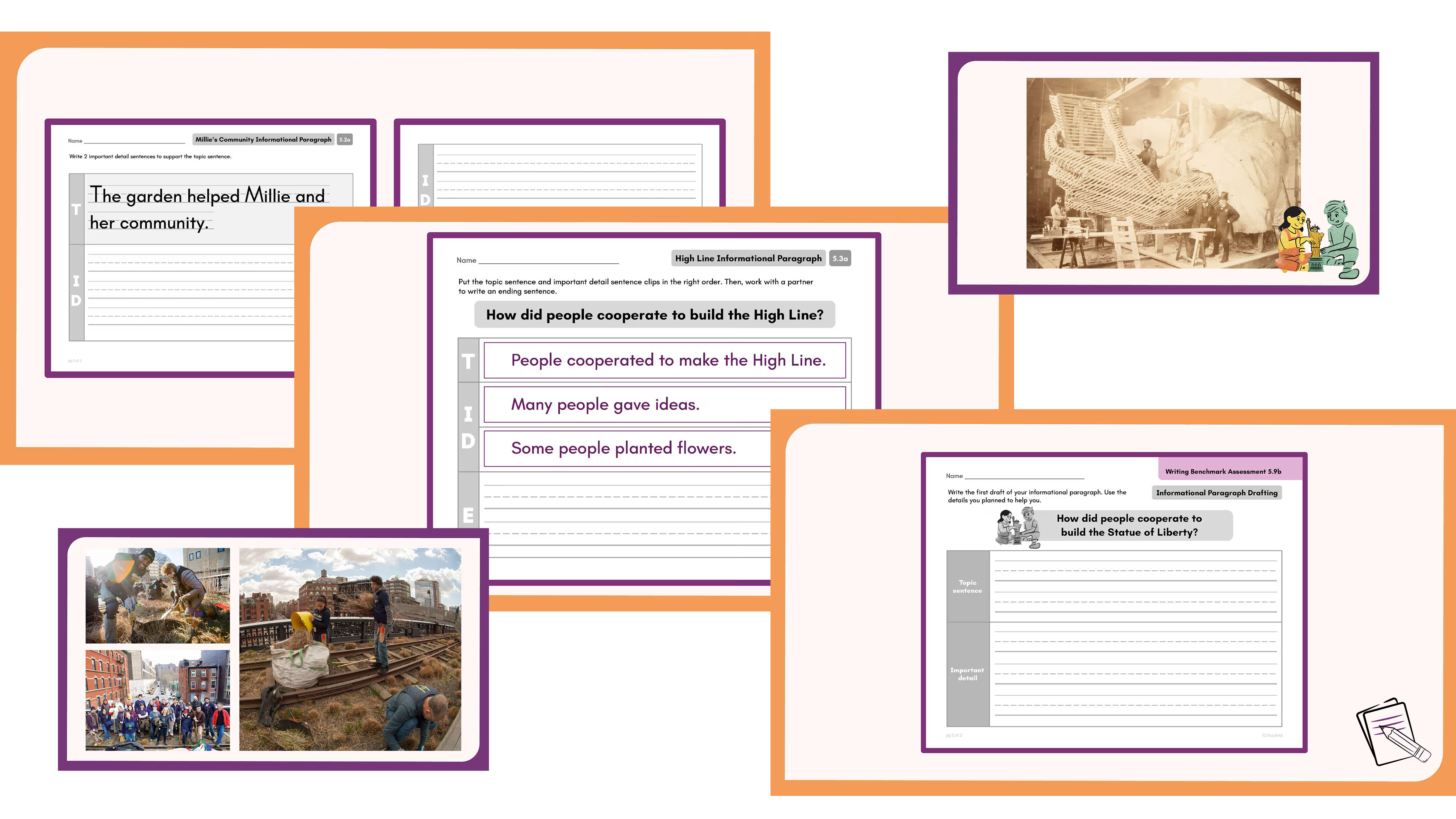
Daily, purposeful writing
Writing is woven throughout instruction, not reserved for the end.
- Sentence-Level Instruction: Early writing centers on expanding and combining sentences as students explain how characters worked together in a school community.
- Paragraph Writing: Midway through the module, students write structured informational paragraphs explaining how cooperation enabled a city project, using details from text features and images.
- Process Writing: In later lessons, students plan, draft, revise, and publish an informational piece explaining how cooperation made the Statue of Liberty possible.
Across lessons, texts, and tasks, students write to explain ideas they are actively learning, not hypothetical prompts.
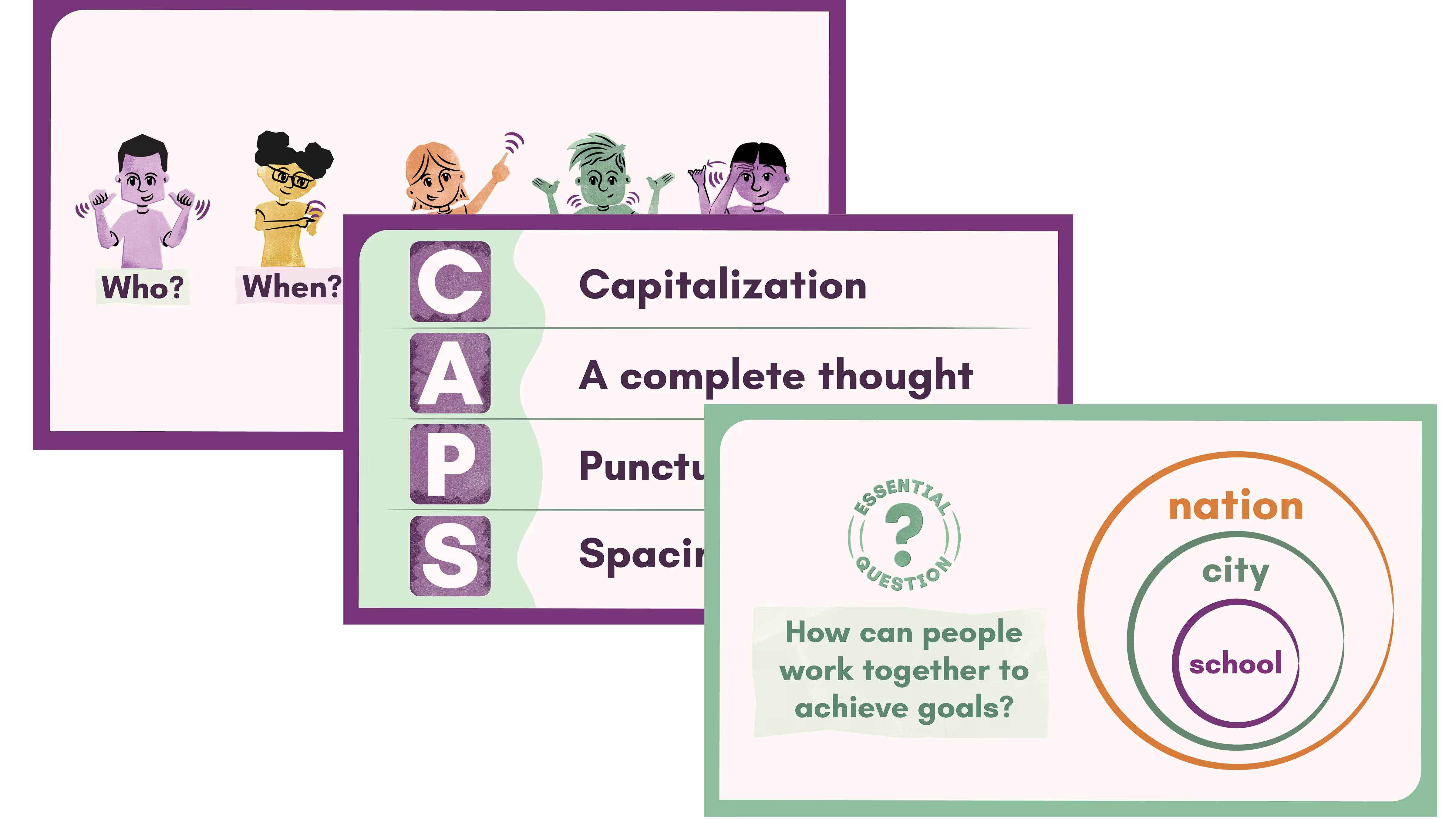
Embedded grammar, language, and vocabulary instruction
Language instruction stays explicit and purposeful, grounded in what students are reading and writing.
- Sentence-level work focuses on adding where, how, and why details connected to acts of cooperation.
- Grammar and conventions are taught in service of clarity as students revise sentences and paragraphs drawn directly from their writing.
Language instruction supports meaning-making rather than isolated practice.
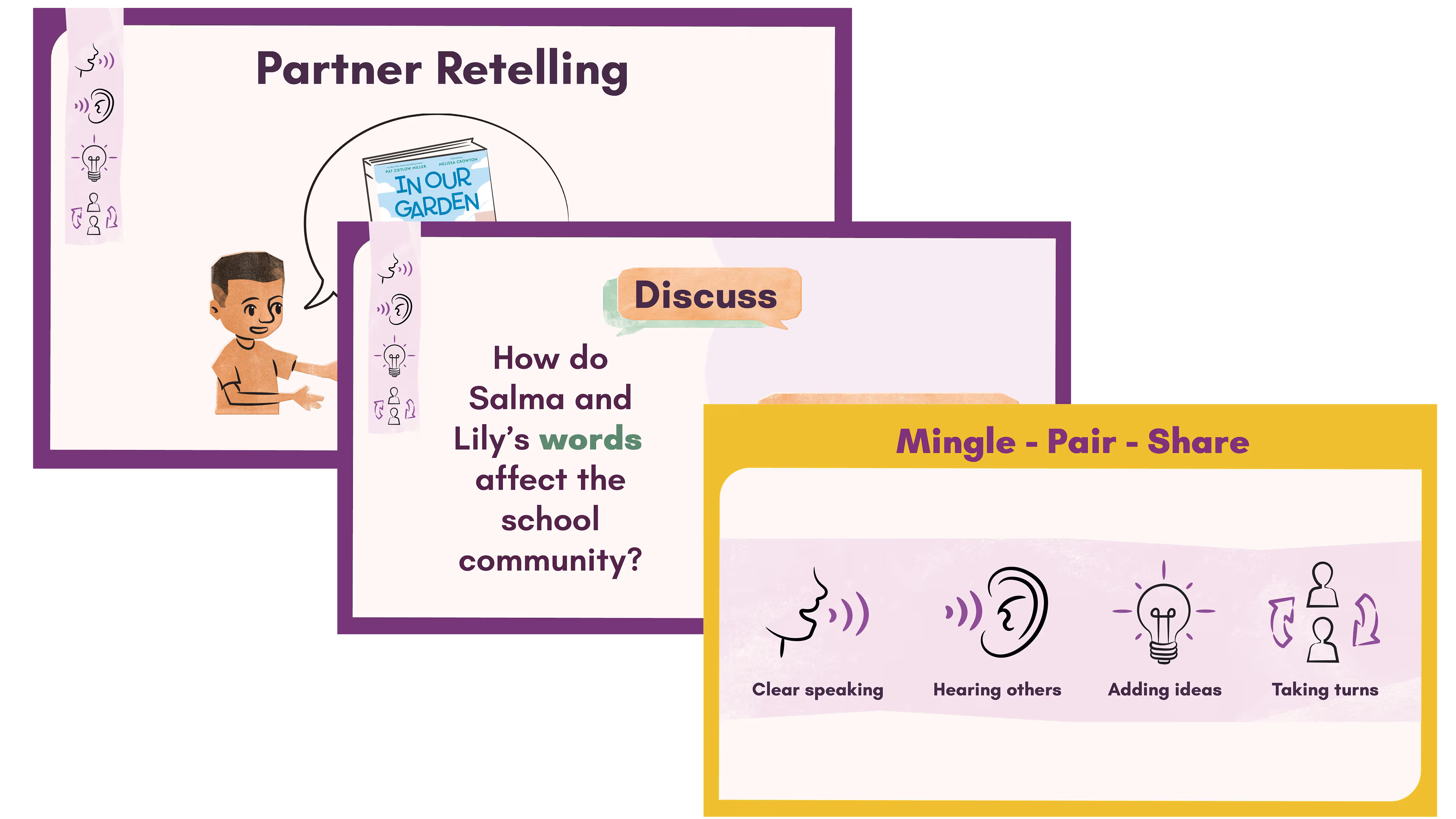
Structured speaking and listening
Speaking and listening instruction is intentional and structured, grounded in shared texts, sources, and ideas.
- Structured discussions support students in explaining ideas, asking questions, and building on one another’s thinking as they talk about cooperation in stories, informational texts, and historical examples.
- Oral rehearsal is embedded throughout the module as students turn and talk, participate in guided discussions, and practice explaining ideas before writing, using evidence from texts, images, and timelines.
Speaking and listening routines help students clarify thinking, test ideas, and learn from multiple perspectives as understanding deepens across the module.
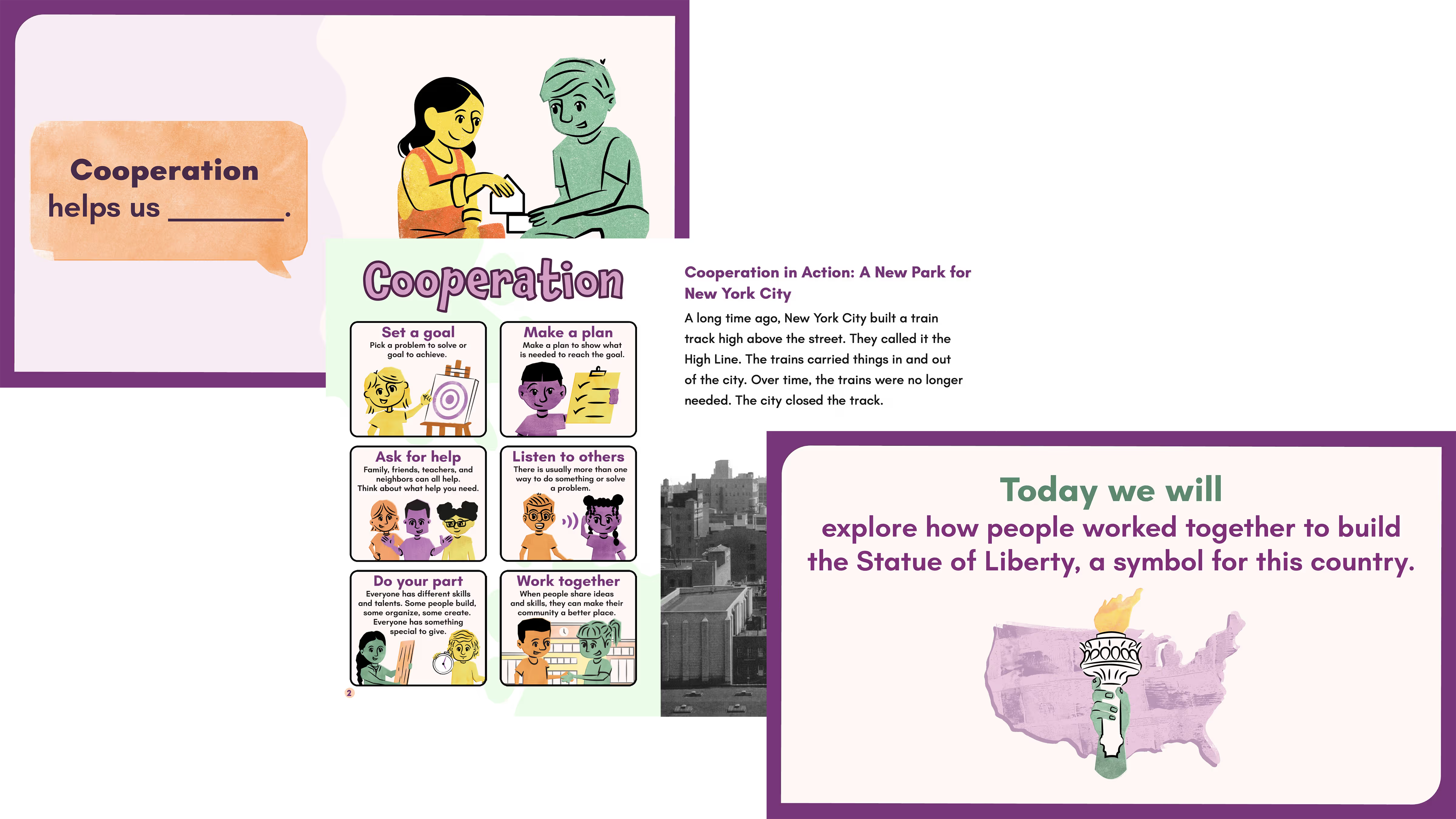
Integrated knowledge building
Knowledge deepens as students move across contexts.
- Students begin by exploring cooperation within a classroom or school community.
- They expand to understanding civic cooperation in a city setting, examining roles, contributions, and shared goals.
- They extend that understanding historically, learning how cooperation across countries made a national monument possible.
Concepts like civic roles, collective effort, and shared responsibility develop alongside literacy skills.
Ready to explore Inkwell?
See the structure behind integrated ELA and social studies.
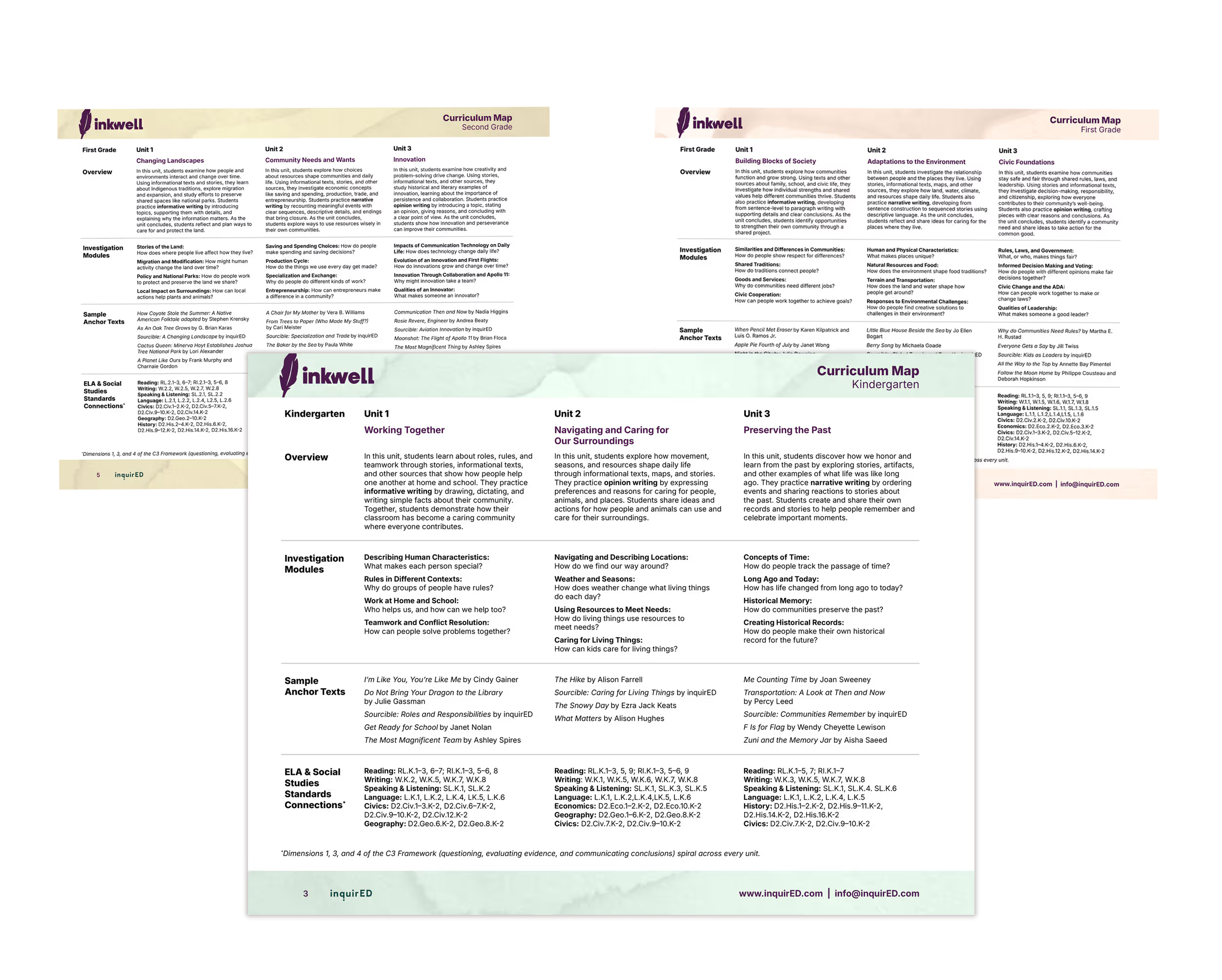
Get a first look at how our K–2 curriculum integrates core ELA and core social studies into one instructional block. Explore the Curriculum Map to see how ELA and social studies skills, concepts, and knowledge develop together over a year of instruction.
Frequently asked questions
Curious about what integration looks like in real classrooms? This section addresses common questions from educators and leaders exploring integrated ELA and social studies instruction.

What is “integration” in elementary instruction?
Integration in elementary instruction means that ELA and social studies are intentionally designed as one high-quality instructional material, taught in a single instructional block with sequenced instruction that leads to mastery of both sets of standards.
What types of texts work best for integrated elementary ELA and social studies instruction?
Integrated elementary ELA and social studies instruction works best with a mix of literary and informational texts, including primary and secondary sources, narratives, informational texts, and multimedia that support inquiry, discussion, and knowledge building.
Does integrating elementary ELA and social studies improve reading outcomes?
Yes. Research shows that sustained elementary social studies instruction supports gains in reading comprehension, especially when elementary ELA instruction includes rich texts and knowledge building over time.
What role does writing play in an integrated elementary ELA and social studies block?
In an integrated elementary ELA and social studies block, writing is taught explicitly and used daily and purposefully to help students explain, describe, and support ideas about social studies content, strengthening both literacy skills and conceptual understanding.
Does integration require more instructional time in elementary ELA and social studies?
No. Integration in elementary ELA and social studies uses existing instructional time more efficiently by addressing multiple learning goals within a single, coherent block rather than competing for time across subjects.
How does integrated elementary ELA and social studies support knowledge building?
Integrated elementary ELA and social studies instruction supports knowledge building by revisiting connected ideas across multiple texts and tasks. This helps students make sense of new information and develop stronger mental frameworks (schema), which supports deeper understanding and long-term comprehension.
How is integrated elementary ELA and social studies different from teaching them separately?
In an integrated elementary ELA and social studies approach, literacy skills are developed through meaningful social studies content alongside explicit skill instruction. Students build knowledge, vocabulary, and comprehension while learning about the world, rather than practicing ELA skills in isolation.
Is integrated ELA and social studies instruction appropriate for K–2 students?
Yes. In K–2 classrooms, integrated elementary ELA and social studies instruction helps students build background knowledge, oral language, and vocabulary through shared topics, discussion, and purposeful reading and writing, alongside explicit skill development.
How are grammar and language taught in integrated elementary ELA?
Grammar and language instruction in elementary English language arts are embedded within reading, writing, and discussion, helping students communicate clearly about texts and elementary social studies topics, alongside intentional skill development.
How does integration support elementary teachers?
Integration supports elementary teachers by reducing fragmented or disconnected lessons and clarifying instructional purpose. This allows teachers to focus on depth rather than coverage, making planning and instruction more coherent, more meaningful, and more sustainable across elementary ELA and social studies.