Curriculum

Elementary

Social Studies

COMING SOON

Integrated ELA & Social Studies

inkwell-logo-white

Middle School

Social Studies

Upcoming Product webinar

Explore

inquiry journeys logo

Join inquirED this fall for Exploring Inquiry Journeys, a webinar series for school and district leaders. Each session offers practical insights and strategies from our curriculum to engage students and support teachers in inquiry-based elementary social studies.

Register
Professional Learning
Resources

Resource Collections

Downloadable guides, frameworks, and tools designed to help district leaders take action on social studies curriculum and instruction. Looking for our most downloaded resesources? Check the quick links below.

Curiculum Review Guide

Literacy in Social Studies Rubric

Social Studies Pacing Guide

Blog

Fresh ideas, research, and reflections to help district leaders stay sharp and responsive in an evolving social studies landscape.

Webinars

Real-time conversations and on-demand learning with experts and district leaders tackling challenges in social studies education.

NCSS & inquirED

Product Webinars

Webinar Library

free resource

Social Studies Curriculum Review Guide

Download this free tool designed to help educators, districts, and curriculum developers create, evaluate, and select social studies instructional materials that meet the demands of today’s classrooms.

Download
Log inContact sales
Log in
Contact sales

Contact sales

Cookie Settings

We use cookies to provide you with the best possible experience. They also allow us to analyze user behavior in order to constantly improve the website for you. See our Privacy Policy

Thank you! Your submission has been received!
Oops! Something went wrong while submitting the form.
Webinars

52 Words: The Meaning and Message of the Preamble

Featured speakerS
Akhil Reed Amar

Akhil Reed Amar

Sterling Professor of Law and Political Science at Yale University
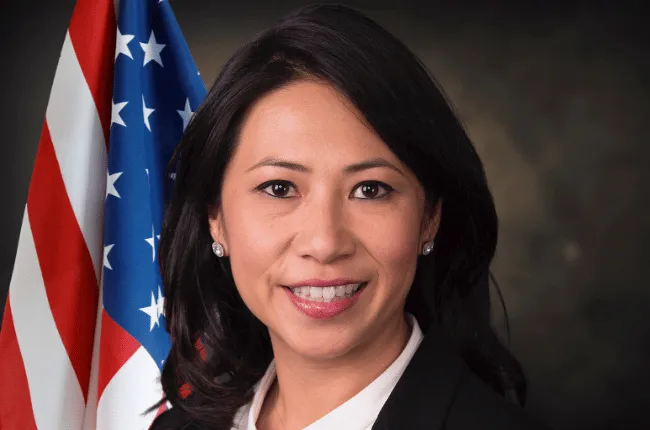
Stephanie Murphy

Stephanie Murphy

Former U.S. Congresswoman
Colonel Elliott Bales

Colonel Elliott Bales

U.S. Army (Ret.)

NOTE: There is no recording for this webinar.

Dec 8, 2024
6
MIN READ
Copied!

I am the text that will be copied.

Webinars
BACK TO BLOG

52 Words: The Meaning and Message of the Preamble

Dec 8, 2024
6
MIN READ
Copied!

I am the text that will be copied.

Table of Contents
H1 Heading
H2 Heading
H3 Heading
Table of Contents
H2 Heading
H3 Heading
H4 Heading

K-5 Social Studies Curriculum

illustration of kid holding question mark

Book a demo

illustration of kid holding question mark

Explore Inkwell!
K–2 integrated ELA and social studies

In times of division, the Preamble to the United States Constitution offers a vision of unity and common purpose. We were joined on our webinar by Akhil Reed Amar, Sterling Professor of Law and Political Science at Yale University; former U.S. Congresswoman Stephanie Murphy; and Colonel Elliott Bales, U.S. Army (Ret.), to explore how the Preamble and other foundational documents can help us find common ground and work together, despite disagreements. Read below for a summary.

Key Takeaways

  • The Preamble highlights the shared purpose of "We the People" as a unifying foundation for the nation.
  • Securing "the blessings of liberty" requires balancing individual freedom with collective responsibility.
  • "The common defense" is more than a military responsibility—it’s a commitment to protecting democracy.
  • Promoting "the general welfare" demands collaboration, bipartisanship, and prioritizing people over politics.

We the People

"What we have in common, all of us Americans, is this—not just the 52 words, but the whole Constitution, including the amendments, and the story behind it," emphasized Professor Akhil Amar during our webinar on the Preamble to the United States Constitution. This poignant reminder highlights a fundamental truth: while we may differ in race, religion, geography, and political beliefs, our shared history and the ideals enshrined in the Constitution provide a common foundation.

"We don’t have race, we don’t have ethnicity, [or] religion in common. Geographically, we’re dispersed. Politically, we’re very dispersed. Some of us came recently…some of our families came a long time ago, some in chains, some with bullwhips in hand," Professor Amar continued. These words resonated deeply throughout the conversation, inviting us to reflect on how the Preamble, with its 52 words of purpose and promise, offers a vision of unity amidst our differences.

Colonel Elliott Bales echoed this sentiment, emphasizing the ongoing responsibility embedded in the words "We the People" and connecting it to the idea of a "more perfect union." "We're constantly trying to make this union more perfect," Bales shared, noting that each generation has a role to play in continuing this work and highlighting the balance required to uphold the nation's principles amidst evolving challenges.

Former Congresswoman Stephanie Murphy built on this idea, reflecting on how each generation builds on the last to create a stronger democracy. "That's really the story of America: that each generation builds on the last in order to make a more perfect union," Murphy explained. Her story of personal sacrifice and commitment to public service serves as a testament to the idea that "We the People" is not a static concept but an ongoing charge to strengthen the bonds that unite us.

The Blessings of Liberty

Stephanie Murphy’s personal story brought the Preamble’s "blessings of liberty" to life. "I wasn’t lucky enough to be an American born here in the United States," Murphy began, sharing her family’s escape from persecution in Vietnam. "They decided to escape by boat in the dead of night with a six-month-old daughter—me—and an eight-year-old son. And they got to international waters, and they simply ran out of fuel."

She described the timely intervention of a U.S. Navy ship, which saved her family and enabled them to begin a new life in America. Murphy connected her family’s story to the Preamble’s message: "This moment really changed the course of my entire life, but it’s also the moment that makes me understand what makes America great—this combination of power and generosity."

Colonel Bales reflected on the balance required to secure liberty. "Securing the blessings of liberty and our liberty is something that is always in balance with common defense," he said. Professor Amar underscored this point, emphasizing that the "blessings of liberty" must be protected for future generations: "This isn’t just for our generation; it’s for later generations, our posterity."

The Common Defence

Colonel Bales provided a deep dive into the meaning of "provide for the common defense," drawing from his 26 years of military service. "The function of and the instruments used to provide for the common defense are subservient…to 'We the People,'" Bales explained. He stressed the importance of civilian oversight, noting, "We set that precedent very early on that [the military] is not going to be its own thing, separate and apart."

Bales discussed the profound responsibility of military service and the duty to uphold the Constitution while navigating the chain of command. “At every level of command, there is now legal counsel,” he explained. “Before an order gets issued, you look at it and ask, ‘What do we need to do to accomplish this purpose? Can I do that? What are the legal implications?’” Reflecting on his career, Bales emphasized the importance of staying grounded in the principles of law and ethics established in the Constitution, ensuring that every action aligns with the foundational values of the nation.

Professor Amar brought a historical lens to the discussion, highlighting how the Constitution’s framers prioritized unity to ensure defense against external threats. "Unless we indivisibly unite, the monarchical powers of Europe are going to slice and dice us," Amar said, linking the common defense to the broader vision of a unified nation.

{{download}}

The General Welfare

Professor Amar opened the discussion on "promote the general welfare" by connecting it to the founding vision of the Constitution. "The framers were trying to solve the problems of their era," he explained. "They weren’t writing just for themselves but for their posterity—future generations. The general welfare was about creating a society where liberty and opportunity could thrive, not just for one group, but for everyone."

This principle resonates deeply in contemporary governance, as demonstrated by former Congresswoman Stephanie Murphy’s efforts to address gun violence. "Let’s start at a place of facts," Murphy urged, recalling her work to lift the 22-year federal ban on gun violence research. Representing an Orlando district devastated by the Pulse nightclub shooting, she was determined to take meaningful action. “There had to be a way that we could protect the Second Amendment rights of law-abiding citizens while also ensuring that we could keep weapons of war out of the hands of people intending harm,” she said.

For a year, Murphy’s bill garnered only Democratic co-sponsors. Then, the tragedy at Parkland shook the nation, catalyzing bipartisan action. The students at Parkland, empowered by strong civics education, led the charge, using their voices to advocate for gun violence reform. Murphy recounted how she used their momentum to engage Republican colleagues. "My first Republican co-sponsor was Carlos Curbelo from Florida," she said. "After he signed on, more Republicans followed."

The bipartisan effort culminated in Congress passing Murphy’s bill as part of a broader spending package, which was signed into law by President Trump. "This effort was done in a very bipartisan way on behalf of people affected by gun violence across the country," Murphy reflected. By focusing on common ground and reasonable solutions, she demonstrated how promoting the general welfare requires collaboration and a commitment to evidence-based policymaking.

To Ourselves and Our Posterity

Colonel Bales reminded us that progress is always possible when we remain steadfast in our commitment to the ideals of the Constitution: "Tomorrow is going to be fine as long as we hold the line today." His reflection underscores the responsibility of each generation to uphold and advance the principles that unite us.

Stephanie Murphy echoed this optimism, emphasizing the role of educators and the next generation in shaping our collective future: "Civics education can have a significant impact on policy and the future of this country. Thank you all for doing the really difficult job of teaching the next generation about their responsibilities, their opportunities, and their blessings."

These reflections remind us that while the challenges are great, the potential for progress remains strong when we work together, guided by the vision of the Preamble and the enduring values it enshrines.

We the People

"What we have in common, all of us Americans, is this—not just the 52 words, but the whole Constitution, including the amendments, and the story behind it," emphasized Professor Akhil Amar during our webinar on the Preamble to the United States Constitution. This poignant reminder highlights a fundamental truth: while we may differ in race, religion, geography, and political beliefs, our shared history and the ideals enshrined in the Constitution provide a common foundation.

"We don’t have race, we don’t have ethnicity, [or] religion in common. Geographically, we’re dispersed. Politically, we’re very dispersed. Some of us came recently…some of our families came a long time ago, some in chains, some with bullwhips in hand," Professor Amar continued. These words resonated deeply throughout the conversation, inviting us to reflect on how the Preamble, with its 52 words of purpose and promise, offers a vision of unity amidst our differences.

Colonel Elliott Bales echoed this sentiment, emphasizing the ongoing responsibility embedded in the words "We the People" and connecting it to the idea of a "more perfect union." "We're constantly trying to make this union more perfect," Bales shared, noting that each generation has a role to play in continuing this work and highlighting the balance required to uphold the nation's principles amidst evolving challenges.

Former Congresswoman Stephanie Murphy built on this idea, reflecting on how each generation builds on the last to create a stronger democracy. "That's really the story of America: that each generation builds on the last in order to make a more perfect union," Murphy explained. Her story of personal sacrifice and commitment to public service serves as a testament to the idea that "We the People" is not a static concept but an ongoing charge to strengthen the bonds that unite us.

The Blessings of Liberty

Stephanie Murphy’s personal story brought the Preamble’s "blessings of liberty" to life. "I wasn’t lucky enough to be an American born here in the United States," Murphy began, sharing her family’s escape from persecution in Vietnam. "They decided to escape by boat in the dead of night with a six-month-old daughter—me—and an eight-year-old son. And they got to international waters, and they simply ran out of fuel."

She described the timely intervention of a U.S. Navy ship, which saved her family and enabled them to begin a new life in America. Murphy connected her family’s story to the Preamble’s message: "This moment really changed the course of my entire life, but it’s also the moment that makes me understand what makes America great—this combination of power and generosity."

Colonel Bales reflected on the balance required to secure liberty. "Securing the blessings of liberty and our liberty is something that is always in balance with common defense," he said. Professor Amar underscored this point, emphasizing that the "blessings of liberty" must be protected for future generations: "This isn’t just for our generation; it’s for later generations, our posterity."

The Common Defence

Colonel Bales provided a deep dive into the meaning of "provide for the common defense," drawing from his 26 years of military service. "The function of and the instruments used to provide for the common defense are subservient…to 'We the People,'" Bales explained. He stressed the importance of civilian oversight, noting, "We set that precedent very early on that [the military] is not going to be its own thing, separate and apart."

Bales discussed the profound responsibility of military service and the duty to uphold the Constitution while navigating the chain of command. “At every level of command, there is now legal counsel,” he explained. “Before an order gets issued, you look at it and ask, ‘What do we need to do to accomplish this purpose? Can I do that? What are the legal implications?’” Reflecting on his career, Bales emphasized the importance of staying grounded in the principles of law and ethics established in the Constitution, ensuring that every action aligns with the foundational values of the nation.

Professor Amar brought a historical lens to the discussion, highlighting how the Constitution’s framers prioritized unity to ensure defense against external threats. "Unless we indivisibly unite, the monarchical powers of Europe are going to slice and dice us," Amar said, linking the common defense to the broader vision of a unified nation.

{{download}}

The General Welfare

Professor Amar opened the discussion on "promote the general welfare" by connecting it to the founding vision of the Constitution. "The framers were trying to solve the problems of their era," he explained. "They weren’t writing just for themselves but for their posterity—future generations. The general welfare was about creating a society where liberty and opportunity could thrive, not just for one group, but for everyone."

This principle resonates deeply in contemporary governance, as demonstrated by former Congresswoman Stephanie Murphy’s efforts to address gun violence. "Let’s start at a place of facts," Murphy urged, recalling her work to lift the 22-year federal ban on gun violence research. Representing an Orlando district devastated by the Pulse nightclub shooting, she was determined to take meaningful action. “There had to be a way that we could protect the Second Amendment rights of law-abiding citizens while also ensuring that we could keep weapons of war out of the hands of people intending harm,” she said.

For a year, Murphy’s bill garnered only Democratic co-sponsors. Then, the tragedy at Parkland shook the nation, catalyzing bipartisan action. The students at Parkland, empowered by strong civics education, led the charge, using their voices to advocate for gun violence reform. Murphy recounted how she used their momentum to engage Republican colleagues. "My first Republican co-sponsor was Carlos Curbelo from Florida," she said. "After he signed on, more Republicans followed."

The bipartisan effort culminated in Congress passing Murphy’s bill as part of a broader spending package, which was signed into law by President Trump. "This effort was done in a very bipartisan way on behalf of people affected by gun violence across the country," Murphy reflected. By focusing on common ground and reasonable solutions, she demonstrated how promoting the general welfare requires collaboration and a commitment to evidence-based policymaking.

To Ourselves and Our Posterity

Colonel Bales reminded us that progress is always possible when we remain steadfast in our commitment to the ideals of the Constitution: "Tomorrow is going to be fine as long as we hold the line today." His reflection underscores the responsibility of each generation to uphold and advance the principles that unite us.

Stephanie Murphy echoed this optimism, emphasizing the role of educators and the next generation in shaping our collective future: "Civics education can have a significant impact on policy and the future of this country. Thank you all for doing the really difficult job of teaching the next generation about their responsibilities, their opportunities, and their blessings."

These reflections remind us that while the challenges are great, the potential for progress remains strong when we work together, guided by the vision of the Preamble and the enduring values it enshrines.

Watch the recording

Resources

  • The Words That Made Us by Akhil Reed Amar

Keep reading

Name

previous

Name

Next

Writing for Meaning and Understanding: The Power of Integrated ELA and Social Studies

Deeper Knowledge and Comprehension Through ELA and Social Studies Integration

The Cognitive Load Problem: Why Too Many Programs Undermine Learning

The Elementary Time Problem: Too Much to Teach, Too Little Time

Canby Brings Oregon’s Vision for Social Science Education to Life

How Standards-Based Inquiry Sparked Innovation in Iowa City Community School District

How West Aurora Turned Social Science into Literacy Gains

Discourse and Differentiation: A Day in the Life of Inquiry in a 5th-Grade Classroom

Implementing Elementary Social Studies Across a District

The Missing Piece in Reading Comprehension: Social Studies

How SFUSD Brought Inquiry-Based Social Studies to Life

Culturally Responsive Education in Social Studies

How to Choose a High-Quality Elementary Social Studies Curriculum

Exploring the Inquiry Journeys Logic Model

How Oconomowoc made standards stick

Creative ways districts are making time for K-5 social studies

Your Guide to Meaningful Inquiry Walls in the Classroom

Using Inquiry in Elementary Social Studies

Think-Pair-Share | Inquiry Lesson Plan Strategy

Social Studies Projects: Give Students the Keys to Success

Can Curriculum-Based Professional Learning Transform Teaching?

Predict Learn Conclude | Inquiry Lesson Plan Strategy

Literacy in Social Studies: Layered Learning with Primary and Secondary Sources

Inquiry Journeys: Literacy Practices and Supports

Inquiry in Action: Classroom Spotlights

Creating a Roadmap for Social Studies Curriculum Review and Adoption

Wisconsin Makes The Case For Elementary Social Studies

"Yes, And..." | Inquiry Lesson Plan Strategy

Why Inquiry-Based Social Studies Matters in K–5 Classrooms

Elementary Social Studies | What is Informed Action?

What is Inquiry-Based Social Studies?

Inquiry in Social Studies Classrooms

What is the best inquiry process for elementary social studies curriculum?

Using Content-Area Literacy Strategies in Social Studies Instruction

Supporting the Shift to Inquiry

Keeping Curiosity Alive

Up to the Task: How to Support Student-Led Learning in Elementary Social Studies

Integrating SEL and Social Studies

Teaching in an Election Season: Rights and Responsibilities

Tell Me More: Using Diverse Books and Inquiry to Teach History

Voice and Choice in Inquiry-Based Learning

Using Primary Sources from the Library of Congress through Distance Learning

Un-level That Text! Integrating Literacy and Elementary Social Studies

Tools for Identifying High-Quality Social Studies Instruction

Time to Design: inquirED's Elementary Social Studies Curriculum Supports Teachers

The State of K-8 Social Studies

Bringing Learning to Life: The Power of Informed Action in Social Studies

The Social Studies ELA Connection: Making the Case For Elementary Social Studies

Theory to Practice: Implementing High-Quality Instruction

The Future of Social Studies: Webinar Series Launch

The Steps Toward Inquiry in Social Studies (Series Launch)

The Power of High-Quality Instructional Materials

Media Literacy: Making The Case For Elementary Social Studies

Social Studies in the Age of Disinformation: Making the Case For Elementary Social Studies

Storytime in Social Studies: Using Picture Books Across an Inquiry

Making the Case For Elementary Social Studies: District Leaders

Building Deep Background Knowledge: Making The Case For Elementary Social Studies

High-Quality Instructional Materials in Social Studies

Socratic Seminar | Inquiry Lesson Plan Strategy

Seen, Shared, Shaped Over Time: Making Learning Visible in Social Studies

The Social Studies Curriculum Review Guide

See Think Wonder | Inquiry Lesson Plan Strategy

Searching for Social Studies: Denver Public Schools

Media Literacy: Primary and Secondary Sources in Inquiry Journeys

Social Studies Curriculum Review and Adoption

Schema Building and Knowledge Transfer

Questioning: The Key to Unlocking the Power of Inquiry in Social Studies

What are your district's priorities for curriculum review and adoption?

Picture Walks and Other Pre-Reading Strategies for Early Literacy Development

Multimodal Learning in Inquiry Journeys

New Standards, New Directions: When Your State Goes All-In for Inquiry

Note Card Reflection | Inquiry Lesson Plan Strategy

Making Time for Elementary Social Studies

Layers of Meaning: Knowledge Building and Complex Texts

Sources as Mirrors and Windows: Making the Case for Elementary Social Studies

Mingle Pair Share | Inquiry Lesson Plan Strategy

Making the Case for Elementary Social Studies

Civic Life in the Era of Truth Decay: Making the Case for Elementary Social Studies

Inquiry Unit Design

Why Inquiry Skills Matter in K–5 Social Studies Classrooms

Inquiry Journeys: Elementary Social Studies Curriculum Resources

Inquiry vs. Knowledge Building: Dismantling the False Dichotomy

Inquiry-Based Elementary Social Studies and the C3 Framework

Inquiry Advocates: Partners with inquirED

Inquiry-Based Elementary Social Studies and the Common Core

Informed Action in Inquiry Journeys: A Garden Grows in Ohio

Inquiry-Based Learning: Research

inquirED's 21st Century Skills

Inquiry-Based Elementary Social Studies and the CASEL Competencies

Implementing Elementary Social Studies: Best Practices from District Leaders

Idea Clustering | Inquiry Lesson Plan Strategy

I Like, I Wonder | Inquiry Lesson Plan Strategy

Hexagonal Thinking & Mapping: A Dynamic Strategy for Deeper Learning

Group Roles | Inquiry Lesson Plan Strategy

Exploration and Meaning Making: Social Studies in K-2 Classrooms

Give an Inquiry-Based Learning Shout Out!

Creating an Inquiry-Based Learning Culture in Elementary Social Studies

Formative Assessments: Exit Tickets

Exploring the Lasting Power of Stories

Civic Engagement: What Can a Citizen Do? Interview with Dave Eggers and Shawn Harris

See more of this series

Division to Dialogue: Teaching Social Studies in Polarizing Times

Sep 8, 2024
5
MIN READ

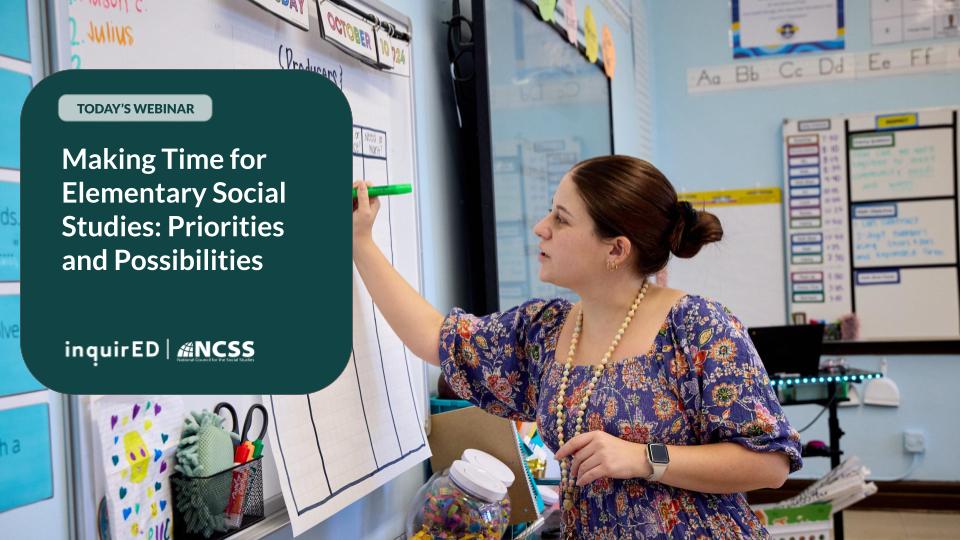
Making Time for Elementary Social Studies

Oct 1, 2024
8
MIN READ

Building a Culture of Discussion in Social Studies Classrooms

Oct 29, 2024
4
MIN READ

Download the scope and sequence

Curious about the thought-provoking questions that drive discussions in each unit of Inquiry Journeys, inquirED's K-5 social studies curriculum?

Download now

Start your journey

Inquiry Journeys, inquirED's K-5 social studies curriculum, engages students in inquiry-based learning, strengthens literacy skills, and supports teachers every step of the way.

Get in touch
illustration of kid holding question mark

No items found.

inquirED supports teachers with high-quality instructional materials that make joyful, rigorous, and transferable learning possible for every student. Inkwell, our integrated core ELA and social studies elementary curriculum, brings ELA and social studies together into one coherent instructional block that builds deeper knowledge, comprehension, and literacy skills. Inquiry Journeys, our K–5 social studies curriculum, is used across the country to help students develop the deep content knowledge and inquiry skills essential for a thriving democracy,

Copied!

I am the text that will be copied.

Webinars

Subscribe to receive email updates from inquirED

Related posts

See all resources

Webinars

Discourse and Differentiation: A Day in the Life of Inquiry in a 5th-Grade Classroom

Dec 16, 2025
7
MIN READ

Webinars

Implementing Elementary Social Studies Across a District

Oct 23, 2025
7
MIN READ

Webinars

High-Quality Instructional Materials in Social Studies

Oct 23, 2025
5
MIN READ
See all resources

Contact us

Contact sales

Ready to learn more?

Connect with someone from the inquirED team to schedule a demo or learn more about our products.

Connect with us

Want the latest webinars, resources, and tools? Sign up for inquirED’s newsletter.

About inquirED

About UsOur TeamCareers

Get in touch

SalesGeneral Inquiries

Social

LinkedIn
Instagram
Facebook
YouTube

© {year} inquirED Inc.. All rights reserved.

Data + Security
|
Privacy Policy
|
Terms and Conditions