Curriculum

Elementary

Social Studies

COMING SOON

Integrated ELA & Social Studies

inkwell-logo-white

Middle School

Social Studies

Upcoming Product webinar

Explore

inquiry journeys logo

Join inquirED this fall for Exploring Inquiry Journeys, a webinar series for school and district leaders. Each session offers practical insights and strategies from our curriculum to engage students and support teachers in inquiry-based elementary social studies.

Register
Professional Learning
Resources

Resource Collections

Downloadable guides, frameworks, and tools designed to help district leaders take action on social studies curriculum and instruction. Looking for our most downloaded resesources? Check the quick links below.

Curiculum Review Guide

Literacy in Social Studies Rubric

Social Studies Pacing Guide

Blog

Fresh ideas, research, and reflections to help district leaders stay sharp and responsive in an evolving social studies landscape.

Webinars

Real-time conversations and on-demand learning with experts and district leaders tackling challenges in social studies education.

NCSS & inquirED

Product Webinars

Webinar Library

free resource

Social Studies Curriculum Review Guide

Download this free tool designed to help educators, districts, and curriculum developers create, evaluate, and select social studies instructional materials that meet the demands of today’s classrooms.

Download
Log inContact sales
Log in
Contact sales

Contact sales

Cookie Settings

We use cookies to provide you with the best possible experience. They also allow us to analyze user behavior in order to constantly improve the website for you. See our Privacy Policy

Thank you! Your submission has been received!
Oops! Something went wrong while submitting the form.
Webinars

Sources as Mirrors and Windows: Making the Case for Elementary Social Studies
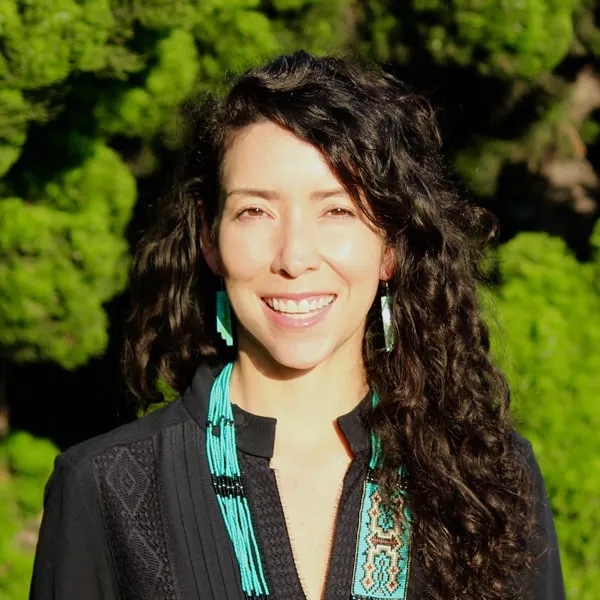
Featured speakerS
Cereescia Sandoval

Cereescia Sandoval

Learning Experience Designer, inquirED
Martin Andrews

Martin Andrews

Creative Director, inquirED

NOTE: There is no recording for this webinar.

Feb 26, 2021
6
MIN READ
Copied!

I am the text that will be copied.

Webinars
BACK TO BLOG

Sources as Mirrors and Windows: Making the Case for Elementary Social Studies

Feb 26, 2021
6
MIN READ
Copied!

I am the text that will be copied.

Photo by Allison Shelley: Images of Teachers and Students in Action

Table of Contents
H1 Heading
H2 Heading
H3 Heading
Table of Contents
H2 Heading
H3 Heading
H4 Heading

K-5 Social Studies Curriculum

illustration of kid holding question mark

Book a demo

illustration of kid holding question mark

Explore Inkwell!
K–2 integrated ELA and social studies

How do the sources teachers choose provide mirrors and windows for students? We explored that question with Cereescia Sandoval, one of inquirED's Learning Experience Designers. Scroll to the bottom of the page for the webinar recording. This blog post and the associated webinar are sponsored by inquirED and the National Council for the Social Studies.

Key Takeaways

  • Learn about Inquiry Journeys, inquirED's elementary social studies curriculum.
  • Find out more information about NCSS and its programs.

Sources Matter

At inquirED, we've been thinking a lot about the sources we use in Inquiry Journeys, our elementary social studies curriculum. We are continually reexamining lessons to keep our sources up-to-date and relevant because we understand that the sources we provide to teachers have a powerful impact on students, especially in inquiry-based social studies classes.

In inquiry-based social studies, the teacher acts as a facilitator, supporting students as they learn from the sources they are investigating. That's something I really didn't understand until recently. For a long time, I’ve known that a teacher shouldn't be the source of all knowledge in the classroom. Twenty years ago in my social studies methods classes, I was told, “Don’t be the sage on the stage, be the guide on the side!”

I remember it because it rhymed.

But it didn’t help me. If I was the guide on the side, what were students learning from? The textbook? That didn’t seem right for a million reasons, least of which was the fact that my textbook was eight years old and, in 2005, kept using the phrase “Someday, in the year 2000…”

So if not me – or the textbook – what could be the source of knowledge?

When I came to inquirED and started to dig deeper into inquiry-based social studies, I began to understand that in inquiry “THE source” is actually “A source” –  one of many. At the heart of every lesson is a source, whether it's a map, document, photograph, painting, piece of art, or even student-created work. Students are waiting to question it, connect with it, and absorb it, learning about themselves and the world in the process.

That's why sources matter. And that’s why we invited Cereescia Sandoval to talk to us about how sources act as mirrors and windows for students. Cereescia is a bi-racial Indigenous American educator who sees her identity as directly connected to her purpose. In fact, her devotion to re-imagining education for Black and Brown students and disrupting educational inequity is what led her to inquirED.

Mirrors and Windows

When I asked Cereescia about the terms "mirrors" and "windows," she referenced Emily Style's "Curriculum As Window and Mirror" as the first scholarship that applied the terms to the classroom. "They demonstrate the importance of providing a way to look out and see others," Cereescia stated, "and also a way to see yourself represented in the curriculum and classroom."

As for Cereescia's own learning experiences with mirrors and windows, she reflected that "what I often experienced was windows, looking into a white-centered, male-centered version of the world." It wasn't until later in life, in college and graduate school, that she began to find mirrors in some of the sources she was exploring. In her work at inquirED, writing social studies curriculum for elementary students, she hopes to make sure that students don't have to wait that long to see themselves in their learning. "There are opportunities for mirrors and windows across all curriculum, but there's a real importance to there being mirrors and windows in reference to social studies."

Why Social Studies?

For all learners, the disciplines of social studies provide unique opportunities for mirrors and windows. Civics examines our relationship with others within a group, whether it’s a classroom,  community, or country. History teaches us to analyze the past to inform our actions in the present and future. Economics asks us to investigate how we meet our wants and needs and balance them in relation to other people’s. Geography prompts us to consider how we affect our environment and how our environment affects us. This list of examples is not exhaustive. Add in psychology, anthropology, archaeology, philosophy, religion, and sociology, and you have nearly the whole spectrum of human experience as your area of study.

Cereescia spent her career teaching kindergarteners and other young learners, so I asked her about the power of social studies in the early grades. She shared her belief that social studies provides young learners with an "opportunity to engage with the real world, to consider their own lived experience and the lives of others." In this way, when we teach social studies, we have an even greater responsibility to ensure that the sources we choose provide mirrors and windows. After all, if we agree that social studies "is life work – not just classroom work" (as Cereescia put it), then our students must be able to see themselves and others in that work.

Immediate Shifts

Teachers can make several immediate shifts to make sure that they are including sources that provide mirrors and windows in their social studies classrooms. Resources like the Guide for Selecting Anti-Bias Children’s Books can help teachers perform a source audit of their existing materials or screen new materials they are considering including in the classroom. During the webinar, we looked at two different sources that inquirED's Learning Experience Team considered for inclusion in Inquiry Journeys.

ree

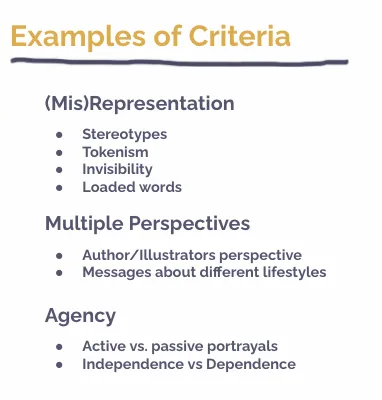
Using the criteria shown here, we enlisted the help of webinar attendees to evaluate and audit these potential sources. Interestingly, both sources were found to be lacking, but Cereescia revealed that her team elected to use one of these sources in the curriculum. "Sometimes you can use a source that's limited to get students to think critically about those limitations." She emphasized that the point of analyzing these sources with students is not to judge one source as "good" and another "bad" but to help students start to understand the limitations of any one source.

Long-Term Work

As teachers, we act as facilitators in an inquiry-based social studies classroom, but we can't help the fact that we are also an influential source of information for students. They watch and listen to us, picking up cues on how to act, think, and interpret the world.

If we truly want to interrogate the sources we bring into our classroom, we must also interrogate our own beliefs, implicit biases, and actions. According to Cereescia, this kind of work is hard to do alone. "Learning communities are important," she said. " It’s important to have people that are highly supportive of you and also push you to interrogate your own beliefs."

As you continue to do the hard and necessary work, keep connected with us – and stay tuned to our upcoming webinars to connect with others who are passionate about elementary social studies.

About our Panelists and Hosts

Cereescia Sandoval

Learning Experience Designer , inquirED

Cereescia is a bi-racial Indigenous American educator who sees her identity as directly connected to her purpose. She is devoted to re-imagining education for Black and Brown students. Cereescia has been teaching for 13 years and received her Masters in Ed. at University of Oregon as part of the Sapsik’ʷałá Indigenous Teacher Education Program. She has a dedication to Deeper Learning that was nurtured through the High Tech High organization. Her experience as a Leading for Equity Fellow with the National Equity Project prompted her to pursue a path focused on disrupting educational inequity, which led her to inquirED.

Martin Andrews

Communications Director, inquirED

Martin has taught for 20 years at the K-12 and college levels. As a Social Studies and Latin teacher in Ohio, he developed narrative-based middle school Latin and high school World History curricula. After earning an MFA in Theatre, Martin co-founded Working Group Theatre, helping to create over 15 original plays to educate children and adults. His work has received support from the National Endowment for the Arts, The National Endowment for the Humanities, The Metlife Foundation, and others. Martin joined inquirED in December 2017.

  • Learn about Inquiry Journeys, inquirED's elementary social studies curriculum.
  • Find out more information about NCSS and its programs.

Sources Matter

At inquirED, we've been thinking a lot about the sources we use in Inquiry Journeys, our elementary social studies curriculum. We are continually reexamining lessons to keep our sources up-to-date and relevant because we understand that the sources we provide to teachers have a powerful impact on students, especially in inquiry-based social studies classes.

In inquiry-based social studies, the teacher acts as a facilitator, supporting students as they learn from the sources they are investigating. That's something I really didn't understand until recently. For a long time, I’ve known that a teacher shouldn't be the source of all knowledge in the classroom. Twenty years ago in my social studies methods classes, I was told, “Don’t be the sage on the stage, be the guide on the side!”

I remember it because it rhymed.

But it didn’t help me. If I was the guide on the side, what were students learning from? The textbook? That didn’t seem right for a million reasons, least of which was the fact that my textbook was eight years old and, in 2005, kept using the phrase “Someday, in the year 2000…”

So if not me – or the textbook – what could be the source of knowledge?

When I came to inquirED and started to dig deeper into inquiry-based social studies, I began to understand that in inquiry “THE source” is actually “A source” –  one of many. At the heart of every lesson is a source, whether it's a map, document, photograph, painting, piece of art, or even student-created work. Students are waiting to question it, connect with it, and absorb it, learning about themselves and the world in the process.

That's why sources matter. And that’s why we invited Cereescia Sandoval to talk to us about how sources act as mirrors and windows for students. Cereescia is a bi-racial Indigenous American educator who sees her identity as directly connected to her purpose. In fact, her devotion to re-imagining education for Black and Brown students and disrupting educational inequity is what led her to inquirED.

Mirrors and Windows

When I asked Cereescia about the terms "mirrors" and "windows," she referenced Emily Style's "Curriculum As Window and Mirror" as the first scholarship that applied the terms to the classroom. "They demonstrate the importance of providing a way to look out and see others," Cereescia stated, "and also a way to see yourself represented in the curriculum and classroom."

As for Cereescia's own learning experiences with mirrors and windows, she reflected that "what I often experienced was windows, looking into a white-centered, male-centered version of the world." It wasn't until later in life, in college and graduate school, that she began to find mirrors in some of the sources she was exploring. In her work at inquirED, writing social studies curriculum for elementary students, she hopes to make sure that students don't have to wait that long to see themselves in their learning. "There are opportunities for mirrors and windows across all curriculum, but there's a real importance to there being mirrors and windows in reference to social studies."

Why Social Studies?

For all learners, the disciplines of social studies provide unique opportunities for mirrors and windows. Civics examines our relationship with others within a group, whether it’s a classroom,  community, or country. History teaches us to analyze the past to inform our actions in the present and future. Economics asks us to investigate how we meet our wants and needs and balance them in relation to other people’s. Geography prompts us to consider how we affect our environment and how our environment affects us. This list of examples is not exhaustive. Add in psychology, anthropology, archaeology, philosophy, religion, and sociology, and you have nearly the whole spectrum of human experience as your area of study.

Cereescia spent her career teaching kindergarteners and other young learners, so I asked her about the power of social studies in the early grades. She shared her belief that social studies provides young learners with an "opportunity to engage with the real world, to consider their own lived experience and the lives of others." In this way, when we teach social studies, we have an even greater responsibility to ensure that the sources we choose provide mirrors and windows. After all, if we agree that social studies "is life work – not just classroom work" (as Cereescia put it), then our students must be able to see themselves and others in that work.

Immediate Shifts

Teachers can make several immediate shifts to make sure that they are including sources that provide mirrors and windows in their social studies classrooms. Resources like the Guide for Selecting Anti-Bias Children’s Books can help teachers perform a source audit of their existing materials or screen new materials they are considering including in the classroom. During the webinar, we looked at two different sources that inquirED's Learning Experience Team considered for inclusion in Inquiry Journeys.

ree

Using the criteria shown here, we enlisted the help of webinar attendees to evaluate and audit these potential sources. Interestingly, both sources were found to be lacking, but Cereescia revealed that her team elected to use one of these sources in the curriculum. "Sometimes you can use a source that's limited to get students to think critically about those limitations." She emphasized that the point of analyzing these sources with students is not to judge one source as "good" and another "bad" but to help students start to understand the limitations of any one source.

Long-Term Work

As teachers, we act as facilitators in an inquiry-based social studies classroom, but we can't help the fact that we are also an influential source of information for students. They watch and listen to us, picking up cues on how to act, think, and interpret the world.

If we truly want to interrogate the sources we bring into our classroom, we must also interrogate our own beliefs, implicit biases, and actions. According to Cereescia, this kind of work is hard to do alone. "Learning communities are important," she said. " It’s important to have people that are highly supportive of you and also push you to interrogate your own beliefs."

As you continue to do the hard and necessary work, keep connected with us – and stay tuned to our upcoming webinars to connect with others who are passionate about elementary social studies.

About our Panelists and Hosts

Cereescia Sandoval

Learning Experience Designer , inquirED

Cereescia is a bi-racial Indigenous American educator who sees her identity as directly connected to her purpose. She is devoted to re-imagining education for Black and Brown students. Cereescia has been teaching for 13 years and received her Masters in Ed. at University of Oregon as part of the Sapsik’ʷałá Indigenous Teacher Education Program. She has a dedication to Deeper Learning that was nurtured through the High Tech High organization. Her experience as a Leading for Equity Fellow with the National Equity Project prompted her to pursue a path focused on disrupting educational inequity, which led her to inquirED.

Martin Andrews

Communications Director, inquirED

Martin has taught for 20 years at the K-12 and college levels. As a Social Studies and Latin teacher in Ohio, he developed narrative-based middle school Latin and high school World History curricula. After earning an MFA in Theatre, Martin co-founded Working Group Theatre, helping to create over 15 original plays to educate children and adults. His work has received support from the National Endowment for the Arts, The National Endowment for the Humanities, The Metlife Foundation, and others. Martin joined inquirED in December 2017.

Watch the recording

Resources

The following resources relate to the issues and ideas discussed during the webinar.

  • Social Justice Books: A great selection of multicultural and social justice books for children, YA, and educators, including a Guide for Selecting Anti-Bias Children’s Books.
  • inquirED's Source Checklist: A checklist to use when gathering sources for your classroom.
  • inquirED's Curriculum Rubric: For those of you who are searching for a curriculum – and want a rubric to check up on how that curriculum incorporates high-quality diverse sources.
  • inquirED's Source Analysis Poster: A classroom poster to help students ask questions about the sources they encounter.
  • The National Equity Project: Supporting teachers and leaders in transforming their systems into equitable, resilient, and liberating environments.

Keep reading

Name

previous

Name

Next

Writing for Meaning and Understanding: The Power of Integrated ELA and Social Studies

Deeper Knowledge and Comprehension Through ELA and Social Studies Integration

The Cognitive Load Problem: Why Too Many Programs Undermine Learning

The Elementary Time Problem: Too Much to Teach, Too Little Time

Canby Brings Oregon’s Vision for Social Science Education to Life

How Standards-Based Inquiry Sparked Innovation in Iowa City Community School District

How West Aurora Turned Social Science into Literacy Gains

Discourse and Differentiation: A Day in the Life of Inquiry in a 5th-Grade Classroom

Implementing Elementary Social Studies Across a District

The Missing Piece in Reading Comprehension: Social Studies

How SFUSD Brought Inquiry-Based Social Studies to Life

Culturally Responsive Education in Social Studies

How to Choose a High-Quality Elementary Social Studies Curriculum

Exploring the Inquiry Journeys Logic Model

How Oconomowoc made standards stick

Creative ways districts are making time for K-5 social studies

Your Guide to Meaningful Inquiry Walls in the Classroom

Using Inquiry in Elementary Social Studies

Think-Pair-Share | Inquiry Lesson Plan Strategy

Social Studies Projects: Give Students the Keys to Success

Can Curriculum-Based Professional Learning Transform Teaching?

Predict Learn Conclude | Inquiry Lesson Plan Strategy

Literacy in Social Studies: Layered Learning with Primary and Secondary Sources

Inquiry Journeys: Literacy Practices and Supports

Inquiry in Action: Classroom Spotlights

Creating a Roadmap for Social Studies Curriculum Review and Adoption

Wisconsin Makes The Case For Elementary Social Studies

"Yes, And..." | Inquiry Lesson Plan Strategy

Why Inquiry-Based Social Studies Matters in K–5 Classrooms

Elementary Social Studies | What is Informed Action?

What is Inquiry-Based Social Studies?

Inquiry in Social Studies Classrooms

What is the best inquiry process for elementary social studies curriculum?

Using Content-Area Literacy Strategies in Social Studies Instruction

Supporting the Shift to Inquiry

Keeping Curiosity Alive

Up to the Task: How to Support Student-Led Learning in Elementary Social Studies

Integrating SEL and Social Studies

Teaching in an Election Season: Rights and Responsibilities

Tell Me More: Using Diverse Books and Inquiry to Teach History

Voice and Choice in Inquiry-Based Learning

Using Primary Sources from the Library of Congress through Distance Learning

Un-level That Text! Integrating Literacy and Elementary Social Studies

Tools for Identifying High-Quality Social Studies Instruction

Time to Design: inquirED's Elementary Social Studies Curriculum Supports Teachers

The State of K-8 Social Studies

Bringing Learning to Life: The Power of Informed Action in Social Studies

The Social Studies ELA Connection: Making the Case For Elementary Social Studies

Theory to Practice: Implementing High-Quality Instruction

The Future of Social Studies: Webinar Series Launch

The Steps Toward Inquiry in Social Studies (Series Launch)

The Power of High-Quality Instructional Materials

Media Literacy: Making The Case For Elementary Social Studies

Social Studies in the Age of Disinformation: Making the Case For Elementary Social Studies

Storytime in Social Studies: Using Picture Books Across an Inquiry

Making the Case For Elementary Social Studies: District Leaders

Building Deep Background Knowledge: Making The Case For Elementary Social Studies

High-Quality Instructional Materials in Social Studies

Socratic Seminar | Inquiry Lesson Plan Strategy

Seen, Shared, Shaped Over Time: Making Learning Visible in Social Studies

The Social Studies Curriculum Review Guide

See Think Wonder | Inquiry Lesson Plan Strategy

Searching for Social Studies: Denver Public Schools

Media Literacy: Primary and Secondary Sources in Inquiry Journeys

Social Studies Curriculum Review and Adoption

Schema Building and Knowledge Transfer

Questioning: The Key to Unlocking the Power of Inquiry in Social Studies

What are your district's priorities for curriculum review and adoption?

Picture Walks and Other Pre-Reading Strategies for Early Literacy Development

Multimodal Learning in Inquiry Journeys

New Standards, New Directions: When Your State Goes All-In for Inquiry

Note Card Reflection | Inquiry Lesson Plan Strategy

Making Time for Elementary Social Studies

Layers of Meaning: Knowledge Building and Complex Texts

Sources as Mirrors and Windows: Making the Case for Elementary Social Studies

Mingle Pair Share | Inquiry Lesson Plan Strategy

Making the Case for Elementary Social Studies

Civic Life in the Era of Truth Decay: Making the Case for Elementary Social Studies

Inquiry Unit Design

Why Inquiry Skills Matter in K–5 Social Studies Classrooms

Inquiry Journeys: Elementary Social Studies Curriculum Resources

Inquiry vs. Knowledge Building: Dismantling the False Dichotomy

Inquiry-Based Elementary Social Studies and the C3 Framework

Inquiry Advocates: Partners with inquirED

Inquiry-Based Elementary Social Studies and the Common Core

Informed Action in Inquiry Journeys: A Garden Grows in Ohio

Inquiry-Based Learning: Research

inquirED's 21st Century Skills

Inquiry-Based Elementary Social Studies and the CASEL Competencies

Implementing Elementary Social Studies: Best Practices from District Leaders

Idea Clustering | Inquiry Lesson Plan Strategy

I Like, I Wonder | Inquiry Lesson Plan Strategy

Hexagonal Thinking & Mapping: A Dynamic Strategy for Deeper Learning

Group Roles | Inquiry Lesson Plan Strategy

Exploration and Meaning Making: Social Studies in K-2 Classrooms

Give an Inquiry-Based Learning Shout Out!

Creating an Inquiry-Based Learning Culture in Elementary Social Studies

Formative Assessments: Exit Tickets

Exploring the Lasting Power of Stories

Civic Engagement: What Can a Citizen Do? Interview with Dave Eggers and Shawn Harris

See more of this series

No items found.

Download now

Start your journey

Inquiry Journeys, inquirED's K-5 social studies curriculum, engages students in inquiry-based learning, strengthens literacy skills, and supports teachers every step of the way.
Get in touch
illustration of kid holding question mark

No items found.

inquirED supports teachers with high-quality instructional materials that make joyful, rigorous, and transferable learning possible for every student. Inkwell, our integrated core ELA and social studies elementary curriculum, brings ELA and social studies together into one coherent instructional block that builds deeper knowledge, comprehension, and literacy skills. Inquiry Journeys, our K–5 social studies curriculum, is used across the country to help students develop the deep content knowledge and inquiry skills essential for a thriving democracy,

Copied!

I am the text that will be copied.

Webinars

Subscribe to receive email updates from inquirED

Related posts

See all resources

Webinars

Discourse and Differentiation: A Day in the Life of Inquiry in a 5th-Grade Classroom

Dec 16, 2025
7
MIN READ

Webinars

Implementing Elementary Social Studies Across a District

Oct 23, 2025
7
MIN READ

Webinars

High-Quality Instructional Materials in Social Studies

Oct 23, 2025
5
MIN READ
See all resources

Contact us

Contact sales

Ready to learn more?

Connect with someone from the inquirED team to schedule a demo or learn more about our products.

Connect with us

Want the latest webinars, resources, and tools? Sign up for inquirED’s newsletter.

About inquirED

About UsOur TeamCareers

Get in touch

SalesGeneral Inquiries

Social

LinkedIn
Instagram
Facebook
YouTube

© {year} inquirED Inc.. All rights reserved.

Data + Security
|
Privacy Policy
|
Terms and Conditions