Curriculum

Pre-K/TK

Pre-K/TK

New

Elementary

Integrated ELA & Social Studies

inkwell-logo-white

Social Studies

Middle School

Social Studies

Upcoming Product webinar

See Inkwell live

Inkwell is our K-2 core curriculum that teaches ELA and social studies in one block. Join a 30-minute live demo with the team behind the curriculum. We'll walk through what it looks like in practice, where it fits alongside your foundational skills program, and what year-one adoption requires.

Register
Professional Learning
Resources

Resource Collections

Downloadable guides, frameworks, and tools designed to help district leaders take action on high-quality ELA curricula and instruction. Looking for our most downloaded resources? Check the quick links below.

Making the Case for Integrated Core Curricula

The Integrated Instructional Block

Integration in Elementary Instruction

Blog

Fresh ideas, research, and reflections to help district leaders stay sharp and responsive in an evolving landscape.

Webinars

Real-time conversations and on-demand learning with experts and district leaders tackling challenges in education.

Lit Talk

Inkwell

Source Material

Inquiry Journeys

Great first eight

new webinar series

Reading Comprehension in Question

Join Dr. Nell K. Duke and Dr. Gina Cervetti for a free webinar on comprehension in PK-5 reading instruction.

Save your spot
Log inContact sales
Log in
Contact sales

Contact sales

Cookie Settings

We use cookies to provide you with the best possible experience. They also allow us to analyze user behavior in order to constantly improve the website for you. See our Privacy Policy

Thank you! Your submission has been received!
Oops! Something went wrong while submitting the form.
BACK TO ALL EPISODES
Webinar recap

Three moves that bring multilingual learners into the full work of inquiry

Christina Nelson

Christina Nelson

Professional Learning Specialist | WIDA
LaKethia White

LaKethia White

PD and Learning Lead at inquirED
Hannah Berkowitz

Hannah Berkowitz

5th-grade teacher, Jane Stenson Elementary
Nov 15, 2026
7
MIN READ
Copied!

I am the text that will be copied.

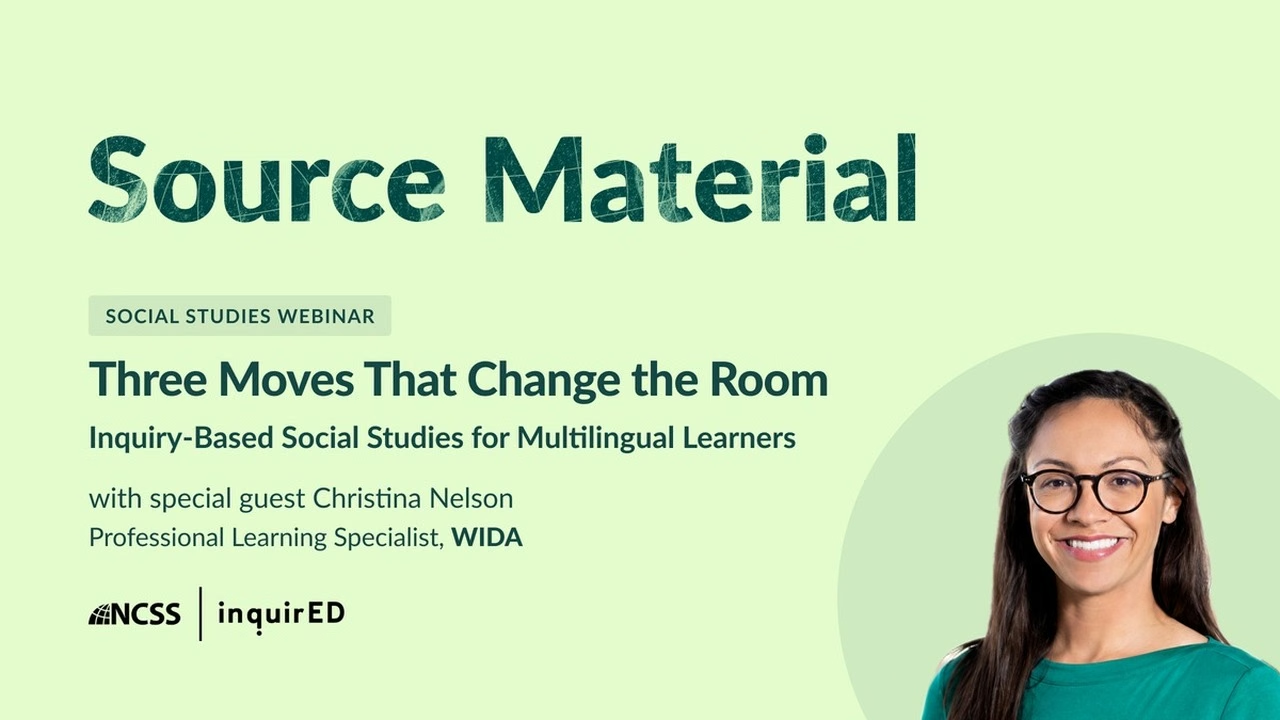
Source Material, Episode 2: Three Moves That Change the Room, with Christina Nelson of WIDA

NOTE: There is no recording for this webinar.

Webinars
BACK TO BLOG

Three moves that bring multilingual learners into the full work of inquiry

inquirED

Nov 15, 2026
7
MIN READ
Copied!

I am the text that will be copied.

Source Material, Episode 2: Three Moves That Change the Room, with Christina Nelson of WIDA
Table of Contents
H1 Heading
H2 Heading
H3 Heading
in this recap
H2 Heading
H3 Heading
H4 Heading

K-5 Social Studies

illustration of kid holding question mark

K–2 integrated ELA and social studies

Inquiry classrooms are some of the most talk-heavy classrooms there are. In Episode 2 of Source Material, “Three Moves That Change the Room,” WIDA’s Christina Nelson joined hosts LaKethia White and Hannah Berkowitz to look at how that talk can open the work to multilingual learners. They discussed inviting home languages in, wording questions so every student can enter, designing group work that needs every voice, and helping students move from talk to writing.

Key Takeaways

  • Students learn a language while using it, so a talk-heavy inquiry classroom is one of the best places for multilingual learners to build academic English.
  • Invite home languages into the work. Students can process new content, take notes, and draft questions in their home language, then move that thinking toward English.
  • Check the questions you ask. Make sure every student understands the wording, break big questions into smaller ones, and choose wording that opens the inquiry to every student.
  • Separate the learning task from the learning goal, so a newcomer can meet the same goal through a different task.
  • Design group work that requires every student to speak, with instructions given in more than one form.
  • School and district leaders can back these moves with time: shared planning for content teachers and language specialists, and chances for teachers to watch each other teach.

Discussion highlights

Home languages belong in the inquiry

Christina started by answering a common worry: that a talk-heavy classroom is hard on students still learning English. Her response was that “we don’t first learn a language and then later use it.” Multilingual learners are learning content and language at the same time, and “our students are not coming in as blank slates.” Even newcomers bring language skills, lived experience, and interests a teacher can build on.

That starts with home languages. When students move between languages (translanguaging), Christina noted, “they’re not always doing it because they don’t have the word in English.” They may be thinking something through, connecting with a classmate, or making a point. A teacher doesn’t need to speak a student’s language to invite that work in. Students can read, take notes, and process new content in their home language or across languages, and the teacher can take a sentence a student produced and ask, “How might we say this in English?” As students get more comfortable moving between languages, Christina said, teachers may notice more and more English showing up in their notes and in how they express their thinking.

“Translanguaging is a very complex process where our multilingual students draw on their languages in a more intentional way.” —Christina Nelson

Questions every student can answer

Open-ended questions are central to inquiry, and Christina sees them as an advantage for multilingual learners, because they invite students “to enter the conversation on their own terms.” Students still have to understand the question first. Teachers can check for words with more than one meaning, give processing time, and break a large question into smaller ones that build toward it.

The wording matters too. Christina’s example was the question “What makes someone a good citizen?”, which can shut out students whose families have a range of immigration statuses. Asking “What does it mean to be an active member of a community?” opens the same inquiry to everyone. When students write their own questions, as they do at the start of an inquiry, she suggested multimodal prompts (images, timelines, video) in place of dense text, model questions, and a multilingual word wall of question words. Students can draft questions in their home language, because the goal at that stage is curiosity, not perfect English grammar.

“We need to separate the learning task from the learning goal.” —Christina Nelson

Group work that requires every voice

Hannah regroups her students nearly every day, so she asked what teachers should think about when grouping multilingual learners. Christina began with the instructions. Students should get them in more than one form (spoken, written, pictured, and modeled), so they can spend their energy on the work instead of figuring out what they’re supposed to do. She also pointed out that “collaboration is a learned skill,” and that teachers have to teach and model the interpersonal moves it takes.

Encouraging participation isn’t enough for a student who hesitates to start, or when one student takes over. Assigned roles, jigsaw discussions, and discussions that build toward a shared product make speaking part of the task. Students also need to know where a discussion is going. “Students want to know the why,” Christina said, whether the talk is preparing them to state an opinion or feeding a later activity.

From talk to writing

Hannah brought a challenge from her own fifth-grade classroom. Her multilingual students join discussions and talk with friends with ease, and then some of them freeze when it’s time to write. As she put it, “their social proficiency can mask their language needs.” Christina pointed to the educator James Britton’s line that “reading and writing float on a sea of talk.” Her suggestion was to make the shift from spoken to written language visible. A teacher can draw a continuum on the wall, ask whether a text message or a lecture sounds more like speech or writing, and then bring in sentences from students’ own conversations to rework together. Hannah said she wanted to make that explicit with her class the next day.

LaKethia added a move for coaches and principals. They can set up a short learning cycle around a teacher’s exact problem, arrange coverage so the teacher can watch a colleague who already supports students through claims with evidence, then debrief, plan, and look at student writing together.

“We don’t want our writing instruction to be too rigid. We want to make space for our students to play with language.” —Christina Nelson

What this means for practice

For teachers, each of these moves starts with something already happening in an inquiry classroom. Students are already talking, asking questions, and working in groups, so the work is to plan those moments so that every student can enter them: home languages invited in, questions every student can understand and answer, and group tasks where speaking is part of the job.

For school and district leaders, Christina’s phrase was “backing our beliefs with our budget.” That can mean schedules that let content teachers plan with English language specialists, materials for talking with families in their home languages, and time for teachers to learn from one another. One principal she worked with covered classes himself so teachers could watch a colleague’s Socratic seminar or question-generating session. As Christina put it, “there’s so much brilliance and expertise right there in your school.”

Closing reflection

Hannah left the conversation planning to make the difference between talking and writing explicit for her students the next day. Christina’s continuum is one way to begin. Put a line on the wall from spoken to written language, and let students decide where their own sentences belong and what would move them along it. The students do the analysis, and the ones who talk easily but freeze at the page get a way to see what changes between the two.

Watch the recording

Resources

Keep reading

Name

previous

Name

Next

Three moves that bring multilingual learners into the full work of inquiry

Where the Day Goes: Rethinking Instructional Time

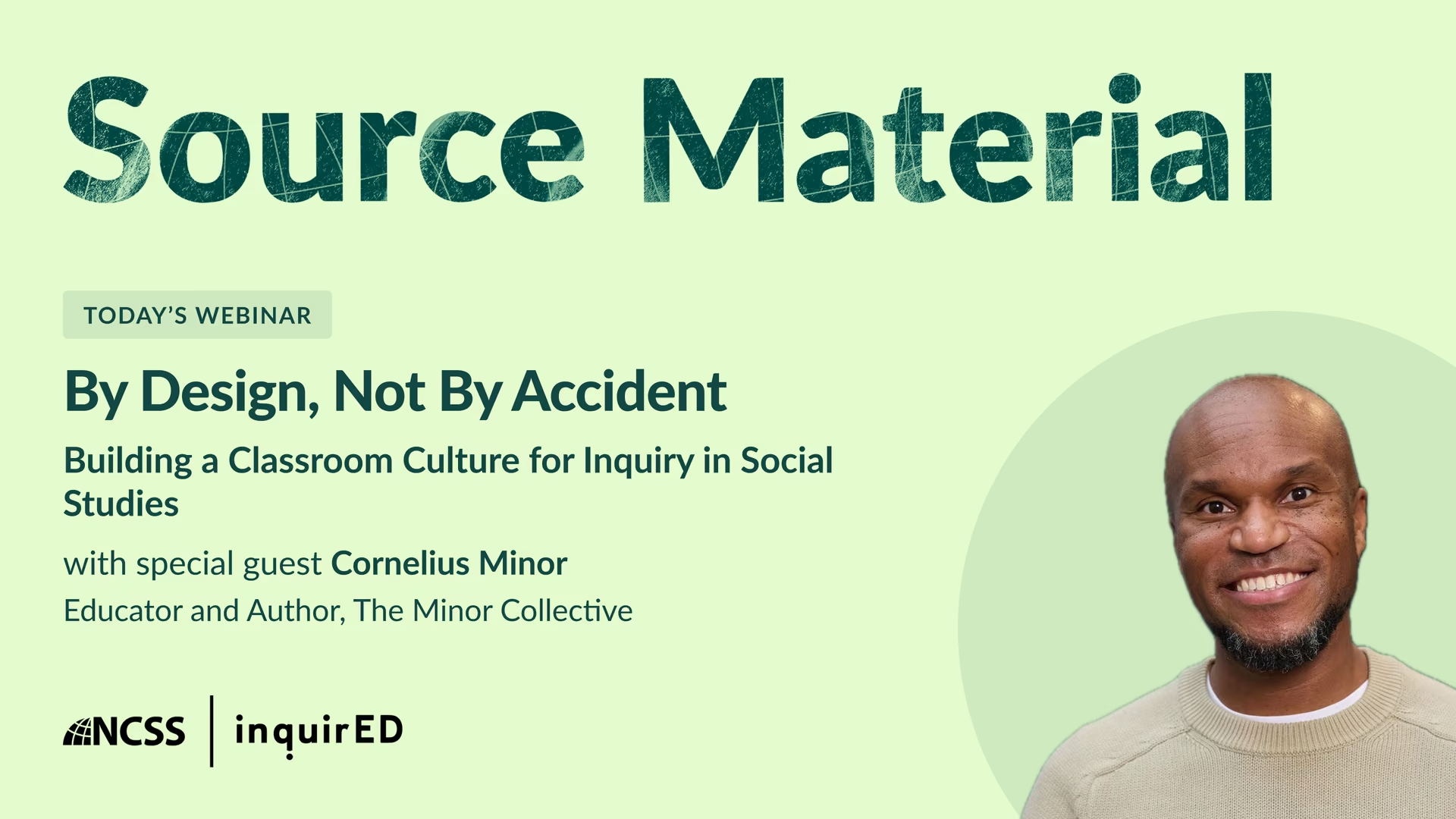
By Design, Not By Accident: Building a Classroom Culture for Inquiry

Making Time for Elementary Social Studies: Priorities and Possibilities

“The People Doing the Talking Are Doing the Thinking”: Inquiry in Eastern Carver County Schools

How Waukee Built Equitable Access to Knowledge Through Complex Texts

Beyond Silos: Aligning Inclusive Instruction and Inquiry in Social Studies

Designing for Depth: Giving Writing Its Due in Early Literacy

Low Floors, High Ceilings: What’s Happening in Skokie Classrooms

From State Adoption to Classroom Instruction: Making Social Studies Materials Matter

How East Haven school district puts their vision of a graduate to practice

Writing for Meaning and Understanding: The Power of Integrated ELA and Social Studies

Deeper Knowledge and Comprehension Through ELA and Social Studies Integration

The Cognitive Load Problem: Why Too Many Programs Undermine Learning

The Elementary Time Problem: Too Much to Teach, Too Little Time

Canby Brings Oregon’s Vision for Social Science Education to Life

How Standards-Based Inquiry Sparked Innovation in Iowa City Community School District

How West Aurora Turned Social Science into Literacy Gains

Discourse and Differentiation: A Day in the Life of Inquiry in a 5th-Grade Classroom

Implementing Elementary Social Studies Across a District

The Missing Piece in Reading Comprehension: Social Studies

How SFUSD Brought Inquiry-Based Social Studies to Life

Culturally Responsive Education in Social Studies

How to Choose a High-Quality Elementary Social Studies Curriculum

Exploring the Inquiry Journeys Logic Model

How Oconomowoc made standards stick

Creative ways districts are making time for K-5 social studies

Your Guide to Meaningful Inquiry Walls in the Classroom

Using Inquiry in Elementary Social Studies

Think-Pair-Share | Inquiry Lesson Plan Strategy

Social Studies Projects: Give Students the Keys to Success

Can Curriculum-Based Professional Learning Transform Teaching?

Predict Learn Conclude | Inquiry Lesson Plan Strategy

Literacy in Social Studies: Layered Learning with Primary and Secondary Sources

Inquiry Journeys: Literacy Practices and Supports

Inquiry in Action: Classroom Spotlights

Creating a Roadmap for Social Studies Curriculum Review and Adoption

Wisconsin Makes The Case For Elementary Social Studies

"Yes, And..." | Inquiry Lesson Plan Strategy

Why Inquiry-Based Social Studies Matters in K–5 Classrooms

Elementary Social Studies | What is Informed Action?

What is Inquiry-Based Social Studies?

Inquiry in Social Studies Classrooms

What is the best inquiry process for elementary social studies curriculum?

Using Content-Area Literacy Strategies in Social Studies Instruction

Supporting the Shift to Inquiry

Keeping Curiosity Alive

Up to the Task: How to Support Student-Led Learning in Elementary Social Studies

Integrating SEL and Social Studies

Teaching in an Election Season: Rights and Responsibilities

Tell Me More: Using Diverse Books and Inquiry to Teach History

Voice and Choice in Inquiry-Based Learning

Using Primary Sources from the Library of Congress through Distance Learning

Un-level That Text! Integrating Literacy and Elementary Social Studies

Tools for Identifying High-Quality Social Studies Instruction

Time to Design: inquirED's Elementary Social Studies Curriculum Supports Teachers

The State of K-8 Social Studies

Bringing Learning to Life: The Power of Informed Action in Social Studies

The Social Studies ELA Connection: Making the Case For Elementary Social Studies

Theory to Practice: Implementing High-Quality Instruction

The Future of Social Studies: Webinar Series Launch

The Steps Toward Inquiry in Social Studies (Series Launch)

The Power of High-Quality Instructional Materials

Media Literacy: Making The Case For Elementary Social Studies

Social Studies in the Age of Disinformation: Making the Case For Elementary Social Studies

Storytime in Social Studies: Using Picture Books Across an Inquiry

Making the Case For Elementary Social Studies: District Leaders

Building Deep Background Knowledge: Making The Case For Elementary Social Studies

High-Quality Instructional Materials in Social Studies

Socratic Seminar | Inquiry Lesson Plan Strategy

Seen, Shared, Shaped Over Time: Making Learning Visible in Social Studies

The Social Studies Curriculum Review Guide

See Think Wonder | Inquiry Lesson Plan Strategy

Searching for Social Studies: Denver Public Schools

Media Literacy: Primary and Secondary Sources in Inquiry Journeys

Social Studies Curriculum Review and Adoption

Schema Building and Knowledge Transfer

Questioning: The Key to Unlocking the Power of Inquiry in Social Studies

What are your district's priorities for curriculum review and adoption?

Picture Walks and Other Pre-Reading Strategies for Early Literacy Development

Multimodal Learning in Inquiry Journeys

New Standards, New Directions: When Your State Goes All-In for Inquiry

Note Card Reflection | Inquiry Lesson Plan Strategy

Making Time for Elementary Social Studies

Layers of Meaning: Knowledge Building and Complex Texts

Sources as Mirrors and Windows: Making the Case for Elementary Social Studies

Mingle Pair Share | Inquiry Lesson Plan Strategy

Making the Case for Elementary Social Studies

Civic Life in the Era of Truth Decay: Making the Case for Elementary Social Studies

Inquiry Unit Design

Why Inquiry Skills Matter in K–5 Social Studies Classrooms

Inquiry Journeys: Elementary Social Studies Curriculum Resources

Inquiry vs. Knowledge Building: Dismantling the False Dichotomy

Inquiry-Based Elementary Social Studies and the C3 Framework

Inquiry Advocates: Partners with inquirED

Inquiry-Based Elementary Social Studies and the Common Core

Informed Action in Inquiry Journeys: A Garden Grows in Ohio

Inquiry-Based Learning: Research

inquirED's 21st Century Skills

Inquiry-Based Elementary Social Studies and the CASEL Competencies

Download now

Start your journey

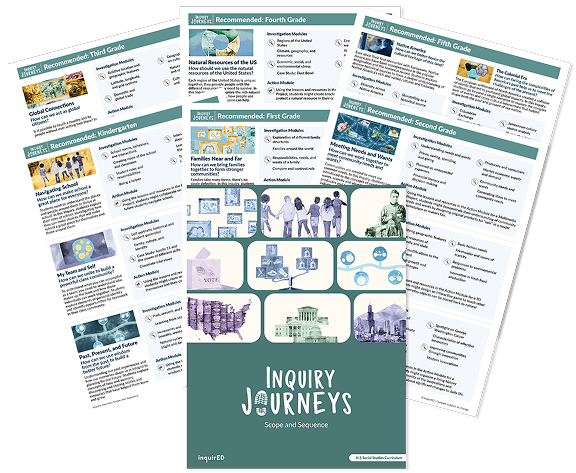
Inquiry Journeys, inquirED's K-5 social studies curriculum, engages students in inquiry-based learning, strengthens literacy skills, and supports teachers every step of the way.

Get in touch
illustration of kid holding question mark

No items found.

inquirED supports teachers with high-quality instructional materials that make joyful, rigorous, and transferable learning possible for every student. Our pre-K/TK and elementary curriculum offerings include Great First Eight (Pre-K/TK), Inkwell (K–2 integrated ELA and social studies), and Inquiry Journeys (K–5 social studies). Together, they help students develop the deeper knowledge, comprehension, literacy, and inquiry skills they need to grow as readers, writers, thinkers, and participants in a thriving democracy.
Copied!

I am the text that will be copied.

Webinars

Subscribe to receive email updates from inquirED

Related posts

See all resources
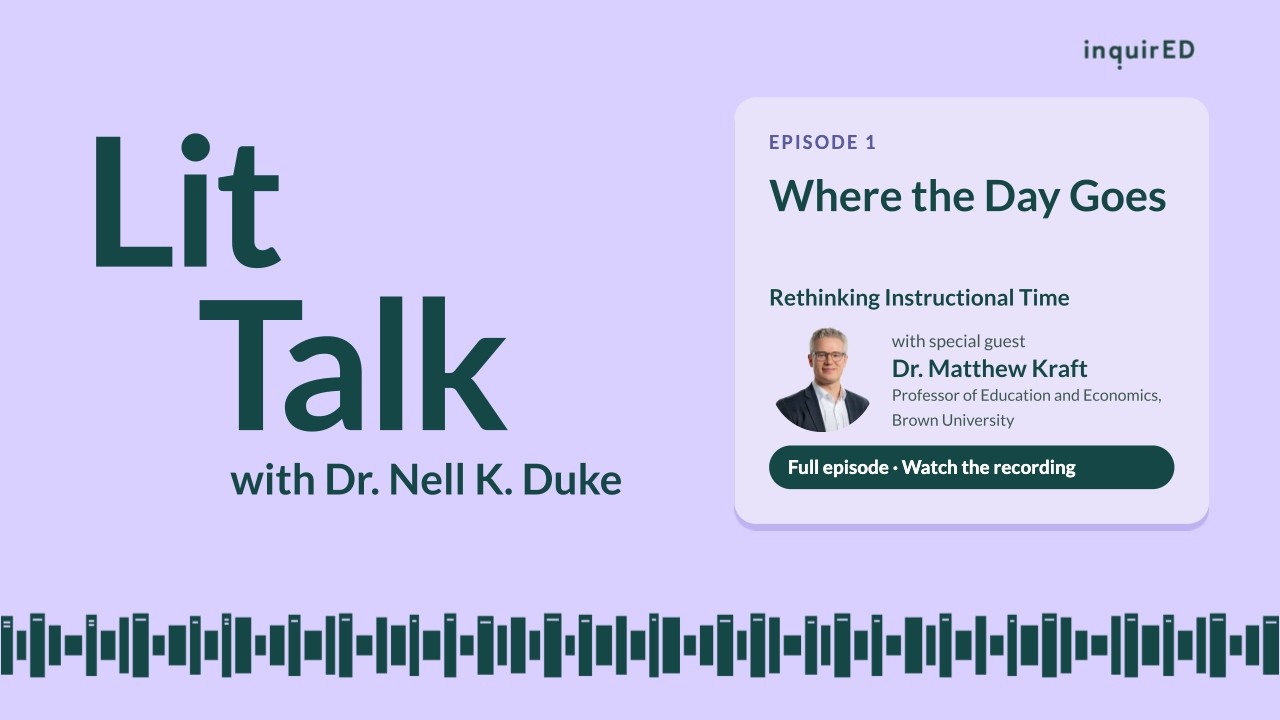
Lit Talk with Dr. Nell K. Duke, Episode 1: Where the Day Goes, with special guest Dr. Matthew Kraft

Webinars

Where the Day Goes: Rethinking Instructional Time

Oct 18, 2026
8
MIN READ

Webinars

By Design, Not By Accident: Building a Classroom Culture for Inquiry

Sep 25, 2026
7
MIN READ

Webinars

Making Time for Elementary Social Studies: Priorities and Possibilities

May 7, 2026
9
MIN READ
See all resources
Contact us

Contact sales

Ready to learn more?

Connect with someone from the inquirED team to schedule a demo or learn more about our products.

Connect with us

Want the latest webinars, resources, and tools? Sign up for inquirED’s newsletter.

About inquirED

About UsOur TeamCareers

Get in touch

General InquiriesSales

Contact sales

Social

LinkedIn
Instagram
Facebook
YouTube

© {year} inquirED Inc. All rights reserved.

Data + Security
|
Privacy Policy
|
Accessibility
|
Terms and Conditions